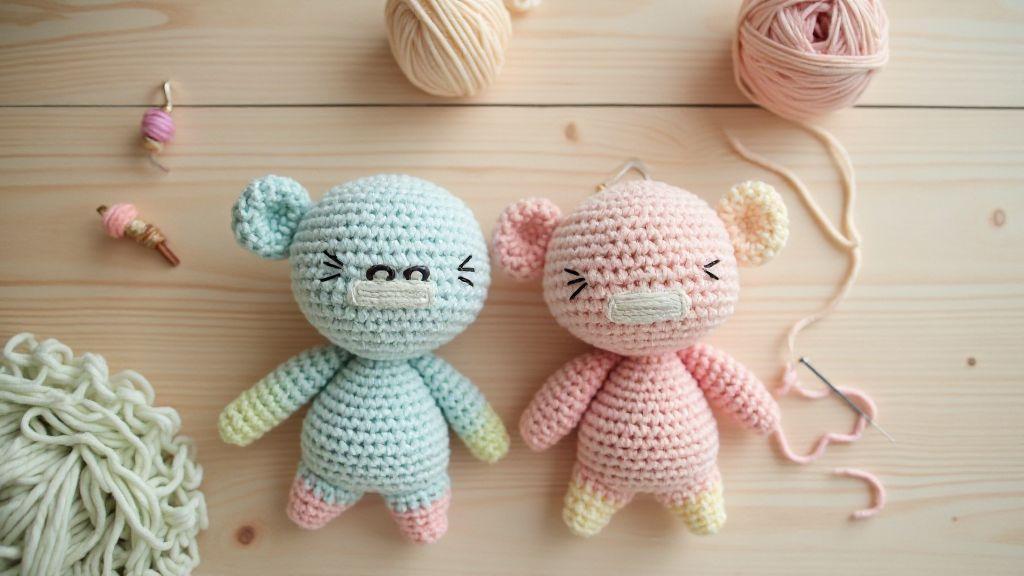
The Mattress Stitch: The Secret to Clean Amigurumi Assembly
Why The Mattress Stitch: The Secret to Clean Amigurumi Assembly Works for Amigurumi
You’ll see the magic when you try the Mattress Stitch. This technique locks pieces together with a nearly invisible line, giving amigurumi a seamless, professional look. It creates a clean join that doesn’t pull or pucker, even along tricky curved edges. It’s faster than some methods since you join row by row rather than stitching through every stitch, and it’s forgiving: as you pull tight, the fabric slides into place.
With this stitch, you control how the seam sits. You can place the seam on the outside or inside, depending on your design. The stitch forms a tiny ladder of horizontal bars beneath the surface, helping the seam stay flat. Since you work with live edges, you avoid bulky seams that can distort the shape, preserving the toy’s silhouette.
The real value comes when assembling multiple parts. The Mattress Stitch lets you align edges precisely so ears, arms, and legs attach cleanly. No crooked mid-assembly stitches to fight with. The finished piece looks polished, giving you that pro finish you want, even if you’re still learning.
How the Invisible Seam Crochet Aligns Rows
Line up your edges so they meet perfectly. Thread a tapestry needle with a length of yarn and anchor a few stitches from each side. Aim for one loop from each piece to sit opposite a corresponding loop, creating a neat corridor for your join. As you stitch, pull gently to keep edges flush without distorting the shape.
Watch the alignment of your stitches across the seam. Each row should mirror its counterpart. If a mismatch appears, adjust so the bars line up. This seam disappears because you’re stitching between stitches, not through them, leaving a smooth surface.
With practice, the rhythm becomes second nature. You’ll check edge alignment, then continue. The payoff is a flat seam with no bulky ridge—quiet, precise, and almost invisible.
Why It Makes Clean Amigurumi Assembly Simple
The Mattress Stitch simplifies the hardest part of assembly: keeping edges straight and joins invisible. You’re guiding edges to meet evenly while the stitch does the rest. Because the seam runs between stitches, you preserve texture and tension, so the amigurumi holds its shape beautifully.
The method reduces guesswork. You know where each edge should meet, reducing fiddly adjustments and the chance of puckers. Your pieces slide into place with confidence, yielding a cohesive look rather than a patched one.
You can be more expressive with design: a seam on the outside for effect is possible, but the method makes most joins easy to hide. The consistency of the join gives a professional finish every time.
Row Alignment Creates a Flat, Invisible Join
Row-by-row alignment makes the join truly flat. Match each row so the bars sit parallel and level. Done right, the join looks like a single fabric line, not a stitched edge, keeping the amigurumi smooth from any angle.
If you see a ridge, you likely drifted off a row or pulled too tightly. Reset, realign, and rejoin. Keeping rows aligned is about steady hands and careful checks. A little patience now saves a visible seam later.
The end result is a clean, invisible join that makes the amigurumi feel solid. The seam disappears into the fabric, signaling quality in every project.
Tools for a Neat Mattress Stitch Amigurumi Seam
A seamless, strong join starts with the right tools. A well-chosen setup makes the mattress stitch clean and tidy, not bulky. Your toolkit is the bridge between rough edges and a smooth finish.
- A sharp-but-blunt tapestry needle that glides through stitches.
- Clean-cut scissors that don’t fray yarn.
- Stitch markers to mark start and stop points, especially on tricky rows.
- A small organizational system to keep markers, scissors, and needles within reach.
Labeling sections as you go reduces guesswork, especially on larger projects. With the right setup, you stitch with confidence, knowing you can adjust without hunting for a tool every other stitch.
Tapestry Needle, Scissors, and Stitch Markers
Choose a tapestry needle with a sharp but blunt tip, a mid-length shaft, and a sufficiently large eye for your yarn end. Scissors should cut cleanly without fraying. Tiny snips help trim ends, and a separate pair for yarn prevents dulling. Stitch markers are handy for marking starts and stops, especially across tricky rows. Keep tools within easy reach for steady progress and confident stitching.
Best Needle Sizes for Different Yarn Weights
- Lightweight yarns: use a finer tapestry needle with a small eye to prevent gaps.
- Medium-weight yarns: a mid-size needle aligns seams evenly without bending on dense spots.
- Worsted or bulky yarns: a larger, sturdier needle helps you slide through while preserving the bar structure.
If unsure, test a tiny swatch to feel how the needle moves between bars. The right size helps maintain a neat line along the join and keeps stitches aligned.
Quick Step-by-Step Mattress Stitch Tutorial
In this concise guide, you’ll close seams like a pro, achieving clean, nearly invisible joins that elevate your project. The Mattress Stitch: The Secret to Clean Amigurumi Assembly is the phrase you’ll appreciate once you feel the difference in your pieces.
- Start with the right thread and needle, align edges precisely, and thread the needle.
- As you pull through, the seam should disappear between the fabric for a smooth finish.
- Practice to increase speed without sacrificing neatness. This technique works on soft toys beyond amigurumi, including blankets and pillows.
The goal is to hide the seam while keeping the fabric snug. Maintain straight lines and even tension. With more practice, you’ll judge how tight to pull so the seam sits flat. Patience now saves time later.
Prep Edges and Mark Your Start (Tutorial Mattress Stitch Crochet)
Prepare the edges by aligning and straightening any tails. Mark the starting point with a contrasting thread or stitch marker so you can stay consistent across the seam. Then thread a blunt-tipped tapestry needle with matching thread, anchor the first stitches, and gently seat them without puckering. Align the corresponding edge and get ready to weave.
Pass the Needle Under Bars and Pull Evenly
Pass the needle under horizontal bars, catching one bar at a time. Draw the thread through with steady, even tension. If you pull too hard, you’ll create puckering; too loose, and gaps appear. Alternate sides as you move along the seam, keeping edges flush and stitches hidden between layers. When you finish, secure the last stitches and tie off securely.
Practice on a Swatch Before Sewing the Toy
Use a swatch to dial in tension and sight-line. Practice on scrap pieces that mimic your fabric. Once you’re happy with the look, transfer that feel to your project. Check that seams sit evenly and evenly spaced; tweak tension and needle angle as needed. This rehearsal saves frustration on the real toy.
Tension and Alignment Tips for a Seamless Crochet Join
Aim for neat, twist-free joins with consistent tension. Let your hands feel the yarn—too tight creates bunching, too loose creates gaps. When joining rows, match stitch top height to its neighbor. Pause mid-join to recheck alignment and adjust your grip so stitches line up like dancers in a line. Treat the join as a quiet conversation between rows; anchor with a slender tail and weave with a steady pace. If misalignment occurs, slip back one stitch and realign. Different yarn drape requires adjusting grip, especially with stiff versus plush yarns.
Keep an eye on the finished edge as you work. If you detect a jog or ripple, re-tack that area with a tiny pull. The right tension distribution across the seam yields a smooth, professional finish.
If color changes or variegated yarns are involved, tension becomes even more critical to avoid visible lines. Practice with a swatch to find the balance where color and tension whisper the pieces are one.
Pin Pieces in Place to Keep Rows Matched
Pins help keep edges meeting precisely and prevent shifting as you sew. Place pins at regular intervals to maintain alignment across larger panels. Remove pins gradually as you near the end of the seam to avoid disturbing the alignment.
Check Flatness Often and Adjust Tension
Flatten the work as you sew and watch for bumps or gaps. If puckering appears, loosen a bit and resew with steady hands. Run your fingers along the seam to feel for tight spots or loose stitches and rework those areas with lighter or firmer tension. A final flatness check ensures a polished finish.
How It Compares to Whip Stitch and Ladder Stitch
The Mattress Stitch pulls edges together from the inside, leaving a neat, almost invisible line outside. Whip stitch shows a dotted line and can look unfinished on tight rounds. Ladder stitch requires careful catching of bars; a misstep can create a visible ladder. For amigurumi, the Mattress Stitch offers a cleaner surface, especially on tight shapes like spheres and stuffed curves.
Whip stitch is fast but less sleek; ladder stitch is precise but time-consuming. The Mattress Stitch balances ease and a smooth finish, ideal for small, rounded pieces.
Invisible seam vs visible overcast finishes: an invisible seam hides the join from the outside, while visible overcast lines can add texture but may distract from features. For most amigurumi, the invisible seam wins for a polished, plush look.
When Mattress Stitch Is the Best Stitch for Amigurumi Seams
Use it when joining pieces that must sit flush, such as arms and legs, or rounded joins where a natural curl should stay intact. It’s especially helpful for tiny curved seams like heads with ears or rounded paws, distributing tension along the seam line to prevent hard edges. For most amigurumi shapes, this stitch remains the best choice for a smooth, professional finish.
Pick the Method by Toy Shape and Yarn Type
Toy shape should guide your choice. Smooth, round surfaces benefit most from the Mattress Stitch because it hides the seam under gentle pressure. If your yarn has a lot of stretch or a fuzzy texture, this stitch helps tame the fabric and keep seams tidy. For straight-edged or angular features, whip stitch might be faster, but at the cost of a cleaner look. Dense, smooth yarns still favor the Mattress Stitch for a near-invisible join that follows the contour of the piece.
Test a tiny seam first to compare how edges meet and how the outside looks. If the yarn blooms or changes shape after stuffing, adjust tension and resew. The Mattress Stitch is versatile, and adapting it to your toy’s shape and yarn behavior yields the best finish.
Yarn and Color Matching for Invisible Seam Crochet
Choose yarns with the same fiber content and weight to minimize seam visibility. If blending fibers, test on a swatch first. Pick a color near the middle of your palette so the join remains calm. Check how the seam behaves under the lighting you’ll use for the final piece.
Consider yarn behavior after washing; choose a yarn with similar bloom and shrinkage to the rest of the project. Gauge consistency matters: a mismatch can show at the join, so measure and match gauge before sewing. Practice on a small sample row before the final project.
Color strategy: exact color matches minimize visibility, or use a blended strand to merge tones. Keep joining stitches firm but not tight; too much tension creates a ridge, too little causes gaps. Practice with swatches to find the sweet spot that makes the join blend seamlessly.
Match Fiber and Gauge for a Hidden Join
Begin with the same fiber type and weight as your project. If you can’t match exactly, test a close substitute on a swatch to see how it behaves after washing and blocking. Gauge matters: use the same hook size and measure a small swatch to confirm consistency. A matched fiber and gauge keep the seam flat and unobtrusive.
Use Matching Color or a Blended Strand for Subtle Seams
For subtle seams, color matters. A precise color match makes the join blend into the fabric. If between shades, a blended strand can help—but keep tension steady so the seam remains barely noticeable.
Same Yarn or a Slightly Thinner Strand Gives Best Results
Using the same yarn or a slightly thinner strand for the join helps the seam read as one piece, especially on dense fabrics. If you must use a different color, pair it with a color-matched knot to hide the join. Move through the join slowly with even stitches to keep it flat and seamless.
Fixing Gaps, Lumps, and Common Seam Problems
Gaps or lumps are fixable without starting over. Check tension and stitch placement first. If a gap appears, close it with careful, hidden work without distorting the shape. Loosen a puckered seam a touch and resew with steady hands. Align edges before resewing to prevent misalignment from creating bumps. With practice, you’ll learn the balance between snug and loose to keep seams flat and strong.
If unsure where the problem starts, inspect for pulled threads, misaligned pieces, or over-stretched fabric. Reinforce weak spots by sewing along the seam again in a slightly different path, keeping stitches small to avoid new ridges. A calm hand and careful tension yield a flat seam.
Close Small Gaps with Extra Hidden Stitches
When a gap sneaks in, rethread a fine needle with matching thread. Pin the edges flush, then insert under the surface with short, close stitches parallel to the seam. Keep stitches within the seam allowance to avoid outside puckers. Knot securely on the inside and trim ends. Tiny, precise stitches help the seam disappear.
Practice makes perfect. If a gap persists, add a curved line of hidden stitches to hug the gap closed. Press the seam gently with your fingers to verify the finish.
Remove Puckers by Loosening and Resewing Sections
Puckers come from pulling too tight or misalignment on curves. Loosen the line slightly, reposition to lie flat, and resew with a lighter touch. For curves, sew in several tiny passes rather than one long pass. Smooth the surface with your fingers before stitching to set fibers where you want them. A final gentle pass often eliminates stubborn puckers.
Adjust Stuffing Before Final Stitching to Stop Bulges
If you feel a lump before final stitching, redistribute stuffing with your fingers or a blunt tool. Remove small amounts from overfilled spots and resew with calm, even stitches. Lay the fabric flat and recheck under layers; if bulges persist, try tiny tucks along the seam to ease fullness. Work gradually for a smooth, even surface that matches the rest of the piece.
Finishing Touches Amigurumi to Hide Your Seam
Plan seam placement to hide it, choose a yarn color that matches, and keep tension consistent. Prefer joins that lie flat, like a mattress-like seam, to minimize visibility. After finishing, weave in ends cleanly and secure knots where they won’t pull loose. Test the fabric with gentle flexing to spot stubborn spots. A few precise stitches can dramatically reduce seam visibility, giving you a polished piece.
Woven-in ends disappear into the fabric, and careful knot security prevents loosening. The more you practice, the more natural hiding seams becomes, allowing the character of your amigurumi to shine.
Weave in Ends and Secure Knots Neatly
Weave ends slowly through the inside layers, then out through hidden spots and pull snug. Tie a small knot and anchor with another pass to prevent slipping. If you’re carrying yarn across the project, trim tails close but leave a little to weave in. The aim is to hide ends so they don’t draw attention.
Practice makes perfect: start with a loose end on a simple piece to learn where tails hide best, such as near limb junctions or seam lines. If a tail sticks out, weave again and trim flush. A well-secured end remains invisible and contributes to a crafted look.
Add Surface Details to Blend the Join
Surface details can distract from the seam by adding texture. Use tiny stitches to suggest shading or fur direction and blur the join. A small row of stitches along the seam or a tiny ridge can help the join read as part of the fabric, drawing attention away from the seam.
Avoid overdoing it. A few well-placed stitches are more effective than a dense texture. View your work from a few feet away to judge whether the join is visible, and adjust with light stitches until the seam blends into the design.
Practice Patterns and Learning Resources for Amigurumi Sewing Techniques
Progress comes from mixture of practice patterns and reliable learning resources. Start with simple shapes to build muscle memory, then advance to complex figures. Track tension and seam alignment in a notebook or swatches to compare what feels right for you. Use a steady cadence—small daily sessions beat occasional long ones.
Pair practice with curated resources: short video tutorials for technique breakdowns, photo tutorials for side-by-side comparisons, and both inside-out and outside views to understand how fabric looks during finishing. Look for guidance on tension, seam placement, and end-hiding.
Swatch Exercises and Small Join Projects to Try
Swatches train your hands for speed and accuracy. Begin with tiny joins that mimic real projects—joining rounds, attaching a head to a body, or linking limbs. Keep swatches organized by stitch type so you can revisit them when needed.
Small join projects let you test seam lines in real pieces, such as a mini torso with removable limbs, to study how joins behave under movement. Each small build shows how seam placement changes the final look, building confidence and real-world fixes for larger characters.
As you practice, you’ll notice pattern shifts in your joins. Compare your progress to earlier attempts and celebrate improvements. The more you sew, the steadier your Mattress Stitch and other joins become.
Find Clear Videos and Photo Tutorials Online
Clear video and photo tutorials accelerate mastery. Seek step-by-step clips that show exact hand positions and tool angles. Save tips from trusted creators to revisit during projects.
Photo tutorials provide verifiable reference. Save close-up shots of both inside and outside stitches to compare your work line by line. Pair photos with quick notes about changes you made to connect progress to results.
Look for demonstrations with good lighting and clean backgrounds. Choose tutorials that match your current level and push you gently toward the next skill.
Search Mattress Stitch Amigurumi and Tutorial Mattress Stitch Crochet
When searching, look for tutorials that show both the outside finish and the hidden joins. The Mattress Stitch: The Secret to Clean Amigurumi Assembly often appears as the dependable backbone for neat joins. Observe examples where the seam sits flat and markers align for reproducible results. Note how the yarn tail is tucked and how the final seam hides the join line. A crisp mattress stitch elevates any amigurumi.
Study tutorials by reproducing the motion first, then adapt to your projects. If a video uses a wider seam or tighter tension, pause and compare with your own technique. The goal is to internalize a reliable method you can apply across characters, not just one model. With growing confidence, your amigurumi will feel sturdier and look cleaner from all angles.
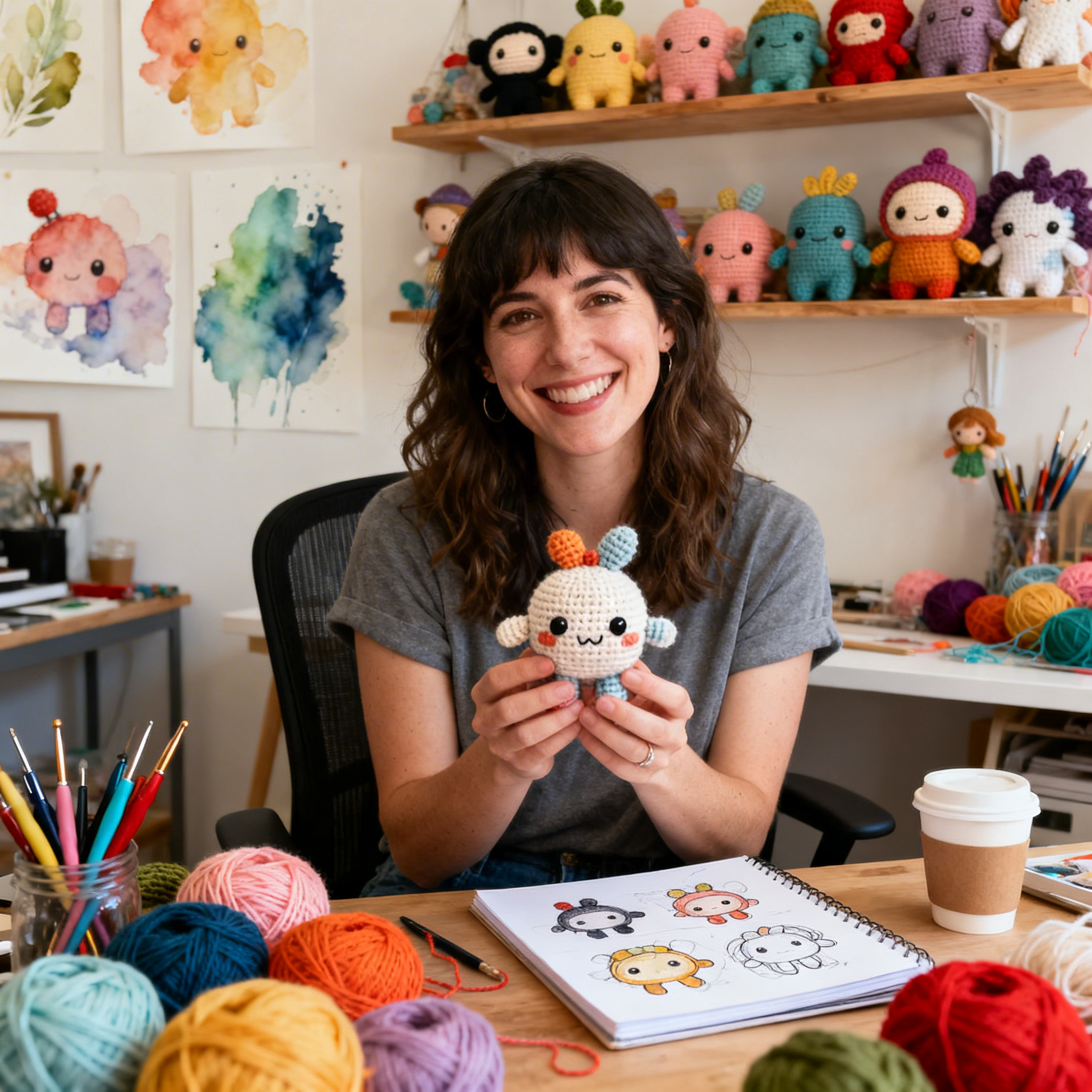
Clara Fern — Crochet Artist & Amigurumi Designer
Clara Fern is a crochet artist and amigurumi designer based in Austin, Texas. With 9 years of experience working with yarn and hook, she transformed a lifelong passion for handcraft into a creative mission: making amigurumi accessible, fun, and deeply rewarding for crafters of all levels.
Clara discovered amigurumi during a trip to Japan in 2017, where she fell in love with the art of bringing tiny characters to life through crochet. Back home in Texas, she spent years studying color theory, design principles, and advanced crochet techniques — developing her own signature style that blends kawaii aesthetics with original character design.
Through maclafersa.com, Clara shares everything she has learned — from choosing the right yarn and reading your first pattern, to designing fully original amigurumi characters from scratch. Her writing is known for being clear, detailed, and genuinely helpful, with no steps skipped and no secrets kept.
When she’s not crocheting, Clara enjoys watercolor painting, visiting local yarn shops, and drinking way too much coffee while sketching new character ideas.