Free Amigurumi Turtle Pattern for Beginners
Introduction
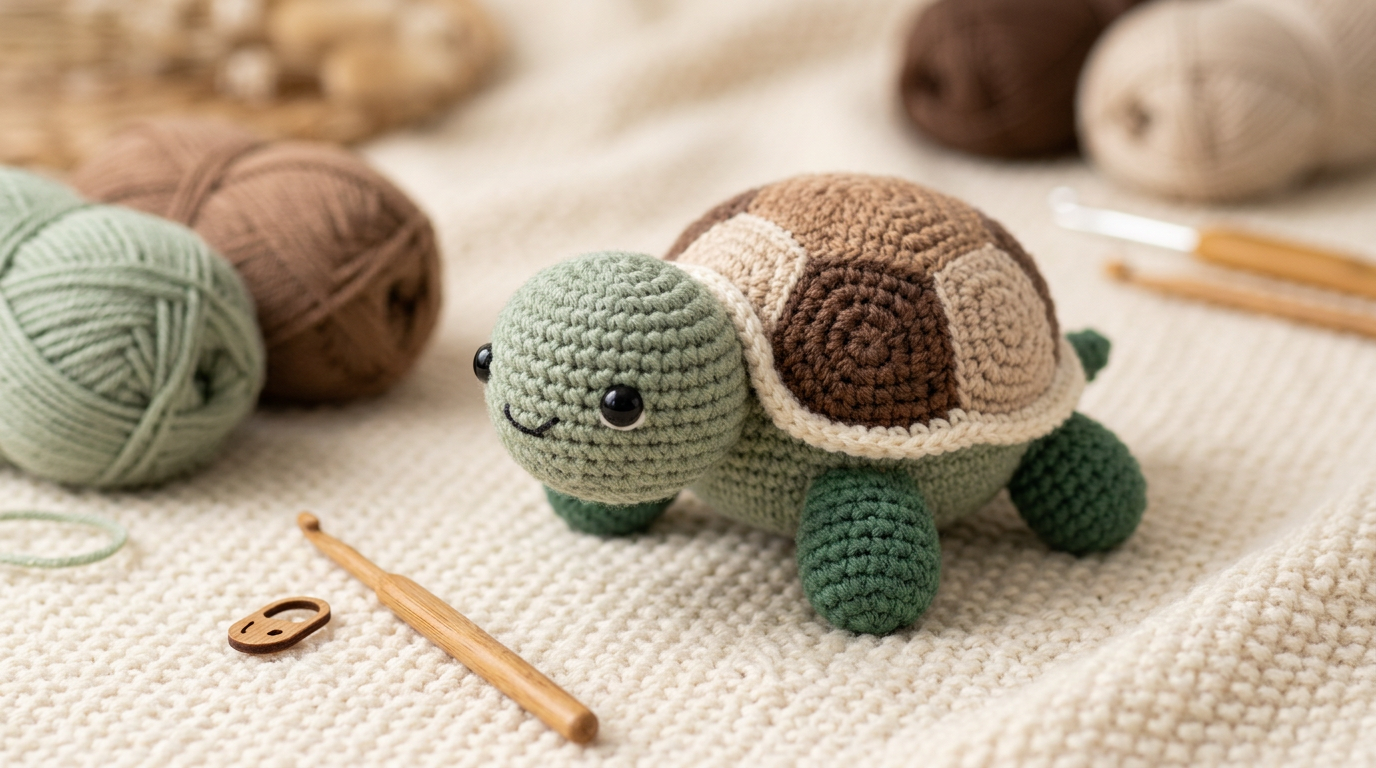
The turtle is an ideal first amigurumi project for beginners. Its simple geometric shapes—a rounded body, four stubby legs, and a small head—require only basic crochet stitches and straightforward construction techniques. Unlike more complex amigurumi that demand advanced shaping skills, the turtle teaches fundamental principles while producing a charming, recognizable result within a few hours. This article provides a complete, beginner-friendly turtle pattern with detailed instructions, helpful tips, and troubleshooting guidance to ensure success on your first attempt.
Materials Needed
Yarn: Worsted-weight yarn in green (main color), brown or tan (shell detail), and a small amount of black or dark gray (eyes). Approximately 100-150 yards total.
Hook: Size 5.5mm (I/9) crochet hook for worsted-weight yarn.
Notions: Polyester fiberfill for stuffing, tapestry needle for weaving in ends and sewing pieces together, stitch markers, scissors.
Optional: Safety eyes (6mm) for a finished look, or embroidery floss for embroidered eyes.
Abbreviations and Stitches
- ch: chain
- sc: single crochet
- inc: increase (2 single crochets in same stitch)
- dec: decrease (single crochet 2 together)
- sl st: slip stitch
- st(s): stitch(es)
- rnd: round
- st st: stitch stitch (the space between stitches)
Pattern: Turtle Body
Rnd 1: 6 sc in magic ring (6) Rnd 2: inc in each st around (12) Rnd 3: sc 1, inc repeat around (18) Rnd 4-8: sc in each st around (18) — 5 rounds total Rnd 9: sc 1, dec repeat around (12)
Stuff firmly. Cut yarn and pull through last stitch to close. Weave in ends.
Pattern: Turtle Head
Rnd 1: 6 sc in magic ring (6) Rnd 2: inc in each st around (12) Rnd 3-4: sc in each st around (12) — 2 rounds total Rnd 5: sc 1, dec repeat around (8)
Stuff lightly. Cut yarn and pull through last stitch to close. Weave in ends.
Pattern: Turtle Legs (Make 4)
Rnd 1: 6 sc in magic ring (6) Rnd 2-3: sc in each st around (6) — 2 rounds total
Stuff lightly. Cut yarn and pull through last stitch to close. Weave in ends.
Assembly Instructions
Attaching the Head: Position the head on the front of the body. Using a tapestry needle and matching yarn, sew the head to the body using a ladder stitch, making stitches every quarter-inch around the entire circumference. The head should sit slightly forward of the body’s center.
Attaching the Legs: Position the four legs evenly around the body—one on each side and one on each end. Sew each leg to the body using a ladder stitch, ensuring they’re positioned so the turtle can stand stably.
Adding Eyes: If using safety eyes, insert them into the head before stuffing. If embroidering eyes, use black embroidery floss to make two small dots on the front of the head, positioned slightly above the center.
Shell Detail (Optional): Using brown or tan yarn, embroider a simple shell pattern on the body. A simple cross-hatch pattern or concentric circles creates a realistic shell appearance.
Beginner Tips for Success
Tension Control: Maintain consistent tension throughout the project. If your stitches are too loose, the stuffing will show through. If too tight, the piece will be stiff and difficult to stuff. Practice on a swatch before starting the actual project.
Stitch Markers: Use stitch markers to mark the beginning of each round. This prevents confusion about where each round starts and ends.
Stuffing Technique: Use a chopstick or dowel to pack stuffing into the body and head, ensuring no air pockets remain. Stuff firmly enough that the piece holds its shape but not so tightly that stitches distort.
Weaving in Ends: Weave yarn ends through nearby stitches rather than tying them off. This creates a neater, more professional appearance.
Troubleshooting Common Problems
Holes Between Stitches: If stuffing shows through gaps between stitches, your tension is too loose. Try using a smaller hook or practicing tension control on a swatch.
Piece Won’t Hold Shape: If the piece feels floppy or won’t maintain its shape, stuff it more firmly. Use densely packed fiberfill and pack it carefully into all areas.
Uneven Stitches: If your stitches look uneven or inconsistent, practice making stitches of uniform size and tension. This improves naturally with practice.
Difficulty Closing Rounds: If you struggle to close rounds smoothly, practice the slip stitch. A smooth slip stitch creates an invisible seam between rounds.
Variations and Customization
Color Variations: Create turtles in different colors—red, blue, or purple—for a whimsical collection.
Size Variations: Use thicker yarn and a larger hook to create a bigger turtle, or thinner yarn and a smaller hook for a miniature version.
Shell Patterns: Experiment with different shell patterns—stripes, spots, or geometric designs—using embroidery or color changes.
Conclusion
The beginner turtle pattern teaches fundamental amigurumi skills while producing a charming, recognizable result. By following these instructions carefully and practicing tension control and stuffing techniques, you’ll create a professional-looking turtle that showcases your new crochet skills. This turtle makes an excellent first project and a wonderful gift for children or amigurumi enthusiasts.
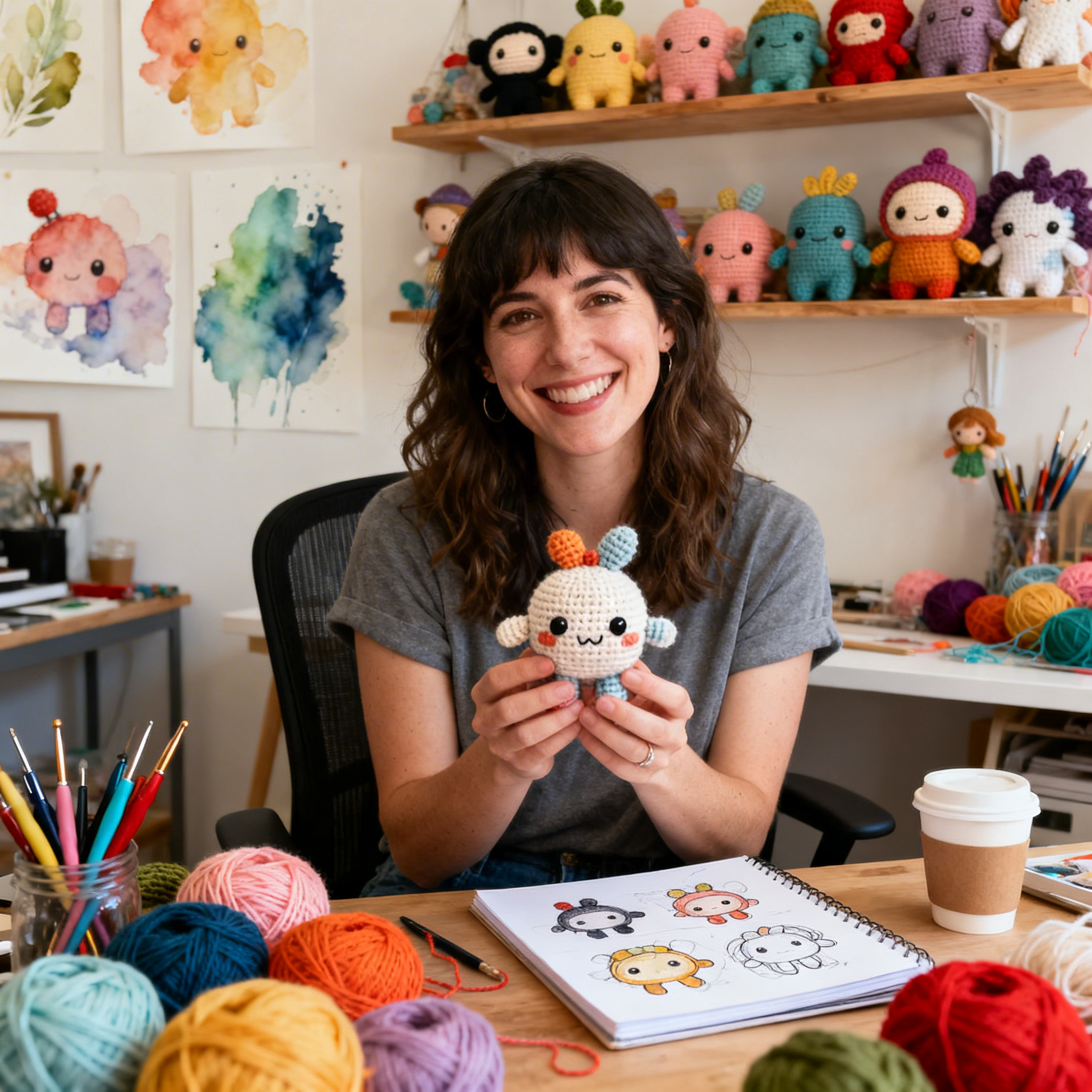
Clara Fern — Crochet Artist & Amigurumi Designer
Clara Fern is a crochet artist and amigurumi designer based in Austin, Texas. With 9 years of experience working with yarn and hook, she transformed a lifelong passion for handcraft into a creative mission: making amigurumi accessible, fun, and deeply rewarding for crafters of all levels.
Clara discovered amigurumi during a trip to Japan in 2017, where she fell in love with the art of bringing tiny characters to life through crochet. Back home in Texas, she spent years studying color theory, design principles, and advanced crochet techniques — developing her own signature style that blends kawaii aesthetics with original character design.
Through maclafersa.com, Clara shares everything she has learned — from choosing the right yarn and reading your first pattern, to designing fully original amigurumi characters from scratch. Her writing is known for being clear, detailed, and genuinely helpful, with no steps skipped and no secrets kept.
When she’s not crocheting, Clara enjoys watercolor painting, visiting local yarn shops, and drinking way too much coffee while sketching new character ideas.