Adding Patterns and Prints to Amigurumi With Embroidery
Essential tools and materials for amigurumi embroidery
Polished embroidery starts with the right tools and materials. Choose supplies that let you lay smooth, even stitches on your crocheted surface and withstand a little tug without fraying. Keep a versatile toolkit nearby so you’re not hunting for basics mid-project. When you use comfortable needles, a sturdy hoop, and a stabilizer, you’ll sew faster and with less strain. The right setup prevents puckering on stretchy crochet and helps color-rich results. With proper tools, embroidery sits flat, stays secure, and your amigurumi looks professional and durable.
Choosing yarn and embroidery thread
Yarn should complement the crochet base and embroidery thread. Look for yarn that doesn’t slip or fuzz, so embroidery sits cleanly. For tiny details, use threads that blend without overpowering the crochet texture. Colorfast threads are essential to avoid bleed on light backgrounds. Test colors on a crochet scrap to ensure contrast and outline clarity. For small eyes or features, micro-threads can work with a steady hand and fine needle. The goal is to enhance the crochet without overpowering it.
Quality matters more than price. Choose durable threads that don’t shed fibers and yarn that doesn’t fuzz after passes. If unsure, stick to a cohesive color family for a unified character. When you commit to good threads, embroidery shines and your amigurumi gains a professional edge.
Needles, hoops, and stabilizers
Needles should glide through crochet without snagging. A fine, sharp needle places stitches precisely, especially in tight spaces. For larger areas, a sharper point keeps work smooth. Hoops keep fabric taut for even stitches; a snug hoop reduces shifting for cleaner features.
Stabilizers help on stretchy crochet. A light stabilizer prevents surface puckering, especially on rounds. It should disappear or compress into the fabric as you work. For dense embroidery, a firmer stabilizer might be helpful. The aim is a flat, tidy surface without altering the yarn feel.
Tools matter more than size suggests: a comfortable needle, a stable hoop, and a suitable stabilizer make embroidery faster and neater, with fewer skipped stitches.
Tool checklist for your project
- Needle(s): Fine and sharp for detail; thicker for larger areas.
- Embroidery threads/yarn: Colorfast, matched to base yarn, with a small shade range.
- Hoop: Small-to-medium size that fits your amigurumi without bending it.
- Stabilizers: Light options to prevent puckering.
- Scissors: Sharp for clean cuts; a small pair for precision.
- Fabric pen or fusible tracing pen: Mark positions before stitching.
- Thimble or needle grip: Comfort during long sessions.
- Magnifier (optional): Helps with tiny details on small pieces.
Stitches for amigurumi embroidery
Stitches are your finishers, adding depth without overpowering the plush. Treat each stitch as a tiny brushstroke that builds character and life.
Running, back, and split stitch
- Running stitch: A quiet workhorse for subtle outlines or delicate details; low-profile so the yarn texture remains the star. Practice on scrap first and sew with even spacing for a calm, tidy look.
- Back stitch: Creates a bold line visible from a distance; ideal for defining edges and shaping curves on the face or limbs. For a cleaner finish, make the outline slightly shorter than the fill so edges stay crisp.
- Split stitch: Stronger with texture; good for subtle fur lines or decorative seams, giving depth without overpowering the design. Use light tension to avoid gaps and let threads lay naturally.
French knots and satin stitch uses
- French knots: Tiny color pops for eyes, nose, or small floral spots. Wrap the thread a few times, insert near the spot, and pull through slowly for a crisp, soft dot. One or two well-placed knots often beat many plain stitches.
- Satin stitch: Covers larger areas with smooth color, perfect for bold mouths, blush, or color blocks. Use long, parallel stitches with steady tension to avoid puckering; work in small sections for clean edges.
Stitches to learn first
A solid starter kit includes running, back, and satin stitches, plus a French knot for small facial details. Practice on scraps first, then transfer confidence to the main piece. The goal is consistent, pleasing results that feel like your signature.
How to transfer patterns to amigurumi
Learn to move patterns from paper to yarn with clean lines and stable placement.
- Start with a method suited to your fabric and yarn. Practice on a swatch to avoid mistakes on the main piece.
- Set up a well-lit workspace and use a pencil that erases easily to test tension and scale before transferring.
- For multiple toys, keep copies of key pattern areas to reference later. Neat lines and consistent placement make your amigurumi shine.
Tracing and washable transfer methods
- Trace patterns with secure, light-tack tape and erasable markers. For dark yarns, use pencils to avoid smudges.
- Washable transfers let you correct misalignments before finishing; test on scrap first to ensure clean removal. Break patterns into segments for small details to maintain accuracy.
Using heat transfer pens with care
Heat transfer pens offer crisp lines with minimal yarn contact. Test low heat on a small area first. Protect your surface with parchment or a silicone mat, and let lines cool before moving on. Some inks fade after washing, so test the entire process on scrap before committing. For small toys, place patterns away from seams and work slowly with precise counts.
Transfer tips for small toys
Position patterns away from crowded seams, use fine-tipped pens, and check alignment as you go. If you miss a line, pause, recheck, and redraw accurately.
Embroidered faces and features amigurumi
Embroidery brings faces to life with bright eyes, tiny noses, and smiles that endure play. Start with a firm base—the fabric and stuffing should support the embroidery. Use dissociated thread colors for clear lines or natural skin tones for subtle features. Short, dense stitches stay crisper under use, while long stitches can sag.
Aim for a consistent style across multiple pieces: round eyes, a small X or curved mouth, and a tiny oval nose. Tie off threads securely and weave ends inside to prevent snagging. With careful planning, embroidered features stay charming through hugs and play.
Positioning eyes, mouths, and noses
Place eyes roughly midway down the head with even spacing. For mouths, a tiny backstitch or satin stitches give a smile that won’t sag. For noses, a small satin stitch or tiny oval works well—adjust placement by testing symmetry with the head laid flat. A balanced face reads clearly from any angle.
Small stitches for durable features
Tiny stitches grip the fabric and resist pulling apart during play. Satin stitches, French knots, and small backstitches are great for eyes and mouths. Use contrasting colors for visibility, but avoid shouting tones that overpower the design. Secure finishing—knots, woven ends, and careful trimming—keeps lines clean after washing.
Face placement rules
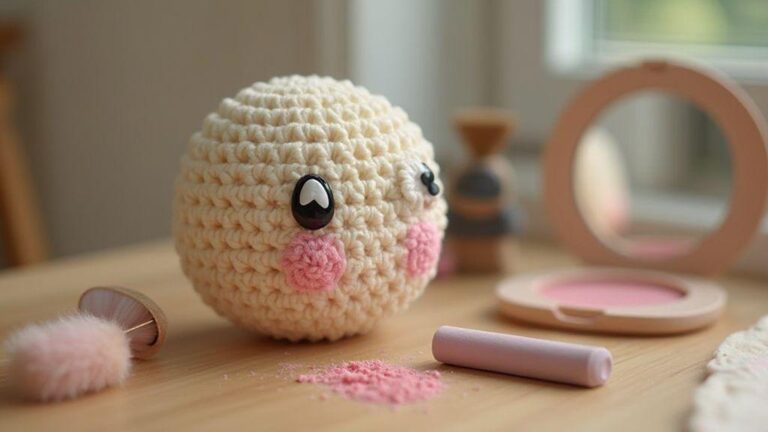
Mark a centerline and an eye line to align features. Space eyes evenly and adjust for character. For eyebrows or blush, place them slightly above the eyes. Consider scale: larger heads allow closer features; smaller heads need more space to avoid crowding. After placement, press lightly to check how the design sits before finishing.
Embroidering clothes for amigurumi and adding prints
Tiny clothes enliven your characters with embroidery and prints. Start with simple stitches, then introduce texture. Choose soft, washable fabrics so outfits stay comfy after play. Use basic stitches like running, backstitch, and satin stitch for small patterns that reflect your amigurumi’s personality. Scale matters: tiny outfits require small stitches for readability.
For prints, sketch lightly first and transfer designs with waterproof pencils to avoid smears. Simple patterns like stripes, dots, or tiny florals work well at amigurumi scale. If you want a print effect without dense stitching, layer small embroidery motifs on a single garment. Keep colors cohesive with the plush yarn to prevent clashes. Secure threads and prevent puckering with careful finishing.
Embroidering sweaters and dresses
Texture matters on garments. Use satin stitch for solid fills and add minimal decorative stitches at the shoulders or cuffs. Layer colors only after testing on scrap to avoid overdoing it. Tiny stripes or dots can elevate a simple sweater without drawing attention from the face.
If you add appliqué, secure edges with tight stitches and press gently to flatten. Small shapes like hearts or stars add charm without crowding silhouettes.
Attaching embroidered patches and appliqué
Patches and appliqué upgrade a character’s wardrobe quickly. Position pieces with fusible or baste first, then edge-stitch with an invisible seam. A tiny zigzag helps soft-edged appliqué resist fraying. Balance patches across the garment for a cohesive look. After sewing, press from the back to maintain shape.
Secure seams and edges
Secure openings and hems with small, even stitches. A neat edge prevents fraying and helps garments hold their shape after washing. Finish with a backstitch or overcast stitch along edges for durability.
Surface embroidery for crochet toys and prints
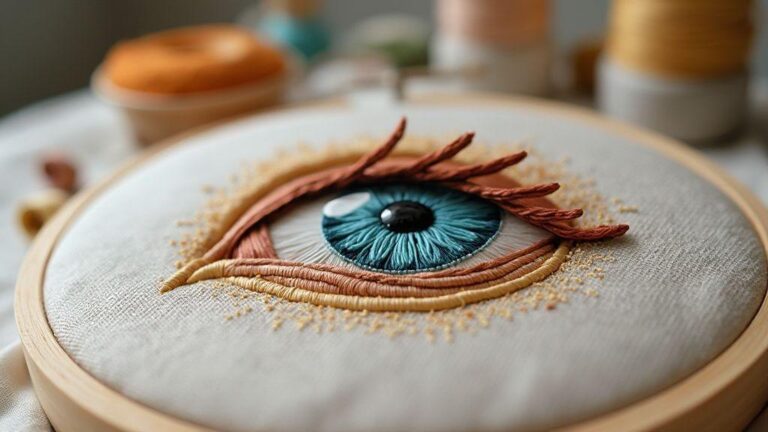
Surface embroidery adds texture and personality with backstitch, stem stitch, and French knots. Plan where eyes, noses, or motifs sit and choose thread colors that pop against the yarn. Practice on scraps first to gain confidence.
Choose a focal motif that matches your toy’s personality. For round faces, place a small patch above the nose to maintain balance. Match embroidery weight to crochet gauge for visual harmony. Repeat motifs consistently to create a cohesive design across the piece.
Finish with clean threads and tight knots. Secure ends inside and trim close. If you’re worried about fraying, a small amount of fabric glue can help, but test first on a scrap. The goal is charm without stiffness or bulk.
Planning motifs for round shapes
For round shapes, place designs slightly off-center to guide the eye along the curve. Mark stitch positions with a light pencil and test on scraps. Use motifs that repeat around the circumference, breaking larger designs into smaller, evenly spaced parts to preserve readability. Color placement can enhance roundness: lighter threads at the top for highlight, darker tones at the bottom for shadow.
Adjusting size for small amigurumi
Small amigurumi require tighter, cleaner embroidery to stay readable. Use a fine needle and thinner threads, and consider magnification for precision. Space features carefully to avoid crowding and test sizing at the final scale with scraps before finishing.
Scale guide for prints
Maintain a consistent base unit for prints, ensuring every motif scales proportionally. Larger motifs should be farther apart, with smaller details filling gaps for balance. Print a test layout to check rhythm before stitching to fabric. Consistency keeps patterns readable and professional.
How to embroider amigurumi: step-by-step workflow
A practical path from planning to finishing helps you add embroidery confidently. Start with a simple design and a ready toolkit: embroidery floss, small needle, erasable pen, scissors, and scraps for practice. Transfer your design with care, then stitch in layers. Keep threads organized and test a stitch on scrap before committing to the toy. Finish by trimming ends, lightly pressing, and sealing knots if needed for durability.
Marking, stitching, and finishing order
Plan on scrap first, then transfer to the toy. Start with light colors and small stitches, layering for depth as needed. Finish the back neatly with secure knots, then lightly press to set the embroidery.
Practice swatches and tension control
Practice on scraps to match yarn feel and tension. Aim for even tension to avoid puckers or wobbly lines. Once comfortable, apply that control to your amigurumi for clean, steady results.
Workflow checklist
- Sketch and mark a scrap, then transfer to the toy.
- Thread your needle and test tension on scrap.
- Begin with a simple stitch, then add details in layers.
- Secure threads on the back and trim close.
- Lightly press to set stitches, if needed.
Amigurumi embroidery patterns and design ideas
Embroidery adds personality and story to your amigurumi. Start with simple motifs to build confidence, then expand to bolder designs. Balance visible detail with readability on social photos or in a shop. Practice on swatches to keep final pieces polished.
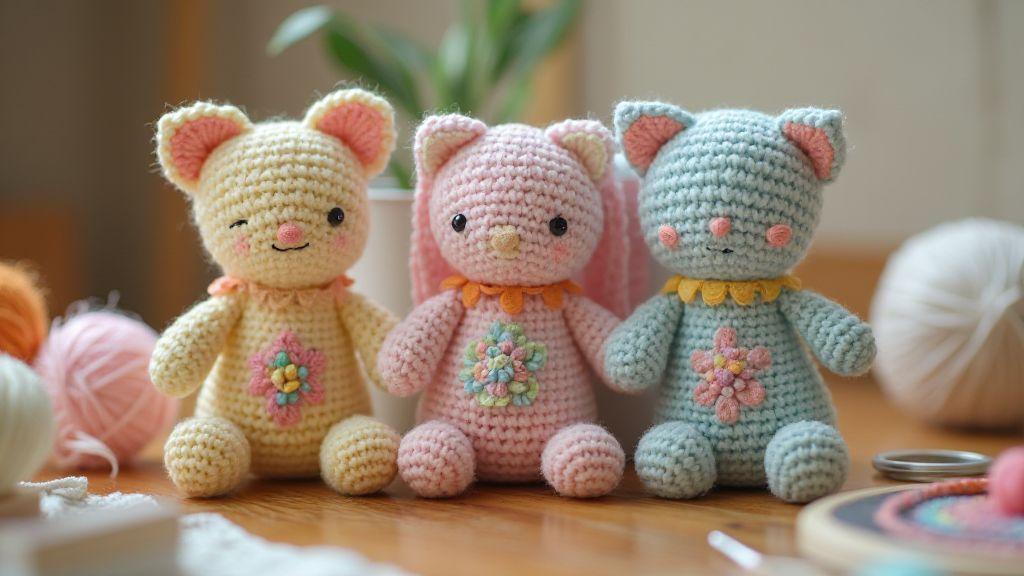
- Simple floral and geometric motifs: French knots and satin stitches create charm at amigurumi scale. Use two to three colors and keep stitch size steady for cohesive pieces.
- Geometric motifs: Lines, chevrons, and tiny triangles read well on limbs or ears. Use backstitch or stem stitch for clean edges and limit shading to two tones. Repeat a single motif across pieces to build confidence.
Creating custom printed designs on amigurumi
Custom designs begin with a clear plan: sketch on paper, map stitches on the toy, and use one- to two-tone palettes for legibility and durability. Limit fine detail to mimic a print’s bold look. Satin stitches or long stitches work well for color blocks, and a light spray sealer can protect the design on pieces that see heavy use—test on scrap first.
If you want to share your custom designs, photograph them with good lighting and a plain background. Your work can showcase Adding Patterns and Prints to Amigurumi With Embroidery, blending art and craft into a cohesive product.
Pattern sources and copyright
Respect pattern licenses. Use patterns labeled for personal use for your own projects, and seek permission or commercial licenses for items you plan to sell. Credit designers when required and keep license documentation. You can also rely on public-domain motifs or original designs to avoid licensing issues and build a personal motif library for future pieces.
Troubleshooting and professional finishing for amigurumi embroidery
If puckering, loose stitches, or misaligned motifs appear, check yarn tension and hoop grip. Retrace with slightly looser tension on the back to keep the front neat. Verify needle size and floss thickness, since mismatches can pull lines out of alignment. Practice makes perfect: small adjustments in tension, stitch length, and placement add up to a polished finish. Work in good light and use a contrasting back thread to spot stray strands quickly. Consistency in stitch counts and paths helps mirrored patterns stay cohesive.
To fix misalignments, retrace the problem area, loosen front stitches, and reposition in small steps. Use a finer needle and keep a firm grip on the hoop to minimize shifting. Measure every stitch path to prevent cumulative errors.
Reinforce high-wear areas with a second layer of stitching—backstitch or satin stitch—using thread that blends or contrasts intentionally for strength. Secure thread tails with extra knots and weave ends into the back. For knitted or crocheted bodies, reinforce where embroidery attaches before finishing seams. Durability comes from thoughtful reinforcement, not a single heavy stitch.
Washing and care instructions
Hand wash in cool water with a mild detergent. Gently swirl, avoid twisting, and rinse well. Lay flat to dry away from direct sunlight. If color bleed is a concern, test a hidden edge with a damp cloth before full washing. Trim loose threads when dry and re-seal knots with a small amount of embroidery glue or fabric glue after testing on a scrap. Regular care keeps your work pristine and reduces major fixes later.
If you’d like to focus specifically on Adding Patterns and Prints to Amigurumi With Embroidery, consider the strategies above as a practical path toward consistently polished, wearable character designs.
Clara Fern — Crochet Artist & Amigurumi Designer
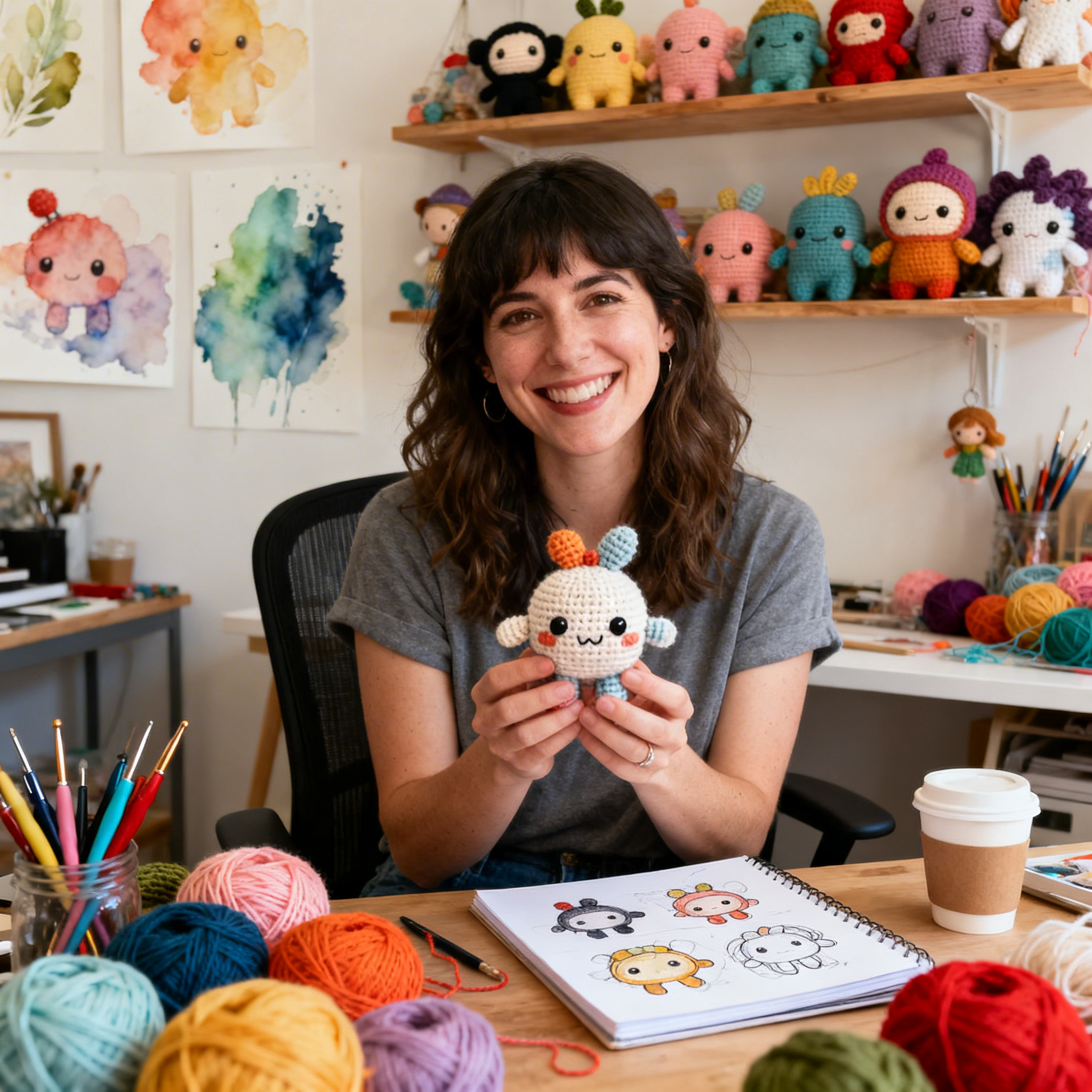
Clara Fern is a crochet artist and amigurumi designer based in Austin, Texas. With 9 years of experience working with yarn and hook, she transformed a lifelong passion for handcraft into a creative mission: making amigurumi accessible, fun, and deeply rewarding for crafters of all levels.
Clara discovered amigurumi during a trip to Japan in 2017, where she fell in love with the art of bringing tiny characters to life through crochet. Back home in Texas, she spent years studying color theory, design principles, and advanced crochet techniques — developing her own signature style that blends kawaii aesthetics with original character design.
Through maclafersa.com, Clara shares everything she has learned — from choosing the right yarn and reading your first pattern, to designing fully original amigurumi characters from scratch. Her writing is known for being clear, detailed, and genuinely helpful, with no steps skipped and no secrets kept.
When she’s not crocheting, Clara enjoys watercolor painting, visiting local yarn shops, and drinking way too much coffee while sketching new character ideas.