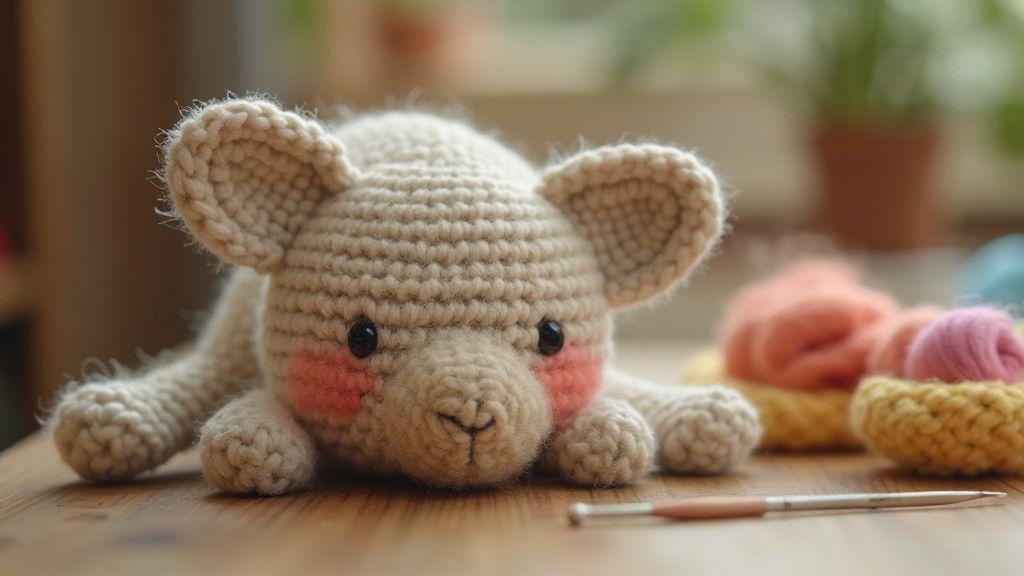
How to Use Needle Felting to Add Detail to Crochet Amigurumi
Tools for Needle Felting on Crochet
Needle felting on crochet lets you add tiny, precise details to your finished amigurumi. Start with a basic setup: a few felting needles, a proper pad, and a comfortable holder. The right tools reduce hand fatigue and give you better control over shape and texture, helping your crochet work look cleaner and more professional. Practice on scraps before touching your main piece to learn needle depth, pressure, and passes for a smooth finish. Keep your workspace organized, store needles with caps on, and use a stand or holder to stay safe and efficient. With the right setup, your crochet work can evolve from good to great.
As you grow more confident, you’ll appreciate how tools guide your technique. A firm felting pad slows the needle a bit while protecting fabric and fingers. A larger pad gives room to work without worrying about poking through. The right grip and weight reduce fatigue, keeping long sessions enjoyable. Your finished pieces stay tidy and stable, thanks to tools that support clean lines and secure stitches.
Best felting needles for amigurumi
You’ll want a small selection of needles to handle different details. A standard multi-needle set is perfect for bulk work, while a finer needle helps with delicate eyes, noses, or tiny texture. For tight, clean lines, a sharp needle is ideal; for soft, fuzzy edges, a slightly duller needle can be kinder to the yarn and produce smoother shading. Start with a few sizes and grow as your technique improves.
Switching between needles should feel natural. Keep extras in a magnetic holder or small tin to prevent rolling away. For tiny features, a fine needle offers precision and reduces the risk of snapping delicate yarns. If a needle breaks, replace it and learn where the break happened to avoid repeating the issue. For beginners, a basic 2- or 3-needle set covers most needs; you can add a finer point or a mid-range needle later.
Felting pads and holders
A solid felting pad is your foundation. It absorbs impact so you don’t push through the crochet fabric. Choose a pad comfortable for long sessions and that stays in place on your workspace. A good pad helps control depth and keeps stitches neat as you add texture. A pad that’s too soft makes crisp edges hard; one that’s too hard can miss small details.
A holder keeps needles organized and ready. A good holder minimizes hand fatigue by giving a steady grip and easy angle changes. Look for one that accommodates different needle sizes without wobble and protects your fingers from slips. Pair these with a small tray for spare needles to breeze through sections without interrupting your flow.
Needle sizes
Choose a range from fine to medium for most amigurumi tasks. A finer size gives control on details like eyes or tiny stitching lines. A medium size handles larger shaping work without bending yarn or leaving jagged edges. Having a couple of different sizes nearby means you can switch without losing momentum. Practice with each size to see how it affects depth, fuzz, and the final look.
How to Use Needle Felting to Add Detail to Crochet Amigurumi
How to Use Needle Felting to Add Detail to Crochet Amigurumi is a great starting point for your technique. You’ll outline features with light passes, then build up color and texture with careful, controlled pokes. Keep your piece secured on the pad, and don’t rush—the goal is crisp shapes and subtle shading, not a rough, glued-on look.
Repetition makes the detail feel natural. A few dozen light passes in the right spots create depth without hard edges. For a soft blush, use short, gentle pokes around the area rather than trying to cover it all at once. With time, you’ll find a rhythm that suits your crochet style and the character you’re bringing to life.
If you want to level up, combine felting with minimal sewing or embroidery accents. Needle felting adds depth without bulky stitches, and small, deliberate fibers can transform a flat surface into a lifelike feature. It’s fast and forgiving once you master gentle taps and even pressure. Your amigurumi will look more finished, and you’ll enjoy the creative control.
Choosing wool roving for amigurumi needle felting
When you pick wool roving for amigurumi, you set the overall look. Choose roving that lightly felts, holds shape, and sheds minimally. Your choice determines softness or firmness and how easy it is to add tiny details. Start with roving labeled for needle felting to ensure consistent thickness and loft.
Consider how you’ll handle the finished piece. For a plush toy, choose roving with high loft that compresses softly. For sharper features like eyes or claws, opt for a slightly denser roving that holds its shape. Some rovings shed less than others; look for clean, uniform locks. A bit of trial and error with a few colors helps you feel the fibers and decide what your project needs.
Check fiber content. Merino is soft and popular for faces, but blends with nylon or sturdier wool can enhance durability. Aim for a balance between softness, control, and longevity. With practice, you’ll learn which brands give you consistent thickness and a predictable finish.
Wool types and loft
Wool type matters because it guides how shapes take form. Merino offers a silky, soft feel great for faces and tiny features but can compress quickly. Corriedale or New Wool often provide more body for forming limbs or cheeks without flattening. Test roving by poking and shaping to find a balance between resilience and pliability.
Loft is the space between fibers. High loft roving feels fluffy and light, ideal for round builds. Medium loft gives better control for noses, ears, and small details. Low loft holds edges for sharp, defined features. Match loft to the feature you’re crafting, not every part requiring one fiber.
Different brands label loft differently; trust your hands over the tag. A pinch should spring back a bit and stay where placed. If it stays too bouncy and won’t settle, it might be too high loft for small parts. Practice with colors to feel how loft affects your work, then pick a couple favorites.
Color selection for realistic detail
Color choice brings amigurumi to life. Start with a neutral base close to your character’s main body tone, then add dimension with subtle variations rather than bold, flat colors. For details, consider light and shadow: lighter highlights on cheeks and noses, darker hues for folds or paws. For eyes, mix a touch of black with charcoal gray to avoid a flat dot.
Limit your palette to 3–4 main body colors and 2–3 accents for shading and features. If unsure, buy small amounts of several colors, then narrow down to favorites. Depth and character trump a rainbow of flat tones.
Roving thickness
Thicker roving gives bulk quickly but can hinder tiny details. Thinner roving builds fine features with precision but wears faster. For most amigurumi, use a mix: medium thickness for the body, thinner options for eyes, ears, and tiny noses.
If you’re new, test strips from each batch to learn how many pokes compress to your desired shape. A good thickness holds after a few pokes, not crumbly. As you gain confidence, switch thickness for specific areas. Layer multiple thin passes for crisper features rather than one thick pass.
Preparing your crochet amigurumi for felting
Felting can add firmness and detail, but prep matters. Check stitches; tight, even stitches hold up better during felting. Reinforce weak areas before you begin. Think of prep as laying a solid foundation for a sculpture. After you finish, you’ll notice crisper surface fidelity when you follow prep steps.
Consider yarn and stuffing. Some fibers felt faster, and over-felting can shrink more than expected. If you used blends, test a small swatch to predict felting requirements. Keep notes on yarn weight and stitch density to guide your work.
Plan which parts stay soft and which will harden. Map out where to apply more pressure so you maintain control. Preparation is not glamorous, but it’s the difference between a squishy toy and a display-worthy piece.
Cleaning and stuffing checks
Before felting, tidy loose ends and seams. Trim stray tails and weave in ends to prevent snagging. Check stuffing balance; redistribute to improve poseability and softness. A well-balanced starting point keeps the final shape accurate after felting.
Marking placement for details
Mark placement for eyes, noses, and other details with a washable fabric pen or light stitch guide. Plan features before felting to maintain proportions and avoid guessing. Consider symmetry: central axis for rounded characters; small shifts can add personality when planned.
Stabilize fabric
Gently firm the surface without over-tightening. Use a light press or slow, even rubbing to stabilize as felting begins. Soft areas may need less pressure, edges more. Use small, controlled strokes around marked details to keep them precise. When the fabric feels sturdy and marks stay visible, you can start felting with confidence.
Step-by-step small detail work
Start with a tiny amount of wool in the desired color. Roll it flat on the surface, then press the needle into both wool and crochet, pulling fibers into shape. For an eye, work slowly with several tiny pricks. Tuck the wool into stitches so it stays in place without protruding. Lightly blend edges into the surrounding yarn to soften transitions. Keep your work area steady and hold your piece for control. Build smooth, rounded features; avoid deep holes or flat spots. Add color gradually, checking from different angles. When satisfied, give a final, tiny prick to set loose fibers.
Start with light tacking then firm felting
Begin with light tacking to establish rough shape, then switch to firmer passes to lock in the detail. Use steadier, repetitive passes to embed fibers. If color smears, reorient your needle. Check symmetry and balance from multiple angles, correcting with light tacking if needed. With practice, you’ll know how hard to press and how many passes you need for a durable finish.
Short felting passes
Keep passes short and shallow for precise detail. Use brief taps to create depth without harsh lines. Inspect from different angles to catch uneven areas early. Short passes yield a clean, professional finish that withstands handling.
Needle felting facial features amigurumi
Embed facial features directly for precise, durable details. Plan feature placement for the most expressive face. Use bold stitches and steady hands; tiny pushes create the best outcomes. Practice reduces reliance on glue and increases safety and confidence in the final look. Neat felting emphasizes depth as much as size.
Bold detail helps. Start with simple eyes, then add shading around sockets for life without overdoing it. Compare two positions before committing. When needle felting, keep fibers tight and needle angles consistent to avoid loose spots or pilling. Refine technique for durability with short, controlled taps and by rotating your piece to check symmetry.
Building eyes and eyebrows
Place eyes with intent. Mark spots lightly, then felt eyes with small, consistent punches. Add white highlights sparingly for sparkle. Eyebrows frame mood; angle downward for boldness or lift for curiosity. Use a darker shade of the same color family and short strokes to mimic hair texture. If brow corrections are needed, adjust in small increments to avoid holes. Finish by smoothing surrounding skin with gentle taps to secure features.
Forming noses and mouths
A nose is a focal point; build it with deliberate pokes, layering color until it sits slightly raised. For a soft line, blend the edge into surrounding fabric with feathery taps. For mouths, start with a shallow line or dot; a gentle curve conveys a smile or reserved look. Add depth with a second color pass at the lip base and blend outward. Anchor noses and mouths with secure edges and check from multiple angles to ensure correct profile.
Symmetry tips
Compare features on both sides as you work. Use the same number of passes per side and rotate your piece to view from angles. If one eye sits higher, rework surrounding areas to regain balance. Small adjustments can correct major imbalance, resulting in a face that reads clearly and professionally.
Blending colors needle felting amigurumi
Color blending makes your amigurumi pop. Start with two or three adjacent hues on the color wheel and layer slowly. Compare against a reference image in natural light. Work in short, tight strokes with the needle at a shallow angle to avoid cutting into the shape. Build color gradually, adding small amounts of shade every few passes. If you see a harsh line, blend with lighter color at the edge and smooth boundaries with circular motions. Blend on the surface by mixing fibers on a patch before attaching. Test blends in different lighting and seal with a light pass to set fibers.
Layering thin roving for gradients
Layer thin roving for smooth gradients. Start with a base color and add a touch of the next shade at the edge with small, overlapping patches to keep surface even. Layer in short sessions, checking from different angles. Adjust needle pressure to prevent chunkiness: lighter at the outer edge, firmer on inner areas. If a ridge forms, blend with adjacent color to hide the seam.
Keep a tray of shade cards handy to compare hues. When layering is done, give a gentle overall pass to melt fibers together for a unified gradient.
Feath ERing edges for soft blends
Feathering edges creates soft, airbrushed transitions. Begin at the color boundary and work inward with a light touch. Use short, feathery motions to pull fibers into neighboring shade. Rotate your work to maintain even pressure around curves and feather from multiple directions on curved edges. Keep the needle at a shallow angle to blend rather than gouge. Feathering strengthens durability by reducing fraying and creates a natural glow.
Color matches
Match colors by comparing shades in natural light. If between two hues, lean toward the cooler shade for shadows or the warmer one for highlights. Don’t chase perfect symmetry; aim for natural blends that shift with light. If the piece looks off in one light, check in another and adjust. Small tweaks can improve fidelity.
Securing felted details on crochet
To keep details in place, choose the right needle and thread for your yarn weight. For bulky crochet, use sturdy anchor threads (like strong cotton) and a small sharp needle to weave near the surface. When placing felted accents, pierce from the back so knots stay inside. Use small, deliberate stitches that bite into both felt and crochet stitches for lasting bonds. Space stitches evenly to avoid looseness over time.
Attach larger details by basting first with removable thread, then secure with stronger stitches. A tiny amount of fabric glue can be used under the detail if your project won’t be exposed to cleaning solvents. Trim threads close to knots and weave them in to hide ends, ensuring a clean finish.
Test the attachment by gently tugging from multiple angles. If it feels wobbly, add a secure pass with a backstitch or diagonal stitch to lock it in. A solid securing method makes your piece durable and professional.
Anchoring large felted pieces
Plan layout before attaching large felted sections. Attach the center area first, then work outward to edges to distribute weight evenly and prevent warping. Use longer running stitches for the main body and shorter, tighter stitches at edges. Hide contrasting thread by weaving as you go for a seamless look.
Alternate stitch types for density and texture; backstitches provide grip without bulk, and small cross-stitches lock corners without stiffness. Pin large leaves or orbs with dressmaker’s pins during stitching to maintain alignment. Finish with a soft press if yarn allows and trim any loose threads.
For wash or heavy handling, consider a light spray of fabric glue along edges (test first). Maintain even tension to avoid puckers. With care, large felted elements will feel as sturdy as they look.
Reinforcing seams and joins
Choose the right join technique. Start with a solid base stitch along the seam, then fold the edge inward and stitch from the inside for a clean surface look. A double pass locks layers and reduces fraying. For curved edges, use short, curved stitches to follow contour, keeping flexibility without sacrificing strength. If transitioning between colors, anchor the border with extra stitches to prevent color lift.
Texture matters too. For a seamless look, use matching thread and pull snug enough to flatten the join without a shiny ridge. Weave additional threads through the felted surface at ends to resist tugging. Always check seams on both sides; a strong seam will look neat, while a weak one may curl or gap.
Trim excess thread and weave ends securely. If you’re worried about movement after washing, consider a light catch-stitch at critical joints to lock everything in place. Your pieces will stay tight and look crisp, even after daily use.
Blocking final shape
Blocking sets the final look and size. After securing all felting elements and seams, block according to yarn care instructions. Pin the piece to a foam block in the exact measurements you want, then gently shape corners and curves. Allow to dry completely before removing pins to prevent re-shrinkage or warping. Blocking helps the felted details read as integrated with the crochet for a professional finish. Check the silhouette and adjust as needed so every angle looks clean.
Felting techniques for crochet toys
Treat felting as a finishing touch that complements clean crochet stitches. Use a sharp felting needle with steady hands, letting the toy rest between passes to spot uneven patches. Plan color strategy before you begin and use small penetrations to blend fibers along edges for natural shading. If you want a softer look, tease fibers lightly before felting and set with a gentle pass. Practice on scraps first, then move to the main piece. A light spray of water after felting can settle fibers and remove loose fuzz.
Sculpting contours and planes
Shape the face and body like a sculpture, defining cheeks, jawline, and brow with short passes, then blending into surrounding areas. Build high points and keep the surface soft enough to read as natural curvature. Check symmetry from both sides and adjust with tiny moves.
Longer, gentler strokes work well on side surfaces and limbs to create smooth transitions between planes. If a plane looks flat, add a few stitches nearby to catch light just right. Keep pressure even and movements deliberate to avoid pinpricks that disrupt the fabric’s texture. The result is a three-dimensional presence with character.
Creating texture and fur effects
Texture brings crochet toys to life. Start with base fibers, then add directional work to mimic fur. Short, quick passes create a velvet feel; longer passes build fur along the back or tail. Layer fibers with fringe-like wisps and blend into the surface for a natural finish. For wirier texture, use sturdier fibers and a firmer needle, but go slowly. A softer plush texture can be achieved by teasing fibers with a comb or fingers before felting.
Color blending elevates fur. Create gradients in tiny, gradual steps, not large jumps. Use short passes to mix fibers at seams for natural shading that catches light. A cohesive finish emerges when color gradients read as one soft wash rather than separate blocks.
Needle felting tips for amigurumi beginners
Practice on a small soft core ball before your main project. Use different densities of wool for a clean edge (firmer core) and soft curves (softer cover). Keep hands safe with a foam pad under your work. Plan facial features early, then attach them after the body is formed. Use a fine needle for details and a medium one for larger shapes. Keep movements controlled and small; large jabs waste wool and create holes. Build facial features in layers for a plush look and better control. Stay organized with color samples and keep your pads labeled to save time.
Common mistakes to avoid
Avoid over-felting in one spot—work in thin layers and assess the shape. Don’t create rough, jagged edges; blend by rotating and weaving as you mat the wool. Don’t neglect safety and hygiene: use clean wool and hands, and avoid sharing needles to prevent residue transfer. Store needles capped and dry to prevent rust or dulling.
Simple practice exercises
Start with a tiny practice head: shape a round ball, add small ears and a nose, and position eyes with proper spacing. Create a simple animal face by attaching a muzzle and blending edges. Practice smoothing edges on flat shapes like hearts or leaves to transfer to more complex outfits later.
Safety and care
Always use a protective mat and keep fingers away from the needle’s bite. Use a thimble or finger guard when pressing or shaping hard areas. If you poke your finger, clean the wound and pause work. Store needles with caps on and in a dry place to prevent rust or dulling.
How to Use Needle Felting to Add Detail to Crochet Amigurumi: Quick Recap
- Plan features before felting and work in small, deliberate passes.
- Use a mix of needle sizes for different details and a firm pad for control.
- Layer color gradually for depth, blending edges to avoid harsh lines.
- Secure details with careful stitching or temporary baste, then reinforce.
- Practice on scraps to gauge pressure, angle, and speed before working on your project.
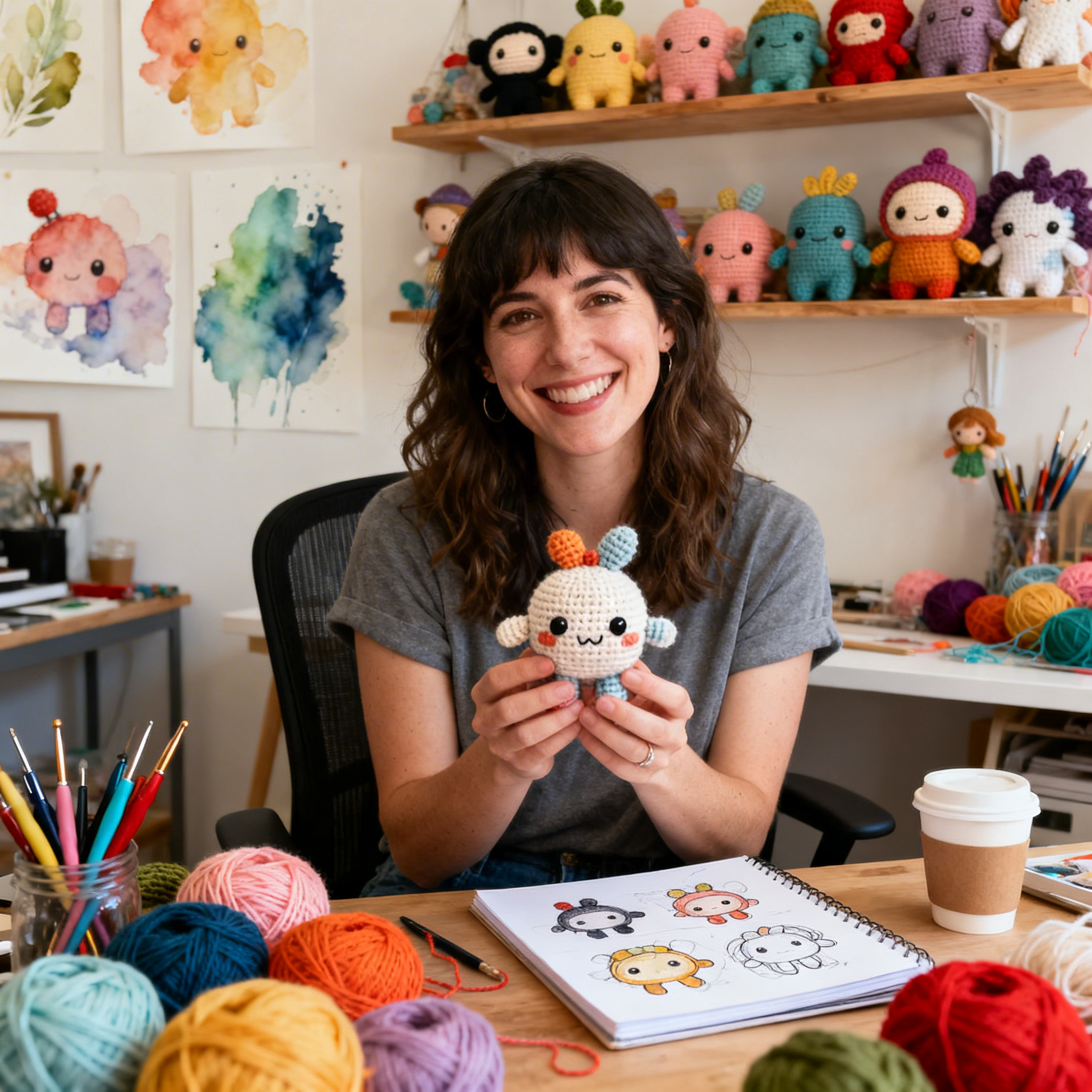
Clara Fern — Crochet Artist & Amigurumi Designer
Clara Fern is a crochet artist and amigurumi designer based in Austin, Texas. With 9 years of experience working with yarn and hook, she transformed a lifelong passion for handcraft into a creative mission: making amigurumi accessible, fun, and deeply rewarding for crafters of all levels.
Clara discovered amigurumi during a trip to Japan in 2017, where she fell in love with the art of bringing tiny characters to life through crochet. Back home in Texas, she spent years studying color theory, design principles, and advanced crochet techniques — developing her own signature style that blends kawaii aesthetics with original character design.
Through maclafersa.com, Clara shares everything she has learned — from choosing the right yarn and reading your first pattern, to designing fully original amigurumi characters from scratch. Her writing is known for being clear, detailed, and genuinely helpful, with no steps skipped and no secrets kept.
When she’s not crocheting, Clara enjoys watercolor painting, visiting local yarn shops, and drinking way too much coffee while sketching new character ideas.