How to Join Flat Pieces to Round Pieces in Amigurumi
How to Join Flat Pieces to Round Pieces in Amigurumi: Quick Start Guide
Mastering the transition from flat crocheted pieces to a rounded amigurumi requires the right approach and steady technique. This quick start guide highlights the core steps, stitches, and finishing tips you’ll use when you embark on How to Join Flat Pieces to Round Pieces in Amigurumi, so your toy stays sturdy and cute through play.
Essential tools to join flat to round amigurumi
You’re about to turn flat crocheted pieces into a seamless, rounded toy, so choosing the right tools matters. When you stitch, your goal is clean joins and a sturdy finish that holds up to play. Start with a comfortable set of tools that feel right in your hands, not just the fanciest ones on the market. A good fabric or craft pin cushion helps you keep pieces organized, while a sharp pair of embroidery scissors makes snipping yarn easy without fraying. You’ll want a reliable tapestry needle with a big eye for chunky yarns and a blunt tip to protect the fabric as you sew. Keep a small pair of snips, a pin or two, and a few binder clips handy to hold pieces in place as you work. The better your tools, the faster you’ll move from flat to round with confidence, so invest in comfort, not flash.
You’ll also benefit from a few optional extras that make joining easier. A yarn needle with a large blunt eye will glide through thicker yarns when you’re closing gaps. A sew-along guide or stitch marker can help you keep track of where to sew, especially when you merge flat sections into a round form. If you use a seam roller or a gentle clay tool, you can press joins lightly to set them before final stitching, but be careful not to flatten your stitches. Finally, a soft, lint-free cloth or microfiber towel helps clean threads as you go, so your work stays neat and tidy from start to finish.
Over time you’ll learn which tools you reach for most. Some crafters love magnetic bowls for holding pins, while others prefer a simple dish. The key is consistency: use tools that reduce snagging and keep your yarn smooth, so your How to Join Flat Pieces to Round Pieces in Amigurumi becomes a clean, sturdy process you can repeat.
Needles and hooks for sewing flat to round amigurumi
The right needles and hooks make a big difference when you sew flat pieces to round pieces. A blunt-tipped tapestry needle is your best friend here because it slides through yarn without splitting fibers. Choose a size that matches your yarn weight—too large and you’ll leave gaps; too small and stitching becomes tedious. If you’re using thick yarn, a larger eye helps you pull through quickly, so you don’t get frustrated halfway. For finer yarns, a smaller needle keeps your joins neat and tight.
You’ll want to have a few options on hand. A medium-length tapestry needle covers most projects, while a longer one can help you reach tight corners on round shapes. Keep a spare needle in your pinning kit in case you bend one from pulling through stiff joins. A crochet hook isn’t just for creating rings; you’ll sometimes use it to pull yarn through tight spots or to tighten knots before you bury ends. Remember, the goal is secure joins, so don’t rush and choose a needle size that lets you thread smoothly and sew with steady control.
As you practice, you’ll notice which needles feel best with your yarn. Some people prefer a slightly longer blunt needle for flat-to-round transitions, while others like a ceramic tip for smooth gliding. Test a small sample piece first to confirm your stitches sit flat and even. Your comfort with the needle directly affects how clean your join looks, so adopt the setup that makes your hands happy and your stitches neat.
Best yarn and stuffing for attach flat pieces to round pieces
Your yarn choice affects both strength and look when attaching flat pieces to round shapes. For beginners, a medium-weight acrylic yarn is forgiving, easy to see when you’re stitching, and holds up to regular play. If you’re sewing a plush toy, consider a softer blend that keeps a fluffy feel without shedding. For tighter seams that stay put, a slightly plied yarn adds stability and reduces pilling. When you bury yarn ends, thicker yarn hides the knot better and looks smoother on the outside.
Stuffing matters just as much as yarn. Choose a fill that gives you a soft, rounded body without looking lumpy. Polyfill works well for most projects, but you may want a denser option for joints that need a little more stability. Avoid overstuffing flat-to-round joins, which can stretch and distort the shape. Instead, add small amounts at a time, pausing to shape as you go. If you’re finishing a feature like ears or limbs, use a slightly firmer fill there to maintain definition while keeping the overall plush feel.
When you attach flat pieces, matching fiber content between yarn and stuffing helps with consistency. If you use a cotton yarn, a cotton-based stuffing provides a natural balance. For acrylic or blended yarns, standard polyfill blends in well. You’ll notice that the right pairing makes your transitions look seamless and your piece hug the round form without puckering.
Pinning and clips to align pieces
Pinning is your alignment cheat sheet. Before you stitch, lay out the flat pieces on the round parts and use pins to mark key points. Don’t over-pin; a few well-placed pins hold the shape without crushing it. Clips are handy when you’re working with slick yarns or round shapes that want to move on you. They grip without leaving marks, so your edges stay clean. As you pin, think about the flow of the finished piece. The goal is to guide, not to force, so you can adjust as needed.
You’ll want to check alignment from multiple angles. Step back and look for symmetry as you pin. If you notice a mismatch, tweak the position a little and re-pin. Once you’re satisfied, you can begin stitching with more confidence, knowing your pieces won’t shift. Remember to remove pins as you sew and keep the pins away from your needle to avoid accidents. The right pinning setup makes the join smooth and helps you reach a professional finish.
When you’re done stitching, use a final pin or two to hold the last stitches in place while you bury ends. A quick clip at the end can keep the end threads away from the main work, so nothing tangles before you finish. Pinning and clips aren’t just tiny steps; they’re the quiet champions of a clean, precise join.
Pick the right stitch for sewing flat to round crochet
When you sew flat pieces to round pieces, the stitch you pick changes how the seam looks and holds. You want a stitch that lies flat, draws in evenly, and keeps the curvature smooth. If you choose the wrong stitch, your join can pucker or feel bumpy. You’ll feel the difference when you gently press your work and it stays neat. The key is to test a small sample first: line up edges, sew slowly, and check how the fabric drapes. Your goal is a seam that blends with the fabric texture, not a bold line that screams sewn. Take notes on tension, and keep a few common stitches in your toolkit for different shapes and densities.
The stitch you use also depends on the yarn and hook size you chose. A denser yarn needs a stitch that doesn’t pull too tight, or you’ll distort the shape. A looser yarn might need more securing so the piece doesn’t shift. For flat-to-round joins, you’ll often rely on tight, controlled stitches so the transition feels seamless, almost invisible. Practice on scrap pieces that mimic your project’s dimensions. When you’re confident, you’ll sew with purpose, not guesswork, and your final piece will look polished.
Remember: the right stitch isn’t just about looks. It’s about durability for playwear, display pieces, or dolls you’ll handle a lot. Your goal is a join that endures washing, handling, and time. Keep the seam consistent, and you’ll enjoy a professional finish that boosts your whole project’s quality.
When to use whip stitch amigurumi join
Whip stitch is great when you want a tight, invisible seam that lies flat. You’ll use it for joining flat shapes to round parts where you don’t want visible sewing lines. It’s fast once you get the rhythm, and it grips evenly as you go around the edge. If your yarn is smooth and your stitches are even, the whip stitch will disappear into the fabric. It’s especially handy for joining parts with similar thickness, like a head to a neck.
If you’re dealing with small pieces, whip stitch helps you keep control. You can pull evenly, and the stitches stay close to the edge, so the join looks neat from both sides. It’s a good option when you need a durable seam without a lot of bulk. Just work slowly, catching the fabric on the same side with each pass, and you’ll end up with a clean finish that holds up to handling.
When to avoid whip stitch? If your edges curl or the yarn frays easily, you might see gaps. In that case, you may prefer a different join that spreads the tension more softly. But for most amigurumi pieces where you want a tight, discreet seam, whip stitch is your Go-To.
When to use mattress stitch crochet amigurumi
Mattress stitch is your friend when you want a seam that fades into the fabric, especially with denser yarns. It hides the seam line between pieces as if the two sides were knitted into one fabric. You’ll see a nearly invisible join on the right side, which is perfect for flat-to-round transitions that need to look seamless. It takes a touch longer, but the result is worth it when you want professional polish.
Use mattress stitch when you’re joining pieces with slightly different widths or when you need to match curves and edges very precisely. It’s ideal for head-to-body joins or around rounded corners where you want the seam to breathe and flex without pulling. You’ll stitch in a ladder-like line, then snug the seam to nestle the edges together, and the fabric will behave as one piece.
If you’re new to mattress stitch, practice on scraps first. You’ll learn to insert your needle between rows so the join sits flat. Once you get the hang of it, you’ll love how quiet and clean the finish looks on your amigurumi.
Single crochet join flat round basics
Single crochet join is simple and reliable for most flat-to-round joins. You’ll work a single crochet along the edge of the flat piece while catching the top of the round piece, keeping your tension steady. This stitch creates a neat, compact seam that lies flat without too much bulk. It’s quick and familiar if you’ve been crocheting a while, so it’s a great dependable option when you’re short on time but still want a strong seam.
To start, align your edges, insert your hook from the inside of the round piece, and single crochet into the edge of the flat piece. Move slowly, ensuring your stitches are evenly spaced. You want the seam to read as part of the fabric, not as a separate line. If you find the seam puckering, loosen slightly or pull more evenly as you go. With practice, you’ll achieve a clean, sturdy finish that lasts through play and handling.
Create an invisible seam in amigurumi
You want your amigurumi to look seamless, like it grew from one piece. An invisible seam hides the join so your work looks whole and professional. Start by choosing a yarn color that matches your main fabric. When you pick the stitch, use a whipstitch or ladder stitch that sits flat and pulls tight without puckering. You’ll notice the difference right away—the seam disappears, and your creature looks magically complete.
Next, plan your pieces so you don’t see obvious breaks where parts connect. Place the pieces with the right alignment and keep the tension steady as you sew. I find it helps to sew a little at a time, pausing to check how the edge sits. If your stitches loom large, you may need to tighten them or switch to a closer, finer stitch. The goal is a line that blends, not a visible seam that shouts where you joined.
Finally, test the surface by gently tugging at the joined area. If any gaps appear, snug the seam a touch more and rework any loose loops. A properly executed invisible seam should feel almost invisible to the touch and look continuous in photos. Practice makes perfect, and with each project you’ll see the join vanish more, leaving you with a flawless finish.
Steps for invisible seam amigurumi
When you start, thread your yarn through a tapestry needle and cut a long tail. Insert the needle into the first stitch just inside the seam line and pull through, keeping your pull even. Use a whipstitch that goes in and out along the edge, making tiny, tight stitches. Keep the stitches evenly spaced and aimed toward the inner side so the seam sits flat.
As you move, stitch along the seam length, catching only the outer loops of each piece. Don’t pull too hard, or you’ll distort the shape. Leave a tiny gap at the end to weave in the last tail invisibly—this keeps the finish neat. When you’re done, knot once, thread back through a few stitches, and clip close to the fabric again. The result should be a clean, flat join with no visible line.
To solidify the look, sprinkle a touch of blocking or careful shaping if your yarn relaxes after washing. The seam should stay flat and barely perceptible. If you’re unsure, compare with a test swatch first—practice makes your invisible seam sharper, faster, and more reliable.
Grafting crochet amigurumi for a smooth join
Grafting lets you join pieces as if they were one. Align the pieces perfectly, then use a small, close ladder stitch that threads through both sides. Work from the inside out, catching only the live loops, so the surface stays smooth. As you go, you’ll notice the join line softening and becoming invisible.
You’ll want to keep tension steady and avoid pulling too tight. If the graft shows a tiny ridge, backtrack a stitch or two and rework with lighter tension. When finished, weave in the tail through a few surrounding stitches and snip clean. The graft should feel like one continuous piece when you run your fingers over it.
With grafting, your color and texture stay consistent across joins. It’s the trick that makes necks, limbs, and mouths look naturally sculpted. Practice on a scrap piece before you try it on your main project to build confidence.
Hide knots and ends for a clean look
Any knot shows up on the surface unless you hide it. Work the end through the inner loops and weave it in across several stitches. Keep your needle angled toward the back so it never makes a visible bump on the outside. If you have multiple ends, secure each one with a snug weave that’s tucked under fibers. A clean finish makes your amigurumi look polished and professional.
Align flat pieces to round pieces amigurumi for a neat fit
You want a neat, smooth join when your flat pieces meet round shapes. Start by laying your pieces flat and lining up the edges exactly where they will meet the curve. Mark a few reference points on both pieces so you know where to align as you sew. When you sew, go slowly and keep your tension even so the edge sits flush against the round surface. If you notice any slight indentation or gap, you can adjust by easing a tiny amount of extra yarn into the seam or by slightly shifting your flat piece to follow the curve. This careful alignment saves you from puckers later and gives your amigurumi a clean, professional look. Remember, the goal is to make the transition feel seamless, not stitched-on.
To get the perfect fit, you should consider the way your stitches pull. Use a flexible stitch that lets the fabric bend without gathering. If your flat piece is too stiff, you’ll get a visible ridge along the seam. Practice on scrap pieces and compare the results to see what technique gives you the least resistance. Try to keep the seam allowance consistent; if one side is wider, the round piece will pull and warp. A consistent seam makes the whole piece feel intentional and sturdy, which is exactly what you want when you’re building something that will be handled or played with.
When you finish, check the seam from multiple angles. Gently pinch as if you’re shaping the round area, watching how the flat edge sits against it. If you see any bulges, rework that portion with a tiny adjustment in your next pass. Your finish line should be invisible to the casual observer, and that only happens when you treat alignment like a craft, not a chore. You’ll notice the improvement in the overall look and durability when your flat-to-round joins disappear into the character of your amigurumi.
Match stitch counts and use markers
Keep your stitch counts in sync so the flat edges meet evenly. Before you begin, count how many stitches run along the edge of the flat piece and mark the same number on the round edge. Use markers at each end and every few stitches in between if the seam is long. This gives you a clear guide, helping you stay on track as you sew. If you lose your place, you can recheck the markers instead of pulling the seam apart to count again. Matching stitch counts is the backbone of a clean, professional join.
As you sew, maintain an even rhythm and pace. Sudden gaps or tight pulls will show up as puckers along the seam. If you find you’re deviating from your marker plan, pause and realign rather than forcing the fabric to fit. Your markers are not just for setup; they’re your safety net for a precise fit. When you finish, you should be able to run your finger along the seam with no noticeable depth differences where the pieces meet. That smooth transition is the mark of careful work.
Ease and gather to fit curves without puckers
When the edge of a flat piece meets a curve, ease and gather to soften the transition. Slightly loosen your tension on the flat piece and pull in small, even increments as you sew. You should see the curve accept the edge without fighting it. If you’re dealing with a tight curve, you may need to slightly gather the flat piece so it lies flat against the round surface. Practice a few tiny gathers to get the feel of how much ease is needed for different curves.
If you notice any gathering forming on the wrong side, adjust by distributing the gathers more evenly along the seam. The idea is to let the flat piece bend naturally as the round piece curves, not to bunch into a lump. Take your time with this step; a little patience here saves you from hidden puckers once you’re done. With practice, you’ll learn how to judge the right amount of ease for each curve you face.
Use pins to check placement before sewing
Pins are your best friend for a precise fit. Pin the flat and round edges together at regular intervals, then step back and inspect from several angles. If anything looks off, lightly lift the edge and reposition a pin to guide the seam. Use enough pins to keep the edges aligned, but don’t over-pin, which can make the fabric stiff or leave marks on delicate yarn. Checking placement with pins saves you from unpicking later and gives you a chance to correct early.
As you pin, think about where your seam allowance will be, and make sure the pins don’t intrude into where you’ll sew. When you’re satisfied, remove the pins one by one as you sew, to keep the fabric from shifting. A correctly pinned seam feels effortless when you stitch, and the result is a crisp, professional join that holds up to handling.
Use single crochet join flat round with confidence
You’ll feel confident when you master the single crochet join. Start by lining up your flat round edges so they sit neatly against each other. You’ll insert your hook into the first stitch of the round and the first stitch of the edge you’re joining, then pull through to create a tight but flexible seam. Keep a steady pace and don’t rush; a calm rhythm helps your stitches stay even. By the end, you’ll see a seam that lies flat, not puckered, and your project will look professional from the start. When you finish, weave in any loose ends close to the join so nothing peeks out later.
As you practice, you’ll notice the seam sits better if you keep your tension consistent. If you pull too tight, you’ll get distortion and a stiff edge. If you’re too loose, the seam will gape and look sloppy. Aim for a snug catch that closes the gap but still lets the fabric lie flat. A good trick is to pause between each stitch to check how the fabric sits; you’ll adjust faster than you think. With practice, your joins will become invisible along the surface and your piece will feel sturdy as you handle it.
You can bring your project to life by positioning the flat edges carefully before you join. A well-aligned round and flat edge reduce the need for later fixes. If you’re working with a color change, twist the yarn ends lightly to avoid extra bulk at the seam. Remember, your goal is a smooth, even transition that reads as one continuous piece. Your confidence grows when you see that the join blends with the fabric, not against it.
Work single crochets through both edges evenly
You’ll want to anchor your stitches so the seam stays even from start to finish. Insert your hook so you grab one stitch from each edge at the same time, then complete the single crochet as usual. This two-edge approach pulls the edges together evenly, preventing bumps or gaps. Move along at a steady pace and check after every few stitches that both sides are matching. If one edge seems ahead, pause and adjust your grip before continuing.
Keep your tension even by treating each stitch as a small step toward a straight seam. If your stitches on one side are looser, tighten your grip slightly or use a thinner portion of yarn for a moment to bring the tension back in line. Conversely, if you’re too tight, ease up a touch. You’ll notice the seam gradually becomes uniform as you maintain this balance. A consistent rhythm helps; you’ll feel the difference in your hands as the row grows.
As you gain experience, you’ll know exactly where your hook should sit to catch both edges without snagging the yarn. A light, confident motion makes the difference between a seam that lays flat and one that puckers. Your goal is a seamless line that travels smoothly around the round piece. Feeling this balance will boost your confidence for future projects, too.
Adjust tension to avoid tight or loose seams
Tension is the silent player in your joins. If you pull too tight, the seam will curl and the round edges won’t meet evenly. If you’re too loose, the join will gape and show irregularities. Aim for a comfortable mid-point where the stitches hold the edges snugly without crushing the fabric. A simple cue is to imagine you’re threading through a light, flexible scarf rather than pulling a tight ribbon. Your fabric should move freely with a gentle tug.
Practice helps you hear the difference. If you notice stiffness, loosen a tad and recheck. If you see slack, tighten slightly and rework a few stitches to regain evenness. The trick is to adapt as you go and not force a one-size-fits-all tension. Your hands will learn the tempo, and your seams will stay even. With steady hands, you’ll finish transforms that look polished and professional.
A practical tip is to test your tension on a small sample first. Crochet a mini join, measure the edge, and compare with the opposite edge. If it’s off, adjust before committing to the full piece. This small check saves you from redoing sections and keeps your project on track. Your goal is a seam that feels almost invisible and behaves like one continuous surface.
Finish rows cleanly for a neat seam
As you finish each row, stop one stitch early to secure the last few stitches neatly. This helps you avoid a bulky tail on the edge. Use a quick weave to tuck in the end and pull snugly so the tail doesn’t show. The cleaner your edge, the less you have to fix later, and the seam reads as a single line rather than a set of joined pieces. When you finish, give the seam a gentle press with your fingers to settle the stitches into place, but don’t overstretch your work.
A neat finish sets the tone for the rest of your project. You’ll notice how a tidy edge makes subsequent steps—like attaching ruffles or adding a border—look more even. Your aim is a seam that’s both sturdy and discreet, letting your design shine through.
Compare whip stitch amigurumi join vs mattress stitch
You’ll notice two very different vibes when you choose between whip stitch and mattress stitch for amigurumi. The whip stitch is quick and keeps the fabric tight, ideal for solid seams where you don’t need a lot of stretch. The mattress stitch hides the seam lines well and gives you a smooth, nearly invisible finish, perfect for shaping curves and delicate parts. If you’re assembling a head to a body or joining limbs to a torso, the choice changes how your pieces read. You’ll feel the difference in both the look and the way the pieces hold together, so knowing when to pick each one helps you finish faster with a cleaner result.
When you’re deciding, think about texture and grip. Whip stitch holds things firmly and doesn’t pull on the fabric as you move pieces around. Mattress stitch glides along the surface and lays flat, but it can be a little fussy to pull tight without creating gaps. If your project needs a sturdy seam that won’t stretch with motion, whip stitch is your friend. If you want a neat line with nearly no seam showing, mattress stitch is the better bet. Your final piece will feel more polished when you match the stitch to the job.
For beginners, whip stitch is often easier to learn quickly, so you can finish a project and see immediate results. Mattress stitch takes a touch more patience but pays off with cleaner pictures and a sleeker silhouette. You’ll get a sense of progression as you practice both techniques, and soon you’ll switch between them as naturally as you switch tools on a big project. Remember, practice helps every seam find its best home in your amigurumi.
Strength, stretch, and look of each join
Whip stitch gives you a strong, tight seam that won’t easily pull apart. The stitches run across the surface, so the join holds steady even when you’re posing or moving your pieces. You’ll notice the seam line is visible, but it stays uniform and predictable. If you want to keep parts glued together with minimal gaps, this is a reliable choice. It also works well when you’re joining dense rows of crochet, where the yarn wants to stick together and stay put.
Mattress stitch hides the seam beautifully and creates a near-invisible line. The look is smooth and continuous, which is why it’s so popular for shaping round parts like heads, ears, or cheeks. It’s a bit more forgiving with pull, so you can nudge the seam without creating a big gap. The downside is that if you pull too hard, you can start to see a little stretch along the line, so you’ll want to go steady. Overall, you get a cleaner, more professional finish, especially on curves.
In terms of stretch, whip stitch can feel stiffer because the stitches cross the seam, locking it in place. Mattress stitch allows a touch more give along the seam as you adjust pieces, which helps when you’re attaching curved shapes. If your project needs flexibility, mattress stitch gives you that subtle bend without breaking the line. You’ll weigh these trade-offs as you plan where to place each join.
When to choose each method for parts and shapes
Choose whip stitch when you need speed and strong, dependable seams. For joining flat panels or thick, dense parts that won’t flex much, whip stitch keeps everything tight and sturdy. It’s a great default for items like torsos or solid limbs where you don’t mind a visible stitch line. If you want the seam to stay put under pressure and you’re OK with a visible line, whip stitch is the practical choice.
Choose mattress stitch when the goal is a clean, invisible finish on curves or rounded shapes. It’s ideal for attaching a head to a neck, cheeks to a face, or any place you want the seam to disappear. If your pieces require a smooth look and you’re comfortable taking a little extra time, mattress stitch elevates the final appearance. For tricky curves or alternating color changes, mattress stitch helps you hide the joins better.
If you’re unsure, test a small spot. Do a practice seam with whip stitch and another with mattress stitch on scrap pieces. You’ll feel which one sits best on your project. You’ll also spot which method you prefer for different parts as your confidence grows.
Repair tips if a join loosens or gaps
If a join loosens, weave a few extra knots and re-tighten with careful, even pressure. For whip stitch, go back along the seam with a fine needle and snug each stitch so it sits flat. For mattress stitch, gently pull along the line and re-close any gaps with small, close stitches to keep the hidden look intact. You want the repair to disappear into the original work, not stand out as a new seam.
If you see gaps forming, don’t yank. Slide a narrow crochet hook under the seam to guide the yarn and re-stitch a bit. For both methods, consider adding a tiny amount of fabric glue or a dab of crochet-friendly stiffener to prevent future stretch in that spot. You’ll keep your amigurumi sturdy and looking neat with just a few careful tweaks.
Attach large flat pieces to round amigurumi without bulges
You want a clean, professional join where flat panels meet rounded shapes, and you’ll get it by planning your edge math first. Start by aligning the flat piece so its edge length matches the circumference you’ll attach to. Mark anchor points evenly across both edges and stitch from one anchor to the next, not just willy-nilly around the edge. This keeps every bulge at bay and makes the seam sit flush against the curve. When you’re sewing, use a backstitch or ladder stitch to keep tension steady and hide any minor puckers inside the fabric, not on the outside. If you see a dip forming, ease the fabric by gently stretching the flat piece as you sew, so the edge relaxes into the rounded form instead of fighting it. The goal is a smooth transition, not a race to finish.
Next, consider the stitch type you’re using. A slick, nearly invisible join comes from tiny stitches spaced evenly. Practice with a scrap to find your rhythm: a short running stitch or slip stitch can vanish along the seam line if tension stays consistent. Don’t rush the process just to meet a deadline; honest, clean finishing earns you respect from fellow crafters and fewer post-project complaints. If your flat piece is bulky, work in sections and pull the yarn snug but not stretched. Remember, your eye should see a continuous line along the seam, not a ladder of little gaps. After you finish, turn the piece right side out and check for any ridges—if you find one, it’s easy to calm it by gently pressing with a damp cloth and smoothing with your fingers.
Finally, test your join by gently shaping the piece. If you feel a bump forming at the edge, you may need to redistribute some stuffing and re-stitch a tiny amount. A light touch goes far here; you don’t want to flatten the rounded area. When you’re satisfied, weave in the ends neatly and trim close to the seam so nothing peeks out. This approach helps you avoid bulky transitions and keeps your amigurumi looking polished from every angle.
Divide the edge into sections for even joining
Dividing the edge into sections is the secret to a calm, even seam around a round edge. Start by counting how many curve angles or corners the round piece has and break the flat edge into that many equal sections. Mark each section with a gentle pin or a contrasting yarn so you can see the points as you sew. Then stitch from one section mark to the next, not jumping ahead. This keeps the tension uniform and stops the edge from getting stretched in one place while another puckers. You’ll notice the join sits much flatter when you follow the section plan, and the finished look is far more professional.
Next, use this section approach to guide your easing. When the flat piece is longer or shorter than the round edge, you’ll need to distribute the extra or missing fabric evenly across all sections. Gently ease the extra along several stitches in each segment rather than bunching it all in one place. If you’re working with a bulky yarn, you can split the load by weaving in a few short rows across multiple sections so the seam remains barely perceptible. The overall effect is a seamless, circular join that reads as one continuous piece instead of a mosaic of separate parts.
Finally, double-check alignment before finishing. Lay the pieces flat and compare the start and end points of your sections. If they don’t meet neatly, you can adjust by slightly easing one or two sections more than the others. Once you’re happy with the alignment, secure the ends firmly and trim away any loose ends. Your edge will stay evenly joined and your amigurumi will look balanced from every angle.
Use short seams and eased gathers for curves
Short seams and eased gathers are your best friends when you’re shaping curves. Start with a few stitches close to the edge to hold the fabric in place, then switch to shorter stitches that sit neatly into the fabric’s grain. The idea is to stitch in small, controlled increments, not long, loose lines that invite stretching and bubbles. As you sew, periodically pull the thread gently to test how the edge sits against the curve. If a slight tuck appears, ease more fabric into that spot by gathering very slightly along a few stitches. You’re aiming for a gentle, even curl, not a crimp or a ripple.
Keep your tension even across the seam. If you notice one area is pulling more than another, back up a stitch or two and re-sew with a lighter touch. For extra control, use a larger needle or a smaller needle depending on your yarn weight; a mismatch can create unwanted puckers. When you finish the curve, you should be able to run your finger along the seam without feeling a harsh line. The edge should surrender to the shape, not fight it. This technique makes your curves look natural and professional.
And don’t forget to weave in ends as you go. Spreading the ends and tucking them into the seam helps prevent them from poking out and causing a lump at the curve. A neat finish amplifies the smooth transition you’ve built with your short seams and eased gathers, giving your amigurumi a refined, finished feel.
Block or stuff to shape pieces before final sewing
Blocking or pre-stuffing shapes before the final sewing step gives you control over the final silhouette. If you’re blocking, dampen the pieces lightly and pin them to a defined shape until they dry. This helps you establish a consistent base size and helps sightings of bulges disappear once you sew. If you’re stuffing, do it in layers: start with a light fill to hold the general form, then add more as you go to shape the curves. This way you avoid overstuffing and you keep a clean line along the seam.
As you work, test the fit against the other piece you’re joining. If the shape seems off, adjust by trimming or redistributing stuffing and re-blocking if needed. Blocked pieces will press together more evenly and give you a straighter, neater join. When you’re satisfied with the shape, you’re ready to sew the final seam and trust that the pieces will sit cleanly against each other with minimal effort.
Finish joins so your amigurumi looks professional
You want your amigurumi to feel polished, not homemade. The way you finish joins can make the whole piece look seamless. Start by choosing the right joining method for each part, and keep your tension even. When you snip yarn, leave a small tail you can weave in so the seam stays flat. Practice makes perfect here, because consistent pressure stops bulges from forming and keeps the fabric uniform. Your end goal is a cohesive toy where you can’t tell where one piece ends and another begins.
Next, consider how you place your joins. Align stitches that sit on the same row or direction to avoid a visible ridge. If a seam shows, you can adjust by moving the stitches slightly and then reseating the yarn. A light tug on the fabric can help you settle the seam into the surrounding stitches. Think of it like closing a zipper: a gentle, even pull makes everything align smoothly. Your attention to seam placement will pay off in a cleaner finish.
Finally, test the look from all angles. A quick flip around the piece often reveals subtle gaps or tension differences you’ll want to fix now. If you see a tiny gap, realign the stitches and tighten the binding so the seam lies flat. Your goal is a seamless silhouette that whispers professional care. As you practice, you’ll notice your joins disappear into the pattern and your amigurumi feels ready for show.
Weave in ends and trim excess yarn neatly
Weave in ends with a careful, slow motion so they disappear into the fabric. Use a blunt needle and go back and forth through several stitches to secure the end. When you pull the thread tight, keep the surface smooth—no puckers. Trim close, but not so close that the tail pops out later. If you need extra hold, weave the end through a nearby stitch once or twice before clipping. This makes the finish feel sturdy rather than delicate.
Next, plan your weave path. Choose routes that travel along existing stitches, not across open spaces. This helps the yarn blend with the fabric’s texture. If you have multiple colors, weave each end into its own color area so you don’t create color shifts on the surface. Neat weaving is the difference between a flop and a confident, finished look. Your amigurumi will read as intentional craftsmanship rather than guessing work.
Finally, double-check all tails. A lingering tail can catch on things and pull loose. Run a final pass with your needle to ensure every end is fully anchored. If a tail stubbornly sticks out, reweave it a bit deeper and trim again. Your piece will stay neat through play and handling, and that satisfaction is what good finishing feels like.
Use surface stitches to hide or accent seams
Surface stitches are your best friends for hiding seams or adding detailing. Use them to tuck away the join lines where you want a clean look. A row of tiny stitches along the seam can melt the line into the surrounding fabric, making the seam almost invisible. If you want to highlight a seam for a deliberate design choice, switch to a contrasting color and stitch along the seam in a decorative way. This adds texture and personality without shouting I sewed this myself.
Think about where you place these stitches. Run them along the outline for a clean edge, or in a small crosshatch to create a subtle shadow. You can also use surface stitches to mimic seams on clothing pieces, giving your amigurumi a cooler, more professional vibe. The trick is to keep the spacing even and stop before you overdo it. A few purposeful stitches beat a dense, obvious seam any day.
Finally, practice varying stitch length. Short stitches read as a tight, smooth finish; longer ones can create a deliberate texture. If you’re unsure, start with a simple zigzag along the seam and adjust as you gain confidence. Your surface stitches should feel intentional, not accidental.
Fix common problems when you join flat to round amigurumi
When you’re joining flat pieces to round pieces in amigurumi, you want clean transitions and sturdy joins. The tricks you use depend on your yarn, hook size, and the way you crochet. You’ll notice puckering or gaps if tension changes or if your stitch counts don’t line up. The goal is to keep the seam flat and invisible from the outside while your inside stitches stay secure. Start by choosing a joining method that matches your project, then adjust as you go. You’ll gain confidence by testing on scrap pieces and refining your technique before you work on your final piece.
First, you should map out where each flat piece will meet a round piece. This helps you choose the right stitch density and alignment. If you see tiny gaps along the seam, you might be pulling too tightly or too loosely. If you see puckering, your stitches could be too loose or your rounds aren’t increasing where the round piece needs them. Keep notes on your tension and counts as you practice. When you get a feel for the join, your projects will look professional and your seams will stay strong.
Finally, finish with a secure tug-and-seal method. After you sew, weave in ends in a way that locks the seam. This prevents unraveling when you stuff or handle the toy. You’ll love how a careful finish makes the piece feel solid and smooth to the touch. Practice, observe, and adjust; your joining will improve with every piece you make.
Deal with puckering, gaps, and mismatched counts
If you spot puckering along the seam, start by checking your tension. Your flat piece should lay flat against the round piece without pulling the stitches tight. If you’re too tight, loosen a notch and rework the section. Gaps often mean you’re skipping stitches or not aligning the edges perfectly. You can fix this by matching the stitch count on the flat piece to the round piece as you go, smoothing the seam with a gentle, steady hand. When counts are mismatched, it helps to slightly stretch the flat piece or adjust how you’re turning and joining. Keep the counts balanced so the seam sits neat and even.
Another trick is to use a slip-stitch or whip-stitch to connect flat to round sections when the gap is stubborn. This keeps the edge tidy without adding bulk. If puckering shows up again, reconsider how you’re joining: switch to mattress stitch for a nearly invisible seam, or use a larger needle to guide the connection if your yarn is slippery. Remember, a small test piece can save a lot of frustration on your main project. Practice with a mini set so you can see how different tensions affect the final seam.
When you face mismatched counts, it’s often because the flat and round pieces grow at different rates. You can compensate by adding or removing stitches along the joining edge in small increments. Don’t force it; ease the yarn and align gradually. You’ll find that keeping a steady pace and watching the edge each time makes the counts line up naturally. With some patience, your seams will be even, and the pieces will join as one.
Practice sewing flat to round amigurumi on scrap pieces
Begin with scrap pieces to build muscle memory. You want to feel how the yarn behaves when you sew, not when you’re finishing a real project. Practice aligning edges, then sew a few mini joins to see how tension changes the seam. This is where you learn what smooth, invisible joins look like, and you’ll catch tension problems before they show on your main piece. Use scraps of the same yarn and hook you’ll use on your project to keep the feel consistent.
Next, test different joining methods. Try mattress stitch, whip stitching, and slip-stitch joins on the same scrap set to learn which gives you the smoothest transition. Compare how each method affects puckering and gaps. You’ll notice some methods disappear into the seam better with certain yarns. When you’re done, tag your notes so you remember which method works best for which yarn and project type. This practice makes your real joins faster and cleaner.
As you grow more confident, your scrap-piece practice becomes your quick-reference toolkit. You’ll know exactly which method to pull from your bag when you need to connect flat to round parts. Your muscle memory will carry you through fast, neat joins on the main project, with less second-guessing and fewer adjustments.
Keep a simple checklist for aligning and sewing steps
- Align edges: lay flat and round parts side by side, matching stitch counts where possible.
- Choose method: pick mattress stitch, whip stitch, or slip stitch based on yarn and project needs.
- Test tension: gently pull along the seam to feel even, not stretched or slack.
- Sew slowly: work in small, deliberate stitches to keep edges neat.
- Check gaps: glance along the seam for any visible spaces; fix immediately.
- Secure ends: weave in ends firmly to prevent unraveling.
- Finish cleanly: trim excess yarn close and press lightly if your yarn allows.
By keeping this checklist handy, you’ll stay consistent and minimize errors. You’ll notice your joins become quicker and more reliable as you follow the same steps each time. Your pieces will look polished, and your confidence will grow with every project.
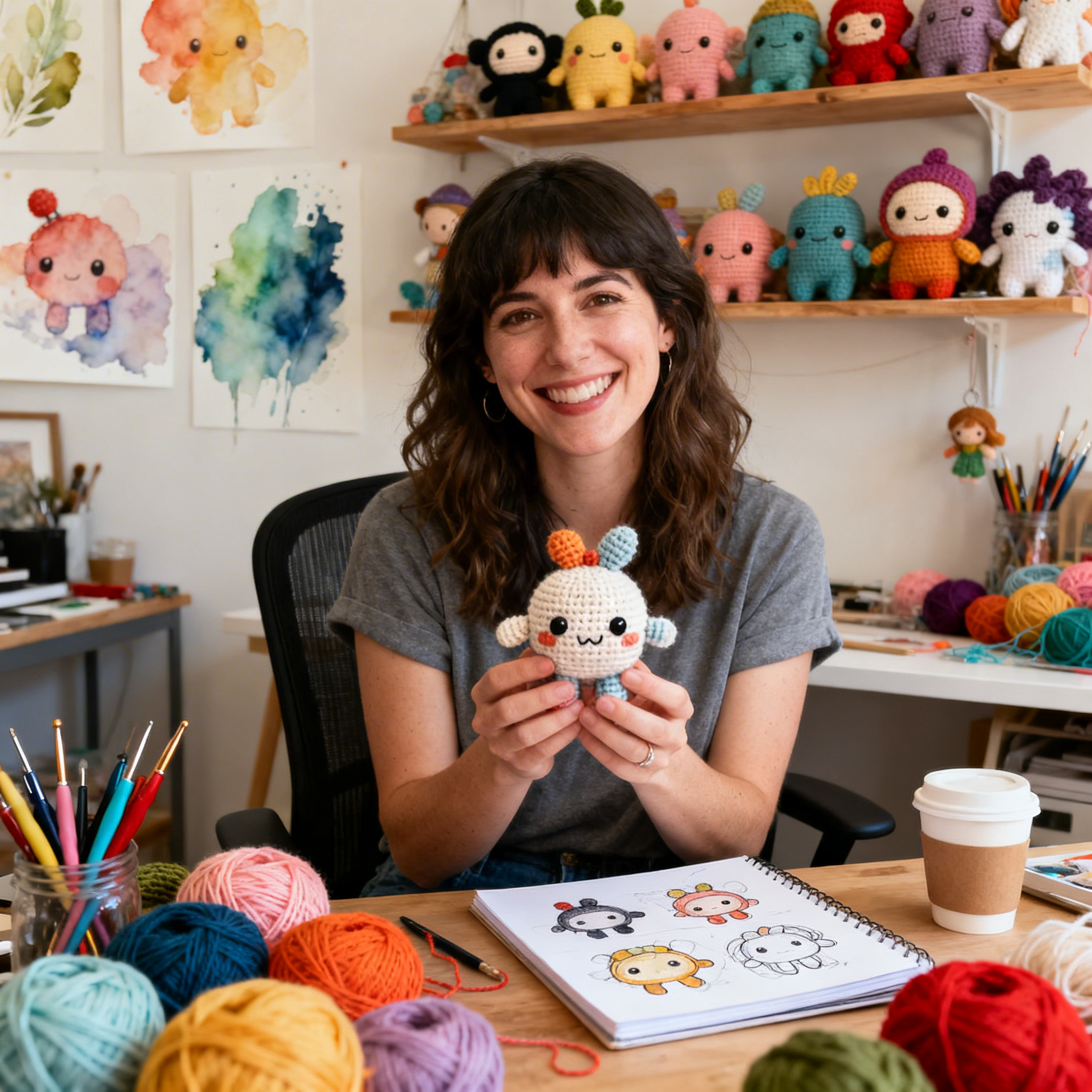
Clara Fern — Crochet Artist & Amigurumi Designer
Clara Fern is a crochet artist and amigurumi designer based in Austin, Texas. With 9 years of experience working with yarn and hook, she transformed a lifelong passion for handcraft into a creative mission: making amigurumi accessible, fun, and deeply rewarding for crafters of all levels.
Clara discovered amigurumi during a trip to Japan in 2017, where she fell in love with the art of bringing tiny characters to life through crochet. Back home in Texas, she spent years studying color theory, design principles, and advanced crochet techniques — developing her own signature style that blends kawaii aesthetics with original character design.
Through maclafersa.com, Clara shares everything she has learned — from choosing the right yarn and reading your first pattern, to designing fully original amigurumi characters from scratch. Her writing is known for being clear, detailed, and genuinely helpful, with no steps skipped and no secrets kept.
When she’s not crocheting, Clara enjoys watercolor painting, visiting local yarn shops, and drinking way too much coffee while sketching new character ideas.