How to Increase and Decrease Stitches in Amigurumi
Why you must count stitches
Counting stitches is the compass for your amigurumi journey. When you count, you know you’re on the right track and not accidentally widening or shrinking your toy. You’ll catch mistakes early, saving you time and frustration later. Think of it as checking your map while you’re learning to ride a bike—a quick glance keeps you from wobbling into a pothole. Your hands learn the rhythm of the pattern, and your project grows with confidence.
Counting stitches also helps you stay consistent across rounds. If you miss a stitch, your shape can look off—like a little creature with a wonky ear. By counting, you ensure symmetry and balance, which makes your finished piece look polished, not sloppy. You’ll notice small errors before they snowball, and that keeps your morale high when you’re chasing a perfect mini creature.
Finally, counting stitches gives you control over sizing. If you need your amigurumi smaller or bigger, you adjust the count, not the guesswork. With proper counting, you can scale your pattern without losing the design. You’ll feel empowered, and your projects will look intentional every time.
Counting stitches amigurumi basics
You’ll start by counting each stitch in every round, and you’ll keep a steady pace as you go. Mark the first stitch of a round and count to the last stitch to ensure you’re working the correct number. This habit reduces surprises when you’re switching from single crochet to increases or decreases. You’ll notice how stitches behave differently as you grow your pieces, and that understanding helps you plan your next move.
As you practice, you’ll learn how to identify common missteps—like a missing stitch or an extra one—that throw off your counts. When you see your rounds look a little lopsided, you can retrace your steps and fix it before it becomes a pattern. Your confidence climbs as counting becomes second nature, and your amigurumi starts to resemble the character you envisioned.
How you check rounds fast
You’ll check rounds quickly by using a simple rhythm: count as you go, then snap your stitch marker into place after you confirm the round count. Keep a mental note of how many stitches you should have for each round, and if you’re off, pause, re-count, and adjust. With practice, you’ll check a round in just a few seconds and keep your project moving.
You’ll also introduce a quick visual check by counting visible stitches at the end of each round. If the number matches your pattern’s target, you’re good. If not, you catch the misstep right away. The faster you become at this, the less you’ll rework later, and your progress feels smoother and more enjoyable.
Use stitch markers routinely
You’ll use stitch markers routinely to mark the start of each round and any changes at increases or decreases. A marker keeps your place clear, so you don’t lose track during mid-row shifts. Slide the marker into the first stitch of every round and relocate it as your work grows. You’ll feel calmer knowing you won’t miscount when you put your project down for a break and come back later.
How to Increase and Decrease Stitches in Amigurumi
In this section, you’ll learn practical ways to shape your amigurumi with confidence. You’ll see how proper increases and decreases keep your piece smooth and balanced, and you’ll avoid the pillow look that happens when proportions go off. You’ll practice with simple examples and then apply the same ideas to cozy stuffed toys you’re proud to show off. You’ll also find tips to maintain even tension while you adjust stitches, so your fabric doesn’t pucker or stretch oddly. With careful technique, your edges stay neat and your seams stay clean. The goal is to keep your final product looking as deliberate as your planning—well-shaped, sturdy, and lovable. This is all part of How to Increase and Decrease Stitches in Amigurumi.
How you check rounds fast
You’ll work through rounds with a quick mental check: if the pattern calls for an increase in a round, you’ll end up with an extra stitch in that round. If you reach a decrease, you’ll see one stitch disappear. Keeping this mental map helps you stay on track even when you’re distracted or listening to a fun podcast.
Stitch markers help here too—place them at the points where you know increases or decreases happen. When you reach the marker, you’ll know exactly what action to take, and your speed increases without sacrificing accuracy.
Single crochet increase amigurumi steps
Start by counting your stitches in the round, then place your first increase where the pattern calls for it. You’ll usually insert two single crochets into the same stitch to form an increase. Keep your tension steady so the new stitch sits neatly next to the original. Continue around the round, repeating the increase in the same spot as required by your pattern. The result is a gentle bulge that becomes part of your shape, not a wobbly bump.
As you complete each round, verify your stitch count against the pattern. If you’re making a sphere, you’ll see the piece getting rounder as you add more increases in the right places. If you’re shaping a small limb, you might use fewer increases and keep the fabric tight to maintain sturdiness. The key is consistency: land each increase in the same stitch position so your work stays symmetrical and easy to seam later.
When you should add increases
Add increases when you want the fabric to grow outward from the center. You’ll see this in rounds where the pattern calls for a wider circumference, like the head or body. If you skip a planned increase, you’ll get a flattened round or an uneven edge. If you add too many, you’ll get a puffier section that might throw off your proportions. The pattern usually tells you exactly where to place increases, so follow that guide and keep a steady pace.
A good rule is to set a rhythm of increases that matches how fast you want the shape to grow. For beginners, you might practice on a simple sphere: place an increase in every stitch on the first few rounds, then gradually space them out as the diameter grows. This helps you learn how the fabric behaves and builds intuition for timing your increases in real projects.
Practice single crochet increases
Grab a small, spare piece of yarn and practice in continuous rounds to build muscle memory. Start with a round of increases in every stitch, then do a round with no increases to feel the difference in tension. Move to alternating rounds of increases and straight stitches to mimic how patterns step up the size. You’ll notice your hands learn the placement, and you’ll stop counting aloud once your eyes and fingers align.
Keep a simple log of what you try: note where you start increasing, how many stitches you add, and the feel of the fabric. This quick record helps you transfer the skill to new patterns without re-learning from scratch. Remember, the goal is smooth, even edges and predictable growth, not just more stitches.
How you decrease with single crochet
Decreasing with single crochet is a simple, steady move you can rely on when shaping your amigurumi. You’re guiding your work toward a tighter, closed look, so you’ll keep tension steady and count your stitches. As you practice, you’ll notice the fabric starts to pull in smoothly, like a drawstring bag. Keep your yarn and hook comfortable in your hand, and you’ll feel confident with every stitch. The key is to stay consistent: if you join and turn, continue the same decrease method each row so your piece stays even. You’ll be surprised how fast your fabric tightens up when you stick to the rhythm you’ve practiced.
With single crochet decreases, you’ll often work two stitches together in a row. Think of it as trimming a little edge to shape your piece. Your goal is to remove exactly one stitch per decrease, so you’ll go through the row methodically. If you’re counting, you’ll end each round with the correct number of stitches, and your amigurumi won’t puff out in the middle. If you’re easing into a curve, you can pause between decreases to keep the shape natural. Your hands will learn the pace, and your stitches will look neat and uniform, which makes the whole character come to life.
Single crochet decrease amigurumi steps
Begin by inserting your hook under the first stitch’s top two loops. You’ll yarn over and pull up a loop to create a loop on your hook. Then insert into the next stitch, yarn over, and pull up another loop. You should have three loops on your hook. Yarn over again and pull through all three loops to complete one decrease. That’s your single crochet decrease in one move. Repeat in the next area where you need to remove a stitch, so you end up with the expected stitch count for the row. Keep your tension steady so the fabric remains even.
When shaping, you’ll often do a 2-in-1 decrease, where you work two single crochet stitches together into one. You’ll identify the two stitches that will become one, insert, and complete the single crochet as one. This saves you from making a bulky bump in the fabric and gives you a smooth curve. If you’re forming a neck or elbow, you’ll repeat this step exactly where the pattern calls for a decrease. With practice, you’ll feel how many decreases to place and where to pace them for a natural look. You’ll double-check stitch counts after each round to stay on track.
If your piece starts to pucker or twist, you’ll pause and check your rounds. You might need to adjust your tension or the number of decreases per row. It helps to count stitches and mark your place with a stitch marker so you don’t lose track. When you finish a section, you’ll see the shape taking form, and you’ll be ready to continue with the next feature. Your careful decreases will keep the amigurumi cute and proportional.
How to decrease in amigurumi
You’ll usually decrease at the top of the piece to close openings. Start by identifying the stitches that make up the circle or row you’re shaping. You’ll insert your hook into the first stitch, pull up a loop, then into the second stitch and pull up another loop. You’ll yarn over and pull through all three loops to complete the decrease. That’s your basic technique, repeated as needed around the round. It’s the simplest and most reliable way to snug the fabric without leaving gaps.
As you work, you’ll rotate and keep the same decrease pattern around the circle. When you reach the end of the round, you’ll usually place a marker on the first stitch you increased from so you can count how many decreases you did and stay on track. If your pattern calls for a hidden decrease, you’ll continue the same method but tuck the seam into the fabric so you won’t see a bulky edge. You’ll learn to balance the number of decreases with the amount of stuffing to keep the curves smooth.
When your amigurumi needs a tighter finish, you’ll combine decreases with slip stitches or simple closing techniques in the final rounds. You’ll always test the fit by gently pressing and checking for any gaps. A well-decreased area looks like part of the toy, not a stitched seam. You’ll feel a sense of accomplishment as you see the shape become more lifelike with each careful move.
Practice single crochet decreases
Practice with a small circle: work several rounds, then practice placing decreases evenly around the circle. Focus on keeping your tension even so the circle doesn’t become lumpy. Mark your first stitch of the round so you can count your decreases precisely. You’ll compare your stitches from round to round and adjust as needed. With a few tries, you’ll find your rhythm and your decreases will look clean and consistent.
Practice on a shape that’s easy to review, like a ball. Start with a full round, then decrease in a few spots, and compare the resulting diameter to your other rounds. You’ll notice when you’re tightening too much or not enough. Keep going, and soon you’ll handle decreases without looking, like second nature.
Make an invisible decrease
The invisible decrease is your best friend for clean shaping. You’ll feel the difference when you slip stitches together without leaving obvious gaps. Practice turns your crochet into a seamless sculpture, not a stitched-on look. When you master it, your bunnies, bears, and little critters will sit and stand with confidence.
You’ll notice the technique hides the decrease inside the fabric. Your work remains sturdy, and your edges stay neat. It’s all about where you pull your hook and how you tighten the final yarn. With a little focus, invisible decreases become second nature, and your projects stay polished from start to finish.
When to use invisible decrease
Use the invisible decrease whenever you’re shaping tight spots where a visible decrease would stand out. It’s perfect for the tops of heads, the bases of limbs, and any place you want a soft, natural slope. When you’re crocheting a round piece that needs a smooth transition, this is your go-to method. If your pattern calls for a decrease that must blend, this is the one to reach for.
You’ll also want it when you’re joining rounds and need a seamless finish. Invisible decreases shine on hats, stuffed animals, and projects that sit on a shelf where the eye catches the seam. If you’re making features like ears or curvy bellies, this technique keeps the shape gentle and uninterrupted.
Tension tips for invisible decreases
Keep your yarn tension even from stitch to stitch. If you notice any puckering, loosen a touch. If you see gaps, tighten just a bit. A steady hand makes all the difference. Also, be mindful of your hook size. A slightly larger hook can help the stitches lay flatter, especially on tight rounds.
Practice a few rounds of invisible decreases on scraps. Feel how your hands need to move to maintain softness. When you’re ready, apply that calm, measured approach to your project. You’ll avoid the common pitfalls and keep your amigurumi looking smooth and polished.
Shape your toy with stitch shaping
You’ll use stitch shaping to turn simple rounds into cute, cuddly forms. This is where your piece starts to look like a character and not just a ball of yarn. By adjusting where you add or skip stitches, you can create noses, cheeks, ears, and little elbows. Think of shaping as the little nudges that give your amigurumi its personality. Your hands will learn the rhythm: add here, skip there, tuck this in, puff that out. The goal is smooth curves, not jagged edges, so take your time and feel how the fabric wants to bend.
Mastering stitch shaping means you can change how tall or wide a part is without changing the whole toy. You’ll shape the head to be slightly bigger than the neck, or narrow the body as you go down. This is how you get a friendly look rather than a flat, two-dimensional piece. As you practice, you’ll notice that gentle increases and decreases create natural curves that hold their form after a wash. Keep notes on where you shaped and how many stitches you added or skipped, so your next toy matches your first one.
When you shape, you also shape the story of your toy. A bunny needs longer ears, a cat needs a pointier snout, a bear needs rounder cheeks. Your stitches are the brush, and the yarn is the paint. With careful shaping, your toy will have charm, not just stitches. You’ll quickly see that small changes make big differences, and that’s the fun of amigurumi shaping.
Amigurumi stitch shaping techniques
There are a few go-to techniques you can rely on. First, learn to control increases. Add a stitch where you want more width, then pause to let the curve settle. Second, practice series of decreases to pull parts in, like a waist or a muzzle. Third, use short rows for smooth bends where you don’t want a seam line to show. Fourth, keep your tension steady so the shape stays even from top to bottom. With these tools, you’ll shape noses, cheeks, and limbs without guessing.
You’ll also use strategically placed increases and decreases to craft features. For example, increase on the sides of the head to widen it, then taper toward the back to create a rounded skull. For ears, work increases at the base and gradually decrease toward the tip to mold a natural ear curve. When you’re shaping limbs, add a few stitches at the widest point and then finish with tight decreases to keep the limb slender. Remember, the magic is in the timing—space those increases and decreases to balance the silhouette.
Another technique is shaping with varying stitch lengths. Switching from single crochet to half or double crochet can give you softer curves or sharper angles. You can also weave a little extra fiber into tight spots to push a curve out, then trim. Use stitch markers to keep track of where the shape changes, so you don’t lose your place. As you get comfortable, you’ll know which technique fits which feature without thinking twice.
How to increase in amigurumi for curves
Increases are your best friend for round parts. Start with a simple increase in the first round where you want the curve to begin, then repeat at even intervals to keep it even. If you want a bulging cheek, place increases on the sides of the head and keep the center round by avoiding increases there. For a plump belly, work increases in successive rounds, but slow down as you near the body to maintain balance. The key is consistency—don’t skip a round or you’ll end up with a lopsided toy.
If you’re building an arm or leg, think about where the curve should end. Increase gradually to keep the shape natural, then switch to decreases to taper the end. You’ll often pause increases as you reach the widest point, then start decreasing to close the limb smoothly. Don’t be afraid to adjust your plan mid-project; tiny tweaks yield a friendlier look. Keep a quick note or a sketch of where you added stitches so your next piece can mirror the curve.
When you’re chasing a curve that looks right, trust your eye and measure against the rest of your toy. If a part feels off, compare with an unfinished version or a reference photo. Tiny differences add up, so it’s okay to backtrack a bit to equalize. Practice makes you faster and more precise, and you’ll be surprised at how quickly your curves start to glow.
Plan shaping before you start
Before you hook a single stitch, map out your shaping. Sketch the main shapes of the toy—head, body, limbs—and mark where you’ll increase or decrease. Decide where you want features to pop and plan the exact rounds for those changes. This saves you from overthinking later and keeps your stitches intentional. You’ll feel more confident knowing you have a shaping plan rather than winging it as you go.
Write down a simple plan: where to increase, where to decrease, and how many stitches to aim for in each section. If you’re making a cat, decide where the cheeks will puff and where the ears will flare. Having a plan helps you stay consistent across toys and makes it easier to replicate a character. Remember, a clear plan is your shortcut to polished shaping and fewer surprises.
Fix common counting mistakes
You’re making small counting fixes that add up to clean amigurumi. First, double-check your starting chain: a single slip of the hook can throw off your entire pattern. If you notice your stitches look uneven or your rounds don’t sit flat, pause and recount from the beginning of the row. A simple miscount here can ruin the shape before you even get to the stuffing. Center yourself on accuracy and you’ll reduce tears and fuzz from unnecessary ripping. If you keep a slow, steady pace, you’ll catch mistakes before they snowball.
Next, watch for skipped stitches and added stitches alike. A missed increase can cause a lopsided head, while an extra stitch can make your sphere bulge oddly. When you’re in the groove, you’ll hear the rhythm: clicks of correct increments and quiet gaps where a stitch was skipped. Your hands will learn the pattern’s tempo, and you’ll start spotting the trouble before it becomes visible. Remember to pause and count aloud if needed; your eyes and hands will thank you later when you finish with a neat seam and consistent texture.
Finally, keep your working yarn pace consistent. Uneven tension can masquerade as counting errors, so practice a steady grip and even pulls. If your stitches feel tight one moment and loose the next, you’re more prone to miscounts. Set aside time to take a breath, check your gauge, and reset your tension. With even pressure, your rows lay flat, your increases sit where they should, and your final piece looks polished from base to crown. When you master tension and counting together, your amigurumi becomes a reliable canvas for creativity.
How to spot missed increases or decreases
You’ll spot missed increases or decreases by the shape and stitch count pattern. If your piece looks cylindrical where it should taper, you’ve probably skipped an increase. If it fans out too much, you may have carried on with a decrease when you shouldn’t have. Your best clue is the stitch count per round: missing an increase or adding an extra decrease will throw off the expected total. You’ll start seeing slight flat spots where the design intends curves, and that’s your signal to recount and fix. When you train your eye on the pattern, you’ll catch these issues early and keep your figure true to the design.
Next, feel for the texture in your work. Increases should create gentle bulges; decreases should pull the fabric inward evenly. If you notice a lump in a spot that should be smooth, you likely skipped an increase. If you see a pinched area or a sudden taper where there shouldn’t be one, you probably added a decrease where you didn’t mean to. Use your ruler or your own stitches as a guide to verify that you’re hitting the expected round counts. You’ll train yourself to read your piece like a map, knowing exactly where the path should widen or narrow.
Look for consistency across rounds. If several rounds in a row differ by a stitch or two, you’ve drifted from the pattern. This is a red flag you should pause at, recount, and align with the instruction. Your goal is to keep the same number of stitches each round unless the pattern calls for a change. When you stay aligned, your amigurumi keeps its intended shape, and you’ll finish with a professional finish you’re proud of.
Counting stitches amigurumi each round
Counting stitches each round is your backbone for a clean amigurumi. Start every round with a quick tally in your head or on paper, especially when you’re working through tricky sections. You want to know exactly how many stitches you should have before you move on. If you’re unsure, pull back to the last known good round and recount—better to slow down now than to unravel later. You’ll feel confident when your rounds add up exactly as the pattern says, and your piece will keep its precise form.
Next, remember that certain stitches count as one toward the round total, and some stitches may be increases or decreases that change the tally. Learn the pattern’s rhythm: flat rounds vs. increasing rounds vs. decreasing rounds. If you’re ever off by one stitch and the texture looks off, stop and recount, then adjust immediately. Your attention to the round-by-round count is what makes your finished amigurumi sturdy and accurate, not flimsy or misshapen.
When you’re counting, maintain a steady rhythm with your hook and yarn. You’ll find that your eyes lock onto the stitch placement more easily, and you won’t drift off counting halfway through a round. Practice makes this automatic, and soon you’ll confirm you’re at the right total within seconds. Your final piece will look crisp, with the curves where they belong and the joints snug without gaps.
Combine increases and decreases for features
You’re shaping your amigurumi by combining increases and decreases to form every feature you want. When you plan how to build a nose, ears, or a tail, think of increases as little growth spurts and decreases as trims that pull things in. This balancing act lets you broaden or tighten sections without starting from scratch, so your character keeps a cute, cohesive silhouette. Practice plotting a quick map: where you want a wider head, where you need a slimmer neck, and where a little curve will sell the expression. By blending these moves in the right spots, you’ll see your creature take on personality rather than just a blob of yarn.
Next, you’ll notice that timing matters. If you pop in increases too quickly, parts puff out too soon and look cartoonish. If you rush decreases, edges can look pinched. The trick is to layer them across rounds, not all at once. For example, build a head with a couple of increases to start a round, then ease back with a decrease to maintain a gentle curve. As you go, you’ll get a rhythm: add, balance, refine. That rhythm is what keeps your amigurumi sturdy and expressive, not floppy or flat.
Finally, remember to check your stitch count as you go. A sudden jump or dip in stitches will show up in the finished shape, so count often and compare to your plan. If you’re aiming for a soft, friendly look, keep increases modest and spread them out. If you want a sharper outline, place decreases more strategically. Keeping that count in check helps you predict how the features will stand up to handling and posing. You’ll feel confident and in control as your figure gains character.
Use small increases for ears and tails
Small increases create delicate ears and slim tails that look natural. You want these features to stay proportional to the head, so go slow. Start with a few tiny increases in the first few rounds, then level off to keep the tips crisp. If your ears get too wide, they’ll dominate the face; if they’re too flat, they won’t read as ears at all. Practice on a scrap piece first to feel the exact pace that fits your yarn and hook.
As you shape ears, think about direction. Even tiny increases should face the same way to keep symmetry. If one ear angles differently, the whole head can look off. If you’re making a curved ear, place increases along the curve to create a gentle bulge rather than a straight stripe. For tails, narrow growth at the base and a gentle taper toward the tip reads as natural fur. Small, careful increases let you keep that soft, cuddly vibe.
If you want more lifelike texture, combine small increases with a few yarn twists or a light stuffing touch at the tip. That gives a subtle point without making the ear look stiff. Practicing these micro-movements will sharpen your eye for proportion, and you’ll find your ears and tails feel just right in every finished piece. Your amigurumi will look balanced and endearing.
Use decreases for noses and eye sockets
Decreases guide the facial features into clear, friendly shapes. Start with a gentle retreat in the rounds around the nose area to create a small, rounded look. Too many fast decreases will flatten the nose into a dot; too few and it stays bulbous. Find that sweet spot with a couple of deliberate decreases, then pause to check the symmetry across both sides.
For eye sockets, decreases pull the fabric inward so you can place eyes securely and comfortably. Aim for a shallow hollow, not a crater. If you’ve got a bead or safety eye, use the decreases to create a snug surrounding space so the eyes sit snugly and don’t wobble. Keep the spacing even from edge to edge so your face reads as cheerful rather than mischievous.
If you’re aiming for a tiny, cute nose, consider a single well-placed decrease to compress the stitches into a small mound. For a larger nose, ease into more decreases across several rounds, keeping the shape round rather than pointed. This careful control makes your face readable at a glance, which is exactly what you want in a friendly amigurumi.
Pin features before sewing
Pinning lets you preview the face and body layout before final stitching. This step saves you from redoing parts after you’ve sewn them on. Lay each feature in place with straight pins, then step back and look for balance. If something feels off, adjust the pins and try again until the proportions look right.
When you pin, note which side each piece will attach to and how the edges align with your body. A quick mock-up helps you catch misalignments early, so your final sewing is clean and confident. After you’re happy with placement, you can sew with a clear plan in mind, knowing your features won’t shift on you.
Read patterns for increases and decreases
You’ll use these patterns every time you shape an amigurumi. When you see an increase or a decrease, think about how it changes the fabric and the piece’s form. Increases add stitches and push the work outward, while decreases pull stitches together to narrow or curve. Keep your tension even so the changes aren’t obvious. Remember, practice makes the stitches smooth, not bulky, and you’ll feel more confident as you go.
As you read through a pattern, note where increases and decreases occur. If you’re working in the round, increases usually happen at specific intervals (like two stitches in the same stitch or one stitch in two). If you’re working in rows, the same ideas apply but you’ll see them at the end of a row or in special sections. Understanding the intent behind each change helps you plan your moves and avoid surprises when you reach a tricky area. You’ll be surprised how quickly these shifts become second nature when you map them out in your head before you hook.
When you practice, try a simple test swatch that uses both increases and decreases. Count how many stitches you add or remove in a few rounds and see how the fabric changes. This quick trial helps you spot tension issues and perfect your rhythm. The goal is even fabric that lies flat and shapes well, not overly tight or loose stitches. Your confidence will grow as patterns become predictable, and you’ll be ready for more complex shapes.
Read patterns for increase stitches amigurumi
Increase stitches push your work outward and are essential for shaping heads, bellies, and limbs. You’ll usually see methods like two stitches in one or increase in the next stitch. Each increase changes the stitch count by one, so you’ll notice a gentle flare or rounded edge as you go. Use a smooth, even motion to keep the fabric tidy and avoid holes at the increases.
When you’re counting, track the total stitches after each round or row. If a pattern asks for an increase every other stitch, you’ll end with a neat, even circle that smoothly grows. If the instruction calls for two stitches in the same stitch, you’ll feel the fabric start to widen right away. Practice these adds on a small circle first, then apply them to your amigurumi. With time, you’ll spot the increases before you reach them and stitch with more confidence.
Read patterns for decrease stitches amigurumi
Decrease stitches pull stitches together to shape curves, slopes, and necks. You’ll commonly see methods like single crochet two together or decrease over two stitches. Decreases make the fabric thinner and bring your piece toward its final form. Work them slowly and keep your tension consistent so you don’t create lumps or holes.
As you read, notice how many stitches are removed and where the decrease lands in the row or round. If the instructions ask for a decrease at the end of a round, your piece will start tapering there. If it’s in the middle, you’ll see a more gradual narrowing. Practice decreases on a simple strip or small cap to get a feel for the shaping you’ll need in your project.
Mark pattern repeats clearly
When you see a repeat, mark it clearly in your mind or on paper. A repeat area might be repeat four times or repeat twice after this point. Keeping this marker helps you stay in sync with the pattern as you work through increases and decreases. It makes it easier to spot mistakes early and adjust the stitch count without losing your place.
Tools and tips to keep your stitches even
You want your amigurumi to look neat from ear to toe, and the secret is consistency in how you hold yarn, your hook, and your work. Start with a comfortable hook size that suits your yarn weight, and make a few practice stitches to feel the rhythm. When your hands feel relaxed, your stitches stay even, and the shape stays true. Keep a light grip and let your yarn glide, not yank, through each loop. If your stitches end up tight, switch to a slightly bigger hook; if they’re loose, try a smaller one. Your goal is steady tension that stays the same from start to finish, so every part of your toy matches the last.
Think about your working area, too. A clean, calm space helps your hands stay steady. A small row counter or a simple notebook can help you track how many stitches you’ve done, so you don’t lose your place. Bright lighting helps you see each loop clearly, and a smooth surface means your yarn won’t snag. If you’re working with multiple colors, keep a separate ball for each color and wind off just what you need to avoid tangling. And breaths—don’t forget to breathe. Slow, even breathing keeps your hands calm and your stitches even when you’re counting rounds.
When you’re ready to finish a piece, use a gentle tug to close gaps and pull tight on the last stitch just enough to secure it. If you see gaps after stuffing, adjust your stitch count by a stitch or two in the next round. Don’t force tightness where it doesn’t belong. Your goal is a clean seam line that blends into the body, not a puckered edge. Practice makes perfect, and small tweaks over time really add up to a smoother finish.
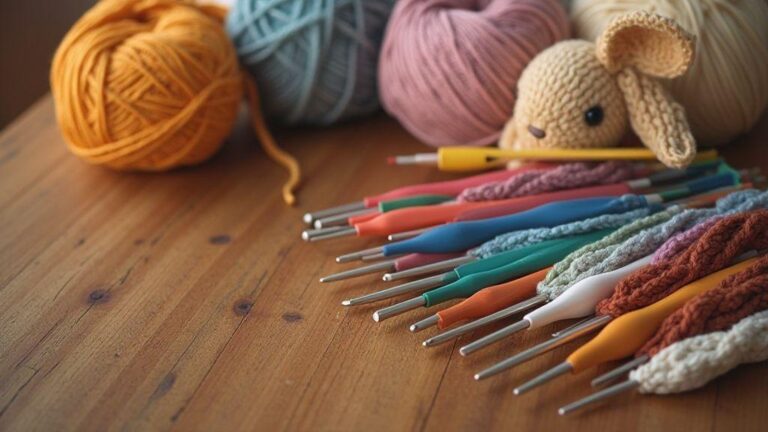
Choose hooks and yarn for steady tension
Selecting the right hook and yarn sets the foundation for consistently neat stitches. If your yarn feels slippery, a hook with a slightly textured grip helps you hold on without squeezing. For bouncy or fluffy yarns, a smaller hook can help you keep your stitches from stretching too much. A good rule is to match the yarn weight to a hook size that yields a fabric you can see and count easily. You’ll notice your stitches sit evenly when the fabric doesn’t pull or pucker around shaping points like ears and limbs.
When you’re choosing yarn, pick a color you can clearly see against your hook. Light or medium colors often show stitch definition better than dark shades, which helps you keep even tension. If your project uses variegated yarn, test a small swatch to see how color changes affect your perceived stitch size. A gentle, consistent tension helps every round align, making your amigurumi look polished. Finally, keep a spare hook or two in your kit so you’re not hunting for the right size in the middle of a round.
Use stitch markers to count and track
Stitch markers are tiny helpers that save you from counting mistakes. Place a marker at the start of each round, then add one at the end when you finish, so you always know where you began. If you’re joining rounds, use a special marker to show the turn point. These markers help you avoid losing track when you’re building limbs or ears, and they’re especially handy if you pause mid-project. You’ll feel more confident picking up where you left off, and your rounds will stay uniform.
Two more tricks: use a different color marker for increases and decreases, so you can see where your stitch counts shift. If your project has color changes, move the marker to the first stitch of the new color to avoid accidentally adding or skipping stitches. Counting becomes automatic with markers, and your shapes stay symmetrical. With practice, you’ll reach a rhythm where markers feel like a natural part of your workflow.
Slow, steady tension keeps shapes
Your shape depends on how you control tension through every stitch. A slow, deliberate pace prevents you from accidentally skipping or overworking stitches. If you notice a round looks uneven, pause, reset your grip, and re-measure your tension for a moment before continuing. You want the fabric to lie flat, not to bunch or lean, so keep your yarn moving in a smooth arc rather than abrupt pulls.
If you’re shaping a head or a limb, you’ll often adjust tension slightly around increases or decreases. Maintain the same overall grip and keep your yarn feeding evenly from ball to hook. This discipline helps your curves stay round and your edges stay neat, so your final amigurumi looks as you imagined. Remember: consistency is your best tool.
How to Increase and Decrease Stitches in Amigurumi (recap)
Mastering How to Increase and Decrease Stitches in Amigurumi requires counting stitches, planning increases and decreases, and shaping with intention. Practice increases for curves, practice decreases for smooth silhouettes, and use invisible decreases where a seam would show. Pair these with stitch shaping, careful reading of patterns, and the right tools to build confident, polished amigurumi every time.
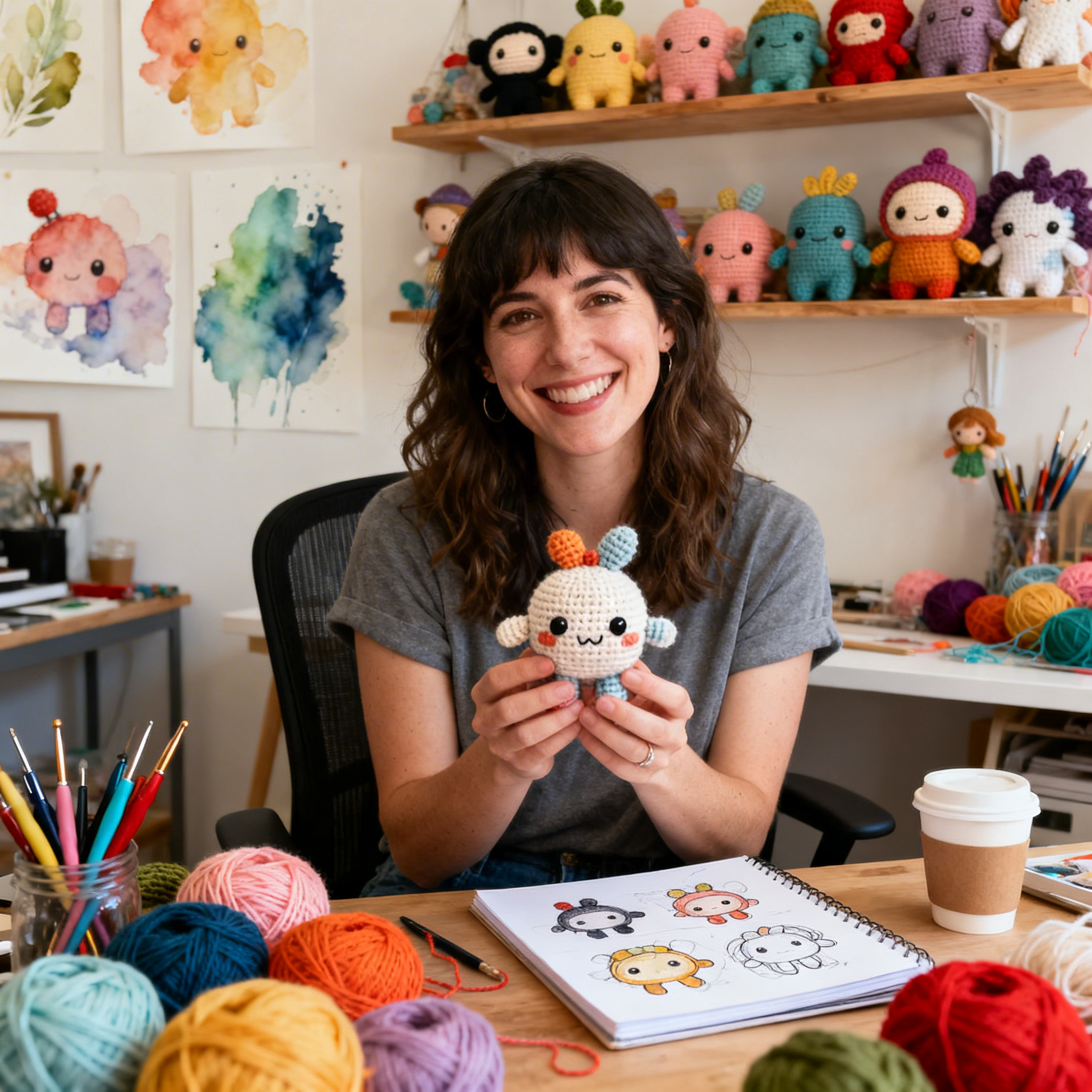
Clara Fern — Crochet Artist & Amigurumi Designer
Clara Fern is a crochet artist and amigurumi designer based in Austin, Texas. With 9 years of experience working with yarn and hook, she transformed a lifelong passion for handcraft into a creative mission: making amigurumi accessible, fun, and deeply rewarding for crafters of all levels.
Clara discovered amigurumi during a trip to Japan in 2017, where she fell in love with the art of bringing tiny characters to life through crochet. Back home in Texas, she spent years studying color theory, design principles, and advanced crochet techniques — developing her own signature style that blends kawaii aesthetics with original character design.
Through maclafersa.com, Clara shares everything she has learned — from choosing the right yarn and reading your first pattern, to designing fully original amigurumi characters from scratch. Her writing is known for being clear, detailed, and genuinely helpful, with no steps skipped and no secrets kept.
When she’s not crocheting, Clara enjoys watercolor painting, visiting local yarn shops, and drinking way too much coffee while sketching new character ideas.