What Does Repeat Mean in a Crochet Pattern?
Know what a repeat is
In this guide, you’ll learn exactly what a repeat means in crochet, so you can read patterns with confidence. Repeats help shape amigurumi without guessing, making texture uniform and edges neat. Think of repeats as the chorus in a song—you memorize the beat and you can stitch along without looking at the page.
A repeat is a section you do more than once—like a mini recipe inside the bigger recipe. These sections are usually enclosed by brackets or parentheses, with a number showing how many times to repeat. Follow the exact count and repeat only the indicated stitches to keep your amigurumi proportional and smooth. If you skip or overdo a repeat, your toy might come out lopsided or too small, so read the repeat carefully and count as you go.
Repeats are especially helpful in amigurumi because they create shapes with consistent texture. Repeating the same stitch pattern builds a uniform fabric that keeps stuffing cozy and seams clean, resulting in a polished, professional look.
What Does Repeat Mean in a Crochet Pattern?
What Does Repeat Mean in a Crochet Pattern? is the phrase you’ll see in most patterns. In simple terms, it tells you to do a set of stitches more than once. The pattern shows how many times to repeat and where the repeated section begins and ends. Look for instructions like repeat 3 times or repeat from the asterisk. Follow these cues exactly to keep your amigurumi proportional.
When you read a repeat, you’ll usually find a core group of stitches that you perform again and again. The repeat zone is marked with brackets or parentheses, and you might see notes like repeat until work measures X. Start by counting the first few repeats slowly to feel the rhythm; with practice, repeats become second nature and your work stays even.
A common pitfall is not respecting the start and end of a repeat. Missing a stitch or adding one inside the repeat can shift the overall shape. Check your count at the end of each repeat cycle to stay on track and achieve a clean, balanced amigurumi.
Spot repeat symbols
Repeat symbols are tiny shortcuts that keep you from rewriting the same stitches. When you see them, you’ll know exactly how many times to loop and where the sequence ends. They help your amigurumi stay neat and consistent, so your stuffed creatures look the same from start to finish. Think of them as the chorus in a song—you hum along, and your work follows.
Repeat symbols appear in charts and written patterns alike. Read them as a rhythm: a set of stitches you repeat, then move on. With experience, you’ll know where repeats begin and end without recounting everything, making patterns more approachable and enjoyable.
As you grow comfortable, use repeat symbols to plan your project. Mark where a repeat starts (on a sticky note or in your pattern) and watch your stitch count. When you see repeat signs, you’ll think, I’ve got this, which helps you stay steady and finish faster with tidy results.
repeat section asterisks crochet
When you see a line with asterisks, it tells you to repeat the section between them. Do the stitches between the asterisks the number of times the pattern specifies. Keeping track of repeats is the trick to staying on track. Count the stitches after the repeated section ends to ensure your rows stay balanced and symmetrical. This method is common in beginner patterns and becomes second nature with practice.
The asterisk method is simple: read the stitches once, then repeat between the asterisks as instructed. If unsure, count the stitches after the repeated section ends and compare to the target. A quick check keeps your amigurumi even and shows you the repeat pattern at a glance.
brackets and parentheses
Brackets and parentheses group repeats or optional stitches. They act like a map inside the pattern, guiding you through the repeat. Brackets show you the repeat group to perform multiple times; parentheses hold the exact steps for one repeat, ensuring you don’t miss a move. Treat them as your mini checklist inside the bigger pattern.
Use brackets to stay organized. If a pattern says [RS, SP, PS] x 3, you’ll repeat that trio three times. Parentheses remind you of the steps to complete each repeat cleanly. Skipping a move or adding extras becomes less likely when you read them clearly. As you crochet, you’ll skim the brackets and know exactly what to do for each repeat.
Read marks quickly
Read marks are guides showing where a repeat starts and ends. Read them at a glance to save time and avoid mistakes. Look for arrows, brackets, or a repeat symbol that signals where to loop back. Practice scanning the row for the first repeat cue, and you’ll glide through instructions with fewer miscounts.
Reading marks quickly reduces errors and ripped-out rows. With steady practice, you’ll crochet with confidence and keep your amigurumi neat and lovable.
Work repeats in rounds vs rows
In amigurumi, rounds vs rows feel different. Rounds build the piece outward in a spiral, keeping stitches even and the interior smooth. Rows are flat and better for simple, flat sections, but amigurumi typically uses rounds to maintain a three-dimensional form. Rounds help increases stay in place and tension stays even, resulting in a cleaner shape.
When working in rounds, use a stitch marker to track the start of each round and join with a slip stitch or a marker. Rows often end with a turning chain, which can affect tension if not managed carefully. Practice rounds to achieve uniform texture and a well-proportioned toy.
Your yarn tension and stitch height feel different in rounds versus rows. Rounds tend to pull the work tighter around the center, helping avoid a square or lid-like top. Practice on a small piece to feel the right tightness—stitches should disappear into the fabric, not leave gaps.
repeat in round crochet
When you repeat in round crochet, you build outward in a spiral. Count increases to keep the shape even. A common pattern reads: Rnd 1: 6 sc in magic ring; Rnd 2: 2 sc in each stitch around, and so on. The magic ring creates a tight center without a hole.
Keep stitch height consistent as you repeat rounds. Don’t tighten too much, which can cause bulges or twists. Mark the first stitch of each round to ensure you land the right number of stitches. If the center develops a hole, recheck increases and ensure you’re not skipping stitches. If needed, redo a few rounds to flatten the center and even the outer edge.
repeat to end crochet
Repeating to end means you continue until you reach the specified final size or the end of a section. End sections with a clean edge before starting a new part, like the head or limbs. Maintain consistent stitch height and density so the transition to the next part is seamless.
As you repeat to end, count stitches at the end of each round or row to verify accuracy. When finishing a piece, weave in ends neatly to keep seams slim and professional. A clean finish makes the difference between a handmade look and a polished toy.
Use multiples for pattern fits
When designing or following an Amigurumi pattern, multiples tell you how many stitches form one repeat. Using multiples lets you scale a pattern to the size you want without changing texture. Look for a multiple at the start of a pattern section and add or remove stitches in complete groups that match the repeat rhythm. This keeps fabric even and seams clean, which makes your creatures look professional.
Multiples matter when mixing stitches that create texture, like front post and back post or clusters. If the multiple shifts, texture can shift too, causing twists. Plan ahead: choose your hook size and yarn weight, then count how many stitches fit into each repeat before you begin. With practice, you’ll adjust size quickly without breaking the stitch pattern.
Keep this tip in mind: always check the pattern’s multiple before starting a new section. If you want a taller or wider toy, add complete repeats of the multiple rather than changing single stitches. That keeps rhythm intact and seams symmetrical.
multiple of stitches crochet repeat
A pattern’s multiple of stitches tells you how many stitches form one repeat. Crochet that many stitches, then repeat the group across the row. If a pattern says a multiple of 3, end your row with complete 3-stitch groups. Mastering multiples lets you resize toys or swap yarns while keeping the pattern intact.
When sewing different parts, treat multiples as a roadmap. Match the same number of stitch groups across parts to align seams. Never stop in the middle of a repeat unless the pattern allows it. Note the exact multiple and plan the first few rows around full repeats to avoid later ripping.
Important tip: plan for full repeats and recalculate as needed to keep the design cohesive.
pattern repeat size crochet
The pattern repeat size tells you how many stitches or rows form the repeating unit. Knowing the repeat size helps you predict section size and adjust when changing yarn weights. If you switch to thicker yarn, you may need fewer repeats; with thinner yarn, you may need more. Mark the start and end of each unit to stay on track and maintain balance across all parts.
Remember: repeat size helps you adapt patterns without losing harmony in your design.
Match stitch counts
Matching stitch counts where parts join ensures clean seams. Compare edge counts before sewing; if one edge has 24 stitches and the other 26, adjust by adding or removing full repeats or tweaking the first/last rounds. When stitch counts align, joins are neat and the amigurumi looks professional.
Plan final rows to end at a natural boundary to ease joining and future edits. Recount after finishing large sections to catch drift early.
Tip: recount after big sections to save reshaping later.
What Does Repeat Mean in a Crochet Pattern?
In a pattern, repeat means you do a set of stitches multiple times to form a unit. You’ll see phrases like repeat from to or repeat 4 times. The repeat unit keeps the design consistent across the row or round. If you’re new to crochet, think of a repeat as a snap-in sequence that locks the look in place. Complete one unit, then repeat it exactly the same way until you reach the end of the row.
Repeats are a designer’s shorthand to save space and keep instructions concise. They also let you scale the project by adding or removing repeats. Knowing the repeat size helps you anticipate how big the piece will become with more rows or with a thicker yarn. Stay within the repeat boundaries to preserve the pattern’s recognizable design.
In practice, count stitches inside the repeat to keep alignment. If you skip a stitch or add an extra one outside the repeat, the fabric shifts and the design won’t sit right. So when you see Repeat, plan your moves to stay inside the unit’s rhythm.
Follow repeats step-by-step
You’ll learn to follow repeats without getting tangled. When you see a number or a bar, that signals repeating a set of stitches. Treat repeats as your personal chorus, coming back at regular moments to keep rhythm. Start simple, build confidence, and you’ll read repeats with ease, keeping stitches neat.
Repeats help shape amigurumi by maintaining consistent size, look, and tension across rounds. If a repeat feels tricky, pause and count, rechecking the last row. A quick pause now saves a headache later, especially when you join parts.
To stay organized, mark the start and end of each repeat with a different color yarn or a small clip. Treat repeats as milestones; each completed repeat brings you closer to a finished, adorable amigurumi.
how to follow repeats crochet
When crocheting, repeats appear as bracketed or parenthesized stitch groups. Count the stitches in your repeat and keep that count steady as you work around the row or round. If you lose track, locate the repeat start and recount to restore alignment.
To follow repeats, read the pattern carefully for the repeat symbol or repeat [X] times. Perform the same sequence for each repeat, maintaining order of steps inside the repeat. A calm pace helps you keep tension even and prevents twists in your fabric. Start with simple projects to learn the rhythm, then tackle more complex repeats in limbs or ears with confidence.
Your goal is even stitches, not speed. Slow, steady repeats build a clean finish.
repeat stitches crochet
Repeat stitches form the backbone of many amigurumi shapes. Repeating a basic stitch pattern creates a dense, consistent fabric that doesn’t wobble as you add rounds. If you notice gaps or crowding, adjust your repeats or round endings and recheck your counts.
Map repeats in your mind or on paper. For example, 6 stitches repeat 6 times means crochet six sequences of six stitches around the row. If a mistake happens, drop back to the start of the repeat, correct your form, and rejoin cleanly. This keeps your amigurumi neat and proportional.
Repeat stitches also affect texture; maintaining even tension across repeats helps your project sew together smoothly. Use a light touch to avoid compressing stitches, and keep a comfortable grip for accuracy.
Keep a simple routine
Set a small, steady routine to master repeats. Work the same length of time, take a short break, and use a color-coded marker or note to track repeats. A simple routine helps your eyes catch miscounts and keeps your hands relaxed, so you don’t twist stitches.
Label repeats with a quick note in your pattern or a color marker. Keep a small notebook or digital note to jot tricky spots. This makes future projects smoother and less intimidating.
Decode abbreviations fast
Decode abbreviations quickly to power through Amigurumi. Abbreviations like sc, inc, dec are just shorthand for common actions. Build a quick cheat sheet and translate lines into concrete steps. With practice, you’ll recognize patterns and patterns’ shorthand across projects, keeping your work moving smoothly.
Rep abbreviations are a practical toolkit. Learn the basics and you’ll breeze through patterns without constant chart-checks. If you stumble, translate the line into the actual hook actions and proceed calmly.
Your success depends on confidence and consistency. Keep a small glossary by your yarn for quick reference, so unfamiliar terms don’t slow you down.
rep abbreviation crochet
Rep means repeat. Identify the start of the repeat, count how many repeats are needed, and keep tension steady. If it says rep 6 times, perform the stitch sequence six times in a row. If it says rep to end, repeat until you reach the end of the round or row. Mark the start of the repeat with a removable marker to stay on track.
Master repeats and your pieces come out reliably, with consistent texture and shape.
crochet pattern repeat meaning
The repeat meaning points to the section you’ll duplicate as you work. Start and end points plus a repeat count help you predict growth and placement of increases or decreases. Reading the repeat section aloud in your head can help you stay on rhythm and catch mistakes early.
Short forms explained
Short forms are the quickest way patterns convey actions. Abbreviations like sc, inc, dec, or blo are your shorthand. Build a quick glossary and review it after each project to translate lines into hook actions quickly. Patterns often reuse the same abbreviations, speeding up future projects.
Tip: keep a mini cheat sheet by your workspace to translate unfamiliar terms on the fly.
rep abbreviation crochet
Rep signals a repeat from a specific point. Mark the start of the repeat, count repeats, and maintain steady tension. Use a stitch marker to avoid losing your place. Mastering repeats with abbreviations makes Amigurumi more predictable and enjoyable.
repeat pattern meaning
The repeat means you duplicate a unit to keep the design balanced. You’ll see a start and end point for the repeat, plus a note on how many times to do it. Understanding this helps you predict growth and place increases or decreases accurately. Reading the repeat section aloud as you work helps you keep rhythm and spot mistakes early.
Short forms explained
Quick reference to common abbreviations helps you move through patterns faster. Keep your cheat sheet handy and translate lines into concrete actions. As you practice, you’ll notice designers reuse the same short forms, speeding up future projects.
Fix repeat mistakes easily
You notice misalignment? Stay calm and follow a simple plan: identify where the mistake happened, reset to a known good point, recheck the pattern, and redo the repeat if needed. Mark the repeat sections to avoid drifting off-count and practice a small swatch to verify the fix before continuing.
Compare your work to the pattern’s grid or chart after finishing a section. If tension changes or a stitch looks off, you may have drifted. Fix the issue now to prevent bigger reshaping later. Slow, deliberate adjustments keep fabric smooth and the mood positive.
spotting wrong stitch counts
Count as you crochet, not after. After a repeat, pause and confirm you have the exact number. Use markers or a tally to keep track. If a repeat looks different from the others, stop at the last good repeat and correct the miscount before proceeding. Treat each color block or stitch type as its own mini-repeat to keep counts accurate across sections.
Redoes are easier when caught early, so you can fix without reworking large sections.
redoing after miscount
If a miscount slips in, redo only the affected part. Identify where the error starts, unravel to the last correct repeat, and rework with careful counting. Recheck the next few repeats to ensure you’re back on track. Practice on a swatch if needed to build confidence before continuing.
Correct without panic
Pause, count, and compare to the pattern. If a stitch feels off, re-count that area. A calm, methodical approach prevents bigger issues later. Fixing problems early helps maintain texture and alignment, leaving you with a confident finish.
Conclusion
Amigurumi repeat tips for shape
Repeats are your allies when shaping amigurumi. Repeating smooth stitches helps keep the body round and proportional. Start with a simple sequence—like single crochet in every stitch for a few rounds—and keep it consistent. The rhythm will train your hands and your creature will begin to take form with steady curves.
Consider where to add or remove stitches. Repeats pace increases and decreases so ears and bodies stay balanced. If you notice a wobble, pause and recheck your counts. Consistency across rounds yields a balanced, symmetrical shape. Practice makes repeats feel automatic, and marking repeats as you go helps you spot drift early.
keep shape with repeats
Maintain a simple, repeatable base stitch to carry through different parts. When shaping, use the same repeat length for each step to avoid bulges or dips. Compare rounds to an evenly proportioned amigurumi for guidance. Visual cues help you stay honest about your repeats, ensuring a neat, well-planned finish.
stuffing and repeat timing
Stuffing should happen after you lock the shape with repeats. Add gradually to avoid distorting curves. Timing repeats with stuffing ensures the opening closes neatly and the final seam disappears. As you stuff, adjust filling to maintain the desired silhouette.
Tiny round repeat tips
- Use steady, even tension so each tiny round sits flat and compact.
- Count stitches carefully and keep the same number each round to avoid wobbles.
- Flatten rounds with gentle finger pressure before moving to the next round.
- Address slight ridges by adjusting stuffing and tightening the last stitches a touch more.
Scale repeats to change size
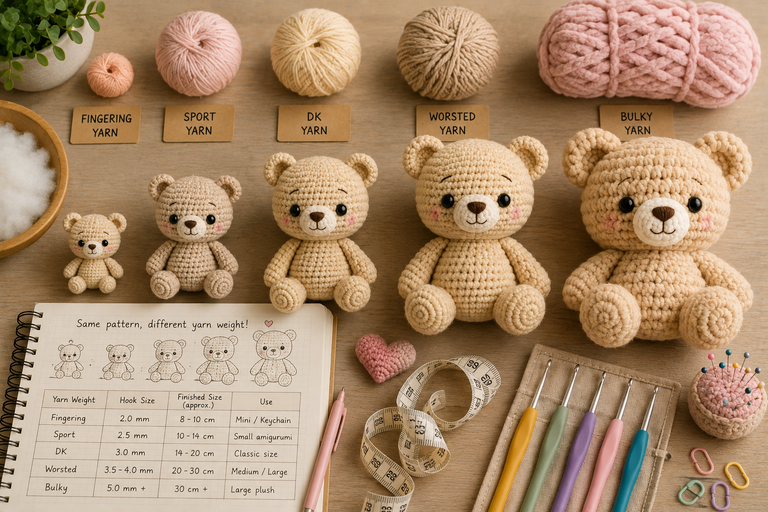
To make a bigger Amigurumi, scale repeats to increase height or width without guessing. Adjust how many times a row or round repeats, and the piece grows smoothly. Test a quick gauge swatch after a few rounds to learn how extra repeats affect size.
Scaling repeats also helps when matching yarn weights. Thicker yarns need fewer repeats; thinner yarns need more. Measure as you go and compare to target size. If you’re aiming for a specific measurement, write it down and tally repeats used. You can always scale back if the piece gets too large, keeping proportions balanced.
When resizing, keep stitch types consistent to preserve texture. If unsure about a section, crochet a small sample first to avoid larger errors later.
After resizing, recheck the overall proportions. If a limb feels long or a head too small, adjust by adding or removing repeats. The goal is a natural, cute silhouette, not distortion. With practice, resizing with repeats becomes second nature.
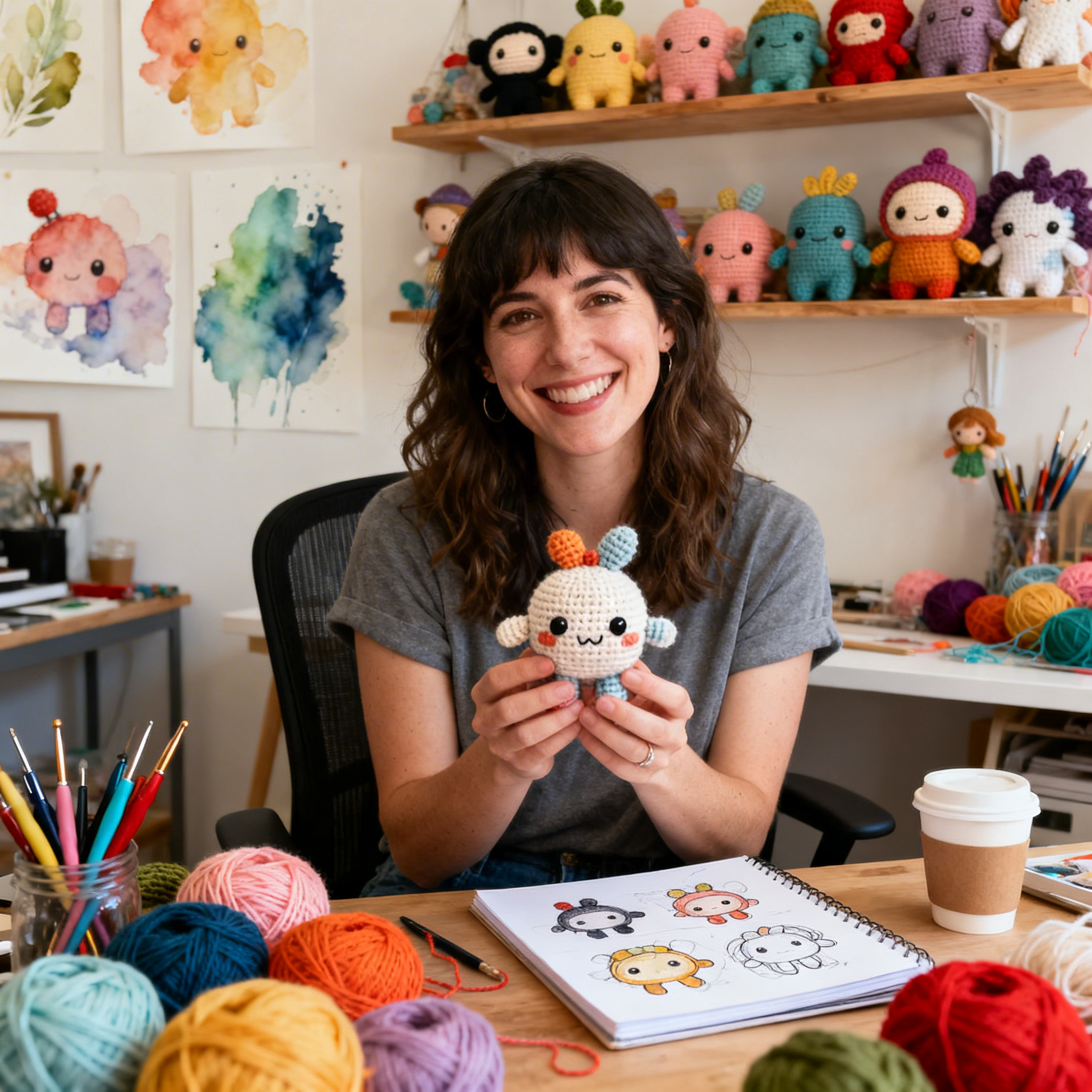
Clara Fern — Crochet Artist & Amigurumi Designer
Clara Fern is a crochet artist and amigurumi designer based in Austin, Texas. With 9 years of experience working with yarn and hook, she transformed a lifelong passion for handcraft into a creative mission: making amigurumi accessible, fun, and deeply rewarding for crafters of all levels.
Clara discovered amigurumi during a trip to Japan in 2017, where she fell in love with the art of bringing tiny characters to life through crochet. Back home in Texas, she spent years studying color theory, design principles, and advanced crochet techniques — developing her own signature style that blends kawaii aesthetics with original character design.
Through maclafersa.com, Clara shares everything she has learned — from choosing the right yarn and reading your first pattern, to designing fully original amigurumi characters from scratch. Her writing is known for being clear, detailed, and genuinely helpful, with no steps skipped and no secrets kept.
When she’s not crocheting, Clara enjoys watercolor painting, visiting local yarn shops, and drinking way too much coffee while sketching new character ideas.