How to Follow a Pattern Row by Row Without Getting Confused
How to Follow a Pattern Row by Row Without Getting Confused
You can master Amigurumi by following a pattern row by row without getting tangled in the details. The trick is to build a dependable system for abbreviations, symbols, counters, markers, and notes. With a steady rhythm, you’ll move through each row confidently and finish each project with cleaner edges and better shaping.
Learn common abbreviations and symbols
You’ll save time and stay on pattern when you know the common abbreviations. In Amigurumi, you’ll see terms like ch, sc, inc, dec, and sl st. Each one tells you exactly what to do next, so you don’t have to guess. When you’re starting out, print a quick list and keep it nearby while you crochet. As you practice, these steps become second nature, and your hands move with confidence. The goal is smooth progress, not speed. Those abbreviations are your map.
Abbreviations aren’t just shortcuts; they are the language of your hook. If you see inc, you know you must add stitches to grow, and if you see dec, you’ll remove stitches to shape your piece. Symbols often accompany words, like a small box or a curved line—tiny pictures that tell you where to insert the hook and what to do next. With practice, you’ll read a pattern faster than you can say crochet.
Consistency matters. Some patterns use US terms, others UK terms. Check the pattern’s legend first, especially when mixing designers. A personal cheat sheet helps every project stay on track, so you won’t pause to translate mid-row.
Why abbreviations matter when you follow a pattern
Abbreviations keep patterns compact and easy to follow. You won’t be flipping pages every few stitches; you’ll glide through rows with a steady rhythm. When you know each abbreviation, you can anticipate the next move and keep tension even. Small details like p for popcorn or blo for back loop only show up in your work. Missing one can throw off an ear or a seam. Internalize abbreviations to stay in control and reduce frustration.
If you’re unsure, slow down and count. Read the line aloud in your head and replace the abbreviation with its meaning. Patience saves you from ripping out hours of work. Before you know it, you’ll breeze through sections that once stumped you.
Decode stitch symbols for reading crochet patterns row by row
Row-by-row reading becomes easier when you translate symbols first, then stitch. A tiny circle usually means a chain. A filled circle can indicate a magic circle, and a straight line often marks a single crochet. A curved line suggests turning your work. Each symbol nudges your hook to the right place to keep the shape consistent.
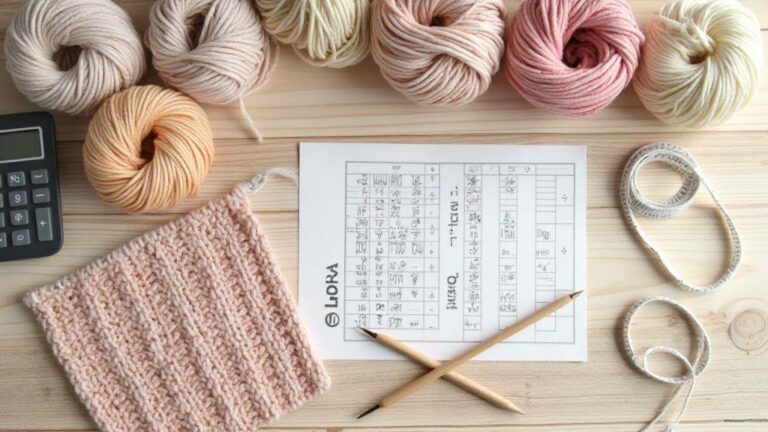
Start each row at the base chain or turning chain indicated at the start. Follow the sequence of symbols along the row. If you encounter an unfamiliar symbol, pause, check the legend, and continue. Practice reading symbols, and patterns will become predictable, making Amigurumi feel like a finished character rather than yarn sprawled on a hook.
Visualize how stitches stack in rows. Some symbols stack to show increases, decreases, or rounds. This helps you keep edges neat and the shape true. With time, you’ll read patterns row by row without getting lost.
Quick legend cheat sheet
Keep this nearby for fast reference. Common symbols: a small oval for a chain, a plus for single crochet, a curved arrow for turning, a hollow square for increasing, and a hollow triangle for decreasing. If you see sl st, that’s a slip stitch to move yarn without adding height. Save this cheat sheet on your phone or pin it to your bag so you can grab it when needed.
Use simple row counters and apps
Row counting shouldn’t slow you down. Choose counters or apps that fit your workflow and reduce mistakes. If you lose your place after a long repeat, a simple mechanical counter may suffice; if you prefer digital progress, an app can show where you are with a tap. The aim is counting almost automatically so you can enjoy the process and finish faster. Consistency across projects reduces mistakes and keeps you on track.
Decide on a counting method you don’t have to think about—one that fits your setup and sticks with you through every row. Clip-on counters, phone/tablet apps, or standalone devices all work; just pick what feels natural. A well-designed setup makes counting feel invisible, like a helpful partner rather than a distraction.
Test the learning curve of any app and choose a popular option with a clear tutorial if you’re unsure. A good app boosts confidence and reduces miscounts, helping you finish your AMIGURUMI with a smile.
Set up your digital counter
Open the app, create a new project named after your Amigurumi piece, and enter the pattern’s row counts per section if supported. Enable a visual highlight for the current row, and ensure you can advance or backtrack with a single tap. Use notifications for pattern repeats if helpful, and switch to a high-contrast theme for dim lighting. Keep a mechanical counter as a backup in case your device dies. If possible, enable cloud backups to preserve progress across devices.
Mark rows with stitch markers and lifelines
Stitch markers and lifelines are essential in Amigurumi. They keep you oriented, especially with repeats or color changes. Markers act as clear guides to where repeats begin and end, helping you count stitches accurately and fix mistakes without ripping large sections. Lifelines are threads threaded through completed rows to allow easy ripping back to a known good point.
Using stitch markers to track rows in repeats
Place a marker at the start of a repeat (and at the end if there are multiple repeats per row). If there are several repeats per round, keep a marker at the first stitch of the round too. Markers make it easy to see where a repeat begins and ends, reducing miscounts in color changes or increases.
How lifelines save you when you need to rip back
A lifeline is a contrasting thread threaded through a completed row before continuing. If you misread the next row, you can pull the lifeline out and re-knit from that point without disturbing earlier stitches. Practice using lifelines on a swatch to gain confidence. Lifelines are especially valuable when working on complex patterns.
Place markers at repeat points
Place one marker at the exact start of each repeat and another at the end if you’re using multirepeat rows. This setup helps you verify counts and stay in pattern rhythm, especially with color changes or special stitches.
Read knitting and crochet charts row by row
Reading charts can feel like a secret map, but taking it one row at a time makes it manageable. Think of the chart as a picture of your project, with stitches replacing colors and shapes. As you practice, patterns become predictable and your confidence grows.
- In knitting, follow the chart from bottom to top and right to left on each pattern row.
- In crochet, charts are often read in rounds or columns depending on the design. Keep a marker at the start of each round to avoid losing your place.
Mark progress as you go. A quick check after each row helps catch missteps early. Use a light touch with yarn and a hook that fits your stitches. Small, steady steps beat frantic sprints.
Reading knitting charts row by row made easy
Start with the chart key to learn symbol meanings, then keep a row counter or sticky note to mark progress. Swatch first to test gauge, chart symbols, and reading flow before committing to a full project.
Read crochet charts and follow each row step by step
Crochet charts can show rounds or rows. Identify whether your chart uses rounds or rows, then follow the direction arrows. Maintain relaxed tension; a tight grip causes mistakes. If you lose your place, recount chains and stitches on the current row. Color-coding or notes in a separate notebook can help with tricky motifs.
Start with the chart key
Begin every chart by looking at the key. It translates symbols into stitches, and keeping it handy helps you double-check unfamiliar symbols without breaking rhythm.
Manage pattern repeats without losing your place
Repeats can be your friend and your foe. Track every repeat with a simple system: markers for each repeat, quick checks at the end, and a mental map of your position. Visual cues like color markers, sticky notes, or small rings along your hook help you stay oriented. Pause at the end of each repeat to confirm the stitch count before moving forward.
Build a routine to manage repeats without overload. Use markers or color-coded yarns to indicate repeat points, and verify you’ve completed the correct number of stitches before continuing. A steady cadence for repeats helps keep your Amigurumi’s edges neat and consistent.
Tips for following complex pattern repeats
For tricky repeats, use visual markers and checkpoints to stay on track. Color badges on your pattern for each repeat section and advance them at the end of each repeat. Consistent stitch counting is essential; confirm you’ve reached the exact stitch number required for the end of the repeat before moving on. A small adjustment here prevents bigger errors later.
Count repeats and mark them as you go
Label completed repeats with a marker or note the number on a sticky note. Keep counting visible and immediate so you don’t have to pause to re-figure your place. As you finish each repeat, move the marker forward and count aloud in your head. This builds muscle memory and reduces double-counting.
Fix mistakes and avoid confusion quickly
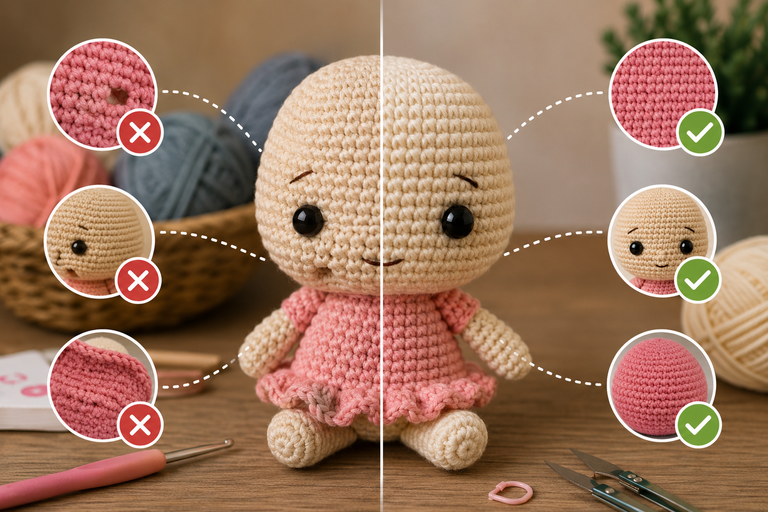
Mistakes can snowball if you don’t fix them promptly. Keep your pattern row clearly labeled in notes or on a sticky near your project. If you skip or add a stitch, recount from the last completed row and compare to the pattern. When you identify the misstep, rip back to that point and resume with the correct row.
Be honest about where you’re off. If you missed a row, mark the last correct row with a contrasting yarn or stitch marker. Rip back when needed rather than pushing forward in the wrong spot. Slow down and recheck your steps. Read the pattern aloud, count stitches, and compare to the written instructions. A small mistake—like a wrong turn or an incorrect yarn over—can affect multiple rows. Consistent checks keep you calm and confident.
How to spot where you went off the row
If you drift, check stitch counts, texture, and height against the pattern. Look for extra or missing stitches, gauge issues, or misaligned shapes. Mark the row where you diverged and work forward from there, recounting every stitch to align with the chart. If needed, go back a row and rework slowly to regain alignment. Use markers as a breadcrumb trail to stay on track.
Simple rip-back methods to stay on track
Rip back to the last correct row and rework with extra care. For asymmetric errors, revert to just before the mistake and redo that row. If you’re near a color change, undo just enough to correct the change. In tricky textures or colorwork, sometimes it’s easier to drop and rejoin rather than unraveling the entire section. Stay calm and work one stitch at a time.
Use a lifeline before hard rows
Weave in a lifeline before tackling difficult rows. Thread a contrasting thread through the row you’re about to start; if you misread the next row, you can pull back to the lifeline and re-knit above it without disturbing stitches below. Practice on a swatch to gain familiarity. This simple step makes complex sections navigable and saves time.
Know the difference between flat and circular rows
Flat pieces are worked with rows you turn at the end of each row, counting from edge to edge. Mark the first and last stitches, and note color changes to stay organized. Circular rows are continuous loops; you don’t turn, you rotate around the circle and count stitches around the circumference. Use a round-start marker to avoid losing your place.
Track right-side and wrong-side rows when knitting flat
In flat knitting, alternate right-side (RS) and wrong-side (WS) rows. RS rows follow the pattern’s instructions; WS rows use the inverse. Keep a small RS/WS note on the pattern edge, count stitches at the end of each row, and use a marker at the first stitch of each row to stay oriented.
Read rounds vs rows when working in the round
When working in the round, read rounds, not rows. Each round is a full circle; place a start marker for Round 1 and count stitches around the circle. Note color changes and keep a marker near those spots to prevent misplacements. Rounds become as familiar as rows with practice.
Note the start of each round
Put a marker after the last stitch of Round 1, or at the first stitch of Round 1. This marker guides you for the next round, preventing miscounts and misaligned seams. When changing colors or stitches, this marker helps you align changes precisely.
Keep clear notes and a row log
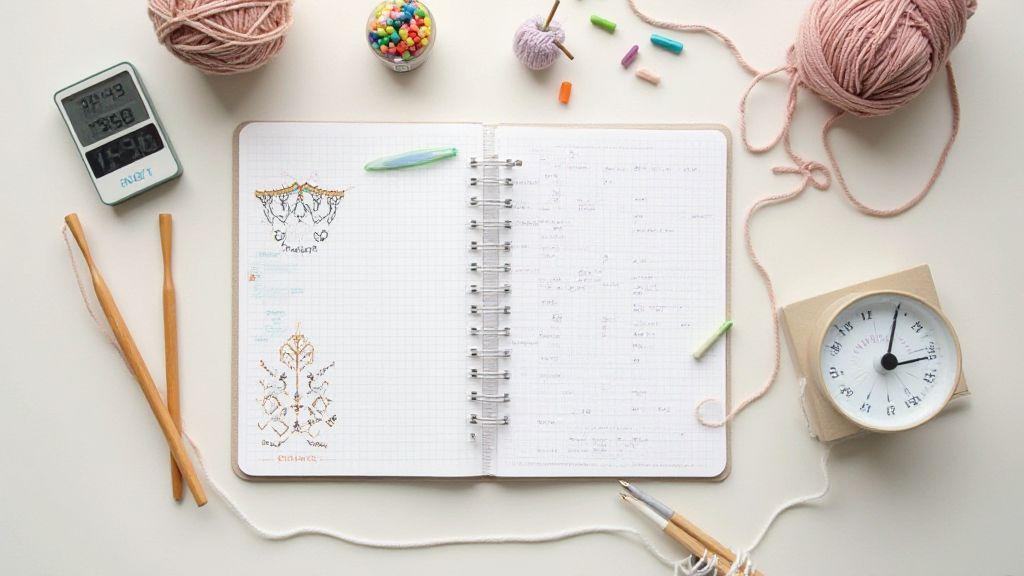
Clear notes and a row log keep you organized and confident. Think of notes as your map through each stitch. A row log should be concise: row number, stitch count, color changes, and where shaping occurred. Use a notebook dedicated to each project or a searchable digital note app.
Marking rows in crochet patterns with a notebook
In a notebook, write the row number and what happened: stitches, increases, decreases, color changes, and any notes. Color-code actions to make the trail easy to read. Open the notebook to the current row before you begin to confirm counts and steps. A ready reference keeps you from second-guessing.
Step-by-step pattern following for beginners using notes
Start with project name, hook size, and yarn weight. Write the first row’s instructions in simple terms and record the exact stitches you make. As you progress, add more detail: stitch counts, where to place increases, and any height changes. Jot reminders like check tension here to prevent errors. Capture milestones—before sewing parts together or after a color change—to anchor your progress.
Jot stitch counts each row
Record stitch counts for every row (e.g., R3: 12 sc). If counts look off, locate the starting point of the discrepancy. Stitch counts act as checkpoints to balance increases and decreases, ensuring neat shapes. Note color transitions in counts for a clean finish. Final counts let you verify against the pattern later.
Practice swatches and pace your work
Start with small, tight swatches to test stitches, gauge, and tension. Swatches become your data set for hook size and yarn changes, helping you translate pattern rhythm to the final piece. Label each swatch with yarn, hook, and stitch count so you can reuse the data.
Pacing is the secret weapon. Set a clear goal for each session: complete a certain number of rows, measure gauge, and time a row. If frustration rises, switch to a calmer swatch or different yarn. The goal is consistency, not speed. With practice, swatches become a map you trust for bigger projects.
How to follow a knitting pattern row by row with a swatch
Create a swatch that mirrors your planned toy, then count rows and stitches as written. Use the swatch to test gauge and chart reading before the main project. Track gauge and adjust hook size or tension if needed. Use a marker for the first few stitches and row count to verify alignment when you resume after a break. Practice through repeats on the swatch before tackling the full piece to catch errors early.
Avoid getting confused following pattern rows by slowing down
Slow down and read each instruction aloud in your head. Break the row into bite-sized actions: where to insert the hook, which stitch to use, and how many repetitions. If a row has a tricky stitch or a tight increase, pause and review that step. Mark starting and ending points with a contrasting marker or scrap yarn. If color changes are involved, write the color order and use a visual cue to remind yourself which yarn to pick up next. Slowing down isn’t a setback; it’s your safety net for clean edges and correct counts.
Practice repeats before main work
Practice the recurring repeats on a small piece before the main project. Focus on the repeat section to build muscle memory. Once you’ve nailed the repeats, translate that rhythm to the main work, and document any adjustments for later repeats. This focused practice saves time and reduces doubt in the middle of the project.
If you’ve followed along, you now have a robust approach to following a pattern row by row without getting confused. With disciplined use of abbreviations, symbols, counters, markers, lifelines, charts, and careful notes, you’ll enjoy steady progress and better results on every Amigurumi you make. And remember the core phrase: How to Follow a Pattern Row by Row Without Getting Confused — let it guide your method as you crochet with confidence.
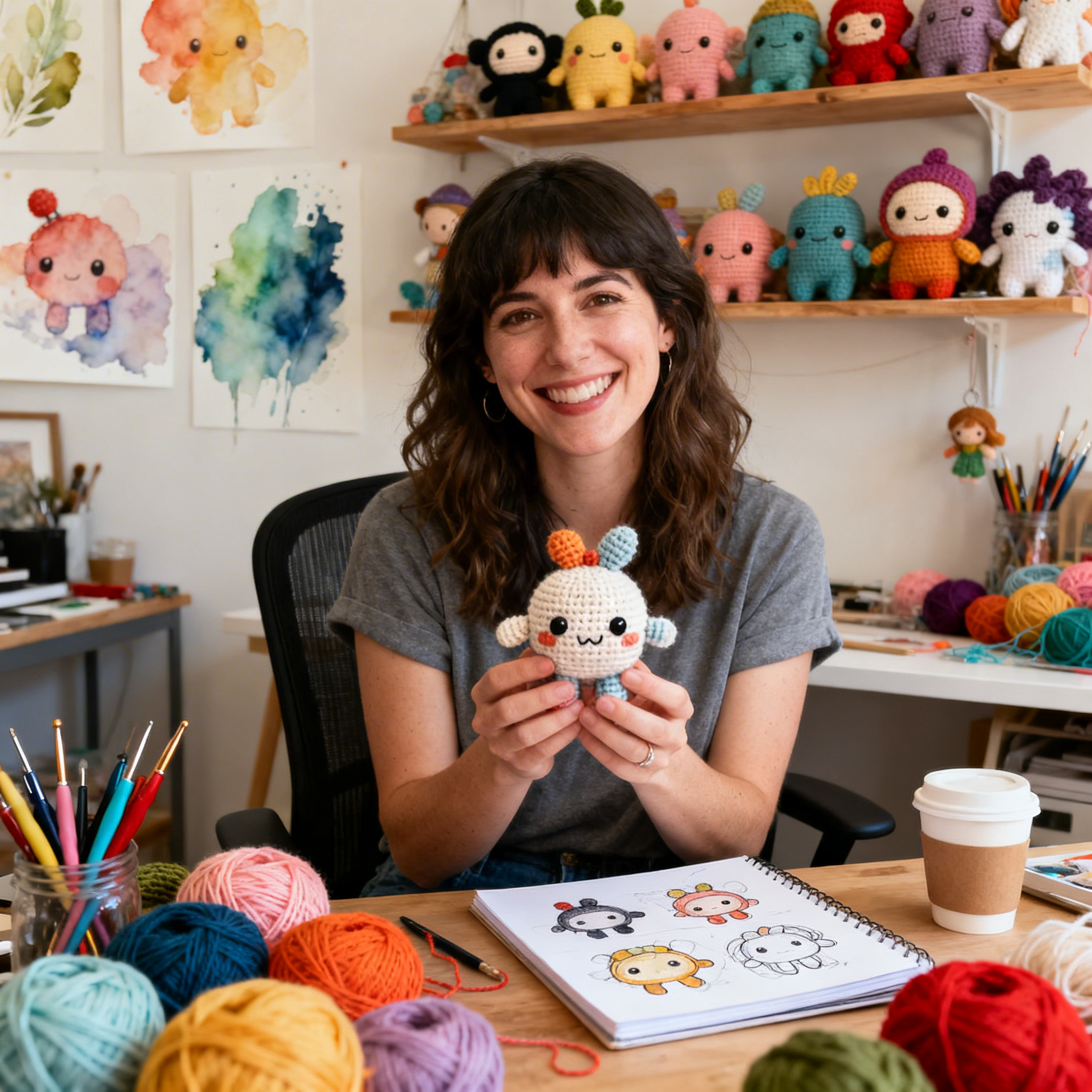
Clara Fern — Crochet Artist & Amigurumi Designer
Clara Fern is a crochet artist and amigurumi designer based in Austin, Texas. With 9 years of experience working with yarn and hook, she transformed a lifelong passion for handcraft into a creative mission: making amigurumi accessible, fun, and deeply rewarding for crafters of all levels.
Clara discovered amigurumi during a trip to Japan in 2017, where she fell in love with the art of bringing tiny characters to life through crochet. Back home in Texas, she spent years studying color theory, design principles, and advanced crochet techniques — developing her own signature style that blends kawaii aesthetics with original character design.
Through maclafersa.com, Clara shares everything she has learned — from choosing the right yarn and reading your first pattern, to designing fully original amigurumi characters from scratch. Her writing is known for being clear, detailed, and genuinely helpful, with no steps skipped and no secrets kept.
When she’s not crocheting, Clara enjoys watercolor painting, visiting local yarn shops, and drinking way too much coffee while sketching new character ideas.