Amigurumi Advent Calendar: 24 Mini Patterns for Christmas
Plan Your Amigurumi Advent Calendar: 24 Mini Patterns for Christmas
You’re turning a crochet plan into a festive daily surprise. This guide helps you map out your Amigurumi Advent Calendar so you can crochet confidently, plan each tiny gift, and gather exactly what you need. By the end, you’ll have 24 little treasures that bring smiles all season long.
Start by choosing 24 mini patterns that fit your style and time. Mix classic animals, holiday icons, and a few cheeky characters. Keep the list manageable but varied enough to stay exciting. This is about steady progress and savoring each tiny creation, not rushing to finish.
Design a simple daily routine that fits your life. Perhaps a bit every evening or a batch on weekends. Put a straightforward schedule on paper and stick to it. Consistency helps you complete all 24 without burnout. Track stitches, yarn, and hooks so nothing slips through the cracks. Your calendar becomes a reliable habit, not a race.
Choose 24 mini amigurumi patterns
Pick patterns that suit your pace and mood. Group them by theme—animals, sweets, holiday icons—and balance easy with a few that are a touch more challenging. If unsure, choose patterns you’ve practiced or can adapt quickly. This step forms the heart of your calendar, so write them down.
Note any special yarns or colors needed for each pattern. Keep a color list handy and mark shared supplies to avoid extra trips to the store. A small stash map helps you see what you have and what you still need. Your goal is a clear plan with no last‑minute shopping.
Set a daily crochet schedule
Chart your daily path. Decide how many days you’ll crochet before revealing the next mini. Some prefer quick 20‑minute sessions; others enjoy longer weekend blocks. Lock in a rhythm that fits your life and map each day to a single mini or a two‑day mini for a slower pace. Keep days consistent and realistic.
Write the schedule down and keep it visible. A calendar note or sticky on your workstation helps you stay on track. If life gets busy, swap days but keep the order intact so the surprise stays intact. Your routine becomes a small, dependable ritual you look forward to.
Make a materials list
List every hook size, yarn color, stitch markers, stuffing scraps, and finishing supplies. Group items by pattern so you can grab what you need quickly. Include safety eyes and embroidery floss for details, plus a needle for sewing in ends. A materials list keeps you from mid‑project runs to the store.
Pick Mini Crochet Patterns for Christmas
You’re choosing mini crochet patterns for the holiday season. Think about how you’ll use them—stockings, tree toppers, gifts, or party favors—and narrow options to fit. Consider sizes, textures, and whether you want a traditional look or something quirky. Your Amigurumi Advent Calendar: 24 Mini Patterns for Christmas will feel cohesive and festive.
Store finished pieces with practicality in mind. For a busy household, choose sturdy designs that hold their shape and can be completed in a single evening. If you’re crocheting with kids or beginners, pick forgiving stitches and simple shapes. Check yarn choices; soft acrylic is easy to wash, while fuzzy yarn adds coziness. Your selections should feel exciting, not overwhelming, so you can start stitching with confidence.
When you pick patterns, mix classic ideas with fresh concepts. Include a few tiny sweaters, animals, or ornaments to anchor your list, plus a couple of novel shapes to keep things interesting. Ensure you can see gauge and color guidance in each pattern so finished minis match your vision. For a cohesive Amigurumi Advent Calendar: 24 Mini Patterns for Christmas, aim for a unified color story and compatible sizes.
Select amigurumi Christmas patterns by theme
Choose a guiding theme to streamline shopping and pattern selection. Traditional Christmas motifs (bears in Santa hats, tiny stockings, candy canes) work well, while a modern vibe might use geometric shapes or minimalist animals. If crafting for kids, pick friendly characters. A cohesive theme helps you finish faster and makes gifting feel intentional.
Group patterns by how they look on the tree, garlands, or table decor. Pair glittery accents with simple motifs for balance. Balance colors and textures so nothing clashes. Your goal is a charming, unified look that tells your Christmas story at a glance.
When you choose by theme, you save time and stay inspired. Start with one theme and add a second later if needed. This keeps your workload manageable and lets you enjoy the process.
Match patterns to your skill level
Be honest about what you can finish well. Beginners benefit from clear rounds, simple stitches, and fewer pieces. More experienced crocheters can tackle more complex minis with detail. Matching skill level to patterns preserves motivation when you hit tricky parts.
Look for patterns that note difficulty clearly, with tips for common hiccups. Patterns with photos or coaching notes help you learn faster. Aim for several patterns in the same difficulty range to build muscle memory and finish more smoothly.
Test one mini pattern first
Test one pattern before committing to the whole batch. This gives you a realistic feel for yarn, hook size, and time. If gauge shifts or stitches feel tight, adjust early rather than halfway through.
Use a small, inexpensive yarn for testing. If you love the result, your yarns and hooks will work for the rest. If not, you’ll save time and avoid redoing multiple minis. Testing keeps your list honest and attainable.
Gather Tools and Yarn for Small Amigurumi Ornaments
Gather a simple kit: sharp scissors, a tapestry needle, stitch markers, and a soft seam ripper. Keep yarn in labeled skeins to avoid mid‑project hunting. Choose a DK or light worsted weight in colors you love, with a few contrasting shades for details. A grippy crochet hook and a lightweight aluminum hook reduce hand strain and slipping. Include a small needle for finishing touches and a few sticky notes to mark repeated rounds. A compact bag or tray helps keep tools organized. Plan a color set: one main color, a second for accents, and a tiny highlight for eyes or noses.
Choose hook sizes and yarn weights
Hook size and yarn weight set the foundation for tight, neat stitches. For small amigurumi, a snug fabric helps stuffing stay hidden. Start with a 3.5–4.0 mm hook for DK yarn, and go down a size for worsted. If stitches look loose, try a smaller hook; if they pucker, switch up.
DK weight yields delicate minis; sport or light worsted can work for chunkier characters with pattern adjustments. Always test a swatch to confirm gauge. Once you find a good combo, note it in your project journal for faster, steadier future ornaments.
Buy stuffing, eyes, and sewing tools
Choose fluffy, smooth stuffing for even filling and crisp shapes. Start with a small pack of flat-fill stuffing and a scent-free option if needed. Eyes bring character; safety eyes are quick, but yarn or embroidery eyes give a softer look. Check pattern eye size and placement to avoid odd expressions. A few extra components—buttons, noses, tiny ears—add personality without clutter.
Sewing tools include a sharp tapestry needle, a seam ripper, and stitch markers. A blunt-ended needle helps close gaps without snagging. Keep scissors, a glue stick for secure eyes, and a small pin cushion handy. With the right tools, you’ll sew on features, weave ends, and finish with tidy knots.
Organize supplies by day
Organize by day to keep the process smooth. Day 1: gather tools, yarns, and patterns, and set a dedicated workspace. Label sections of your setup so you can grab everything in one sweep. Day 2: swatches and test stitches to confirm gauge and practice tricky parts. Store the swatch with the pattern for quick reference. Day 3 onward: tackle full ornaments in parts—body, ears, eyes, assembly—in separate sessions. Use labeled bags for each part to avoid mixups. Finish by assembling, hiding ends, and testing the final shape.
Use Step-by-Step Amigurumi Tutorials
Breaking projects into small, clear steps helps you learn faster. Start with a simple pattern and follow each stage in order. Tutorials typically include materials lists and gauge checks. Gather yarn, hook size, and stuffing before you begin, and check tension to keep proportions. If color changes are required, prep a small palette on your workspace.
Practice the rhythm: stitch, stuff, assemble. Reread tricky steps and compare with your work to improve accuracy. Following visual guides makes your amigurumi look polished in less time.
Read abbreviations and stitch notes
Memorize common abbreviations (ch, sc, inc, dec, sl st) and keep a quick reference card handy. Practice any special stitches on scrap yarn first. Stitch notes guide you on tension, rounds, and where to close openings or join parts. If a note suggests a larger hook for stuffing, you’ll know why. Double-check abbreviations, as some patterns reuse terms with subtle differences.
Follow photo or video guides
Photos and videos act as a map for your hands. Study the full sequence, then zoom in on challenging steps. Pause and try the move without looking, then compare. Rewatch or recheck if needed. Keep your workspace organized and in the sequence you’ll need, so you stay confident and enjoy the process.
Practice stitches with scrap yarn
Use scrap yarn to rehearse stitches and rounds until your hand remembers the rhythm. If you err, pause, retry, and compare with the guide. Test tension and stitch height to keep your pieces even. Your finished ornaments will thank you for the extra practice.
Assemble, Finish, and Label Miniature Crochet Toy Patterns
Review pattern notes to know which parts to sew and the order to join them. Keep ends tucked and work tidy so color changes stay clean. Test the shape by giving a gentle squeeze; if it holds, you’re on track. Label each toy with a name and completion date for progress tracking.
Assemble in stages: finish each part before joining. Use matching or slightly contrasting yarn for clean joins. Tug test joints after attaching to ensure stability. A consistent finish helps your miniatures stay durable through handling and play.
Label and organize finished minis for storage and gifting. Create small, durable labels with the toy’s name, pattern, and your initials. Attach or tuck the label in a tiny pocket so it won’t snag on clothing. If gifting, include a care note (hand wash, lay flat to dry). A polished finish and cohesive presentation elevate your Amigurumi Advent Calendar: 24 Mini Patterns for Christmas.
Sew parts and hide ends neatly
Sew parts with small, tight stitches to keep seams invisible. Use ladder or mattress stitches to close openings, and weave tails through neighboring stitches to vanish ends. When color‑changing, carry yarn inside to avoid gaps. Align eyes and features for balance. A neat finish lasts longer and looks crafted, not hurried.
Weave in stray tails at the back of seams and center lines, then test by gently shaking the toy. If you spot a gap, add a few more internal stitches and re‑weave ends. Quality finishing makes your pieces feel handmade with care.
Secure safety eyes and joints
Secure eyes and joints to keep minis kid‑friendly. Place eyes before closing the final seam if the pattern requires it, using washers or security backs. For joints, use strong, matching embroidery thread or a dedicated toy joint method. Ensure movement is steady—neither too loose nor too stiff. Keep all hardware and stitches secure with a final check.
If you’re making a group, keep eyes and joints consistent across the set. Store extra backs and small hardware in a labeled container to speed up future projects. This attention to security preserves the charm of your Amigurumi Advent Calendar: 24 Mini Patterns for Christmas.
Pack toys in numbered pouches
Package each mini in numbered pouches that match your assembly order. Include a tiny note with the toy’s name and its pattern source. Numbering helps you stay organized for large runs and makes unboxing feel like a treasure hunt. Seal pouches with a coordinated sticker or string tie for a polished finish. This packaging step makes your handmade set feel intentional and gift‑ready.
Display, Gift, or Sell Your Crochet Advent Calendar
Your crochet Advent calendar can display beautifully, be gifted, or become a small business item. Aim for a festive, accessible presentation—think a warm display in a window or on a mantle—where each day’s mini gift catches the eye. If you’re selling, include clear photos, simple care notes, and a friendly product description. Labeling each pocket or day with a number and a hint about the pattern inside helps track progress and adds a playful element.
For selling, price thoughtfully by materials, time, and packaging. Offer a clear return policy and include care notes with every order. Use the keyword Amigurumi Advent Calendar: 24 Mini Patterns for Christmas in listings to help buyers discover your calendar when searching for a ready‑to‑crochet festive project.
Build a hanging or box display
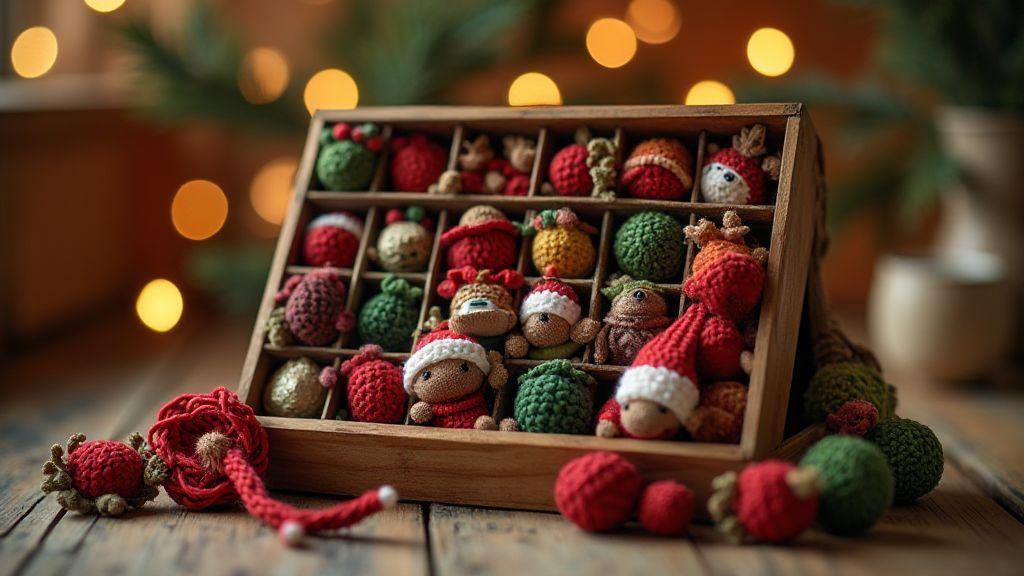
A hanging display creates dramatic impact. Use sturdy hoops or a wooden rod, attach pockets or clips, and keep a simple color scheme with evenly spaced pockets. A vertical line along a wall works well in small spaces. A box display—a shallow wooden box lined with fabric—also suits photos and shops. Number compartments 1–24 and place a single mini inside each. Ensure stitches are tight and attach points hidden for a polished look. Add tiny bows or pine sprigs sparingly to keep the crochet front and center.
Wrap as daily amigurumi gift patterns
Wrap each day as a tiny amigurumi gift to add wonder. Crochet 24 mini characters or ornaments that fit inside pockets, using a consistent yarn weight and hook size for uniform size. Simple silhouettes—bell, star, animal, or tree—finish quickly and feel cohesive. If selling, include a tiny tag with the next day’s clue or a stitch tip to create a progressive journey through the 24 patterns. Tuck pieces securely so nothing shifts during transport.
Daily patterns can progress from beginner to light intermediate, maintaining motivation and buyer confidence. Use bright colors with a few metallic accents for holiday magic. The result is a charming, collectible set people will want to display year after year.
Add care and wash instructions
Include clear care instructions with every calendar. State basics: hand wash in lukewarm water, gentle detergent, lay flat to dry. Note any color‑bleed warnings if using delicate dyes and suggest a test wash. A concise care card reduces returns and builds trust, especially for a product meant to be cherished.

Clara Fern — Crochet Artist & Amigurumi Designer
Clara Fern is a crochet artist and amigurumi designer based in Austin, Texas. With 9 years of experience working with yarn and hook, she transformed a lifelong passion for handcraft into a creative mission: making amigurumi accessible, fun, and deeply rewarding for crafters of all levels.
Clara discovered amigurumi during a trip to Japan in 2017, where she fell in love with the art of bringing tiny characters to life through crochet. Back home in Texas, she spent years studying color theory, design principles, and advanced crochet techniques — developing her own signature style that blends kawaii aesthetics with original character design.
Through maclafersa.com, Clara shares everything she has learned — from choosing the right yarn and reading your first pattern, to designing fully original amigurumi characters from scratch. Her writing is known for being clear, detailed, and genuinely helpful, with no steps skipped and no secrets kept.
When she’s not crocheting, Clara enjoys watercolor painting, visiting local yarn shops, and drinking way too much coffee while sketching new character ideas.