Ergonomic Crochet Hooks: Are They Worth It for Amigurumi?
Reduce your hand pain with ergonomic hooks
Crocheting amigurumi is fun, but hand pain can sneak up on you. Ergonomic hooks help maintain a comfortable grip and stitch consistency. Switching gradually can reduce cramping and keep your wrist in a natural angle. Think of ergonomic hooks as a seat belt for your hands: they guide your motion and reduce strain. Start with one option to test the difference.
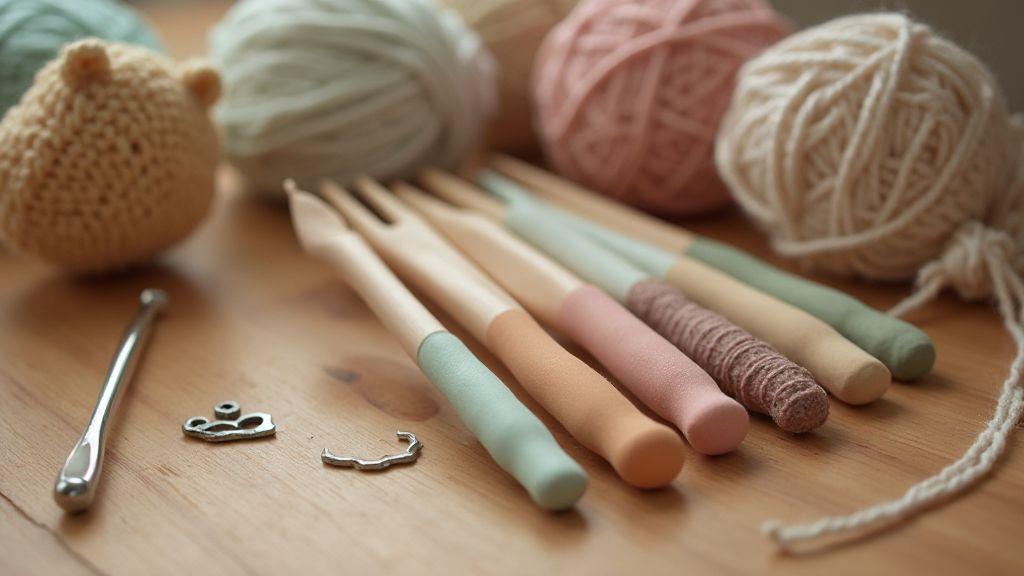
If you’ve been using standard hooks, you might feel tension after a long block. Ergonomic hooks have thicker, softly shaped handles that fit your palm and give you a steadier hold. This means less effort to pull through stitches, so your tendons stay happier. You’ll still crochet the same stitches you love, but with less push-pull on your joints, keeping wrists relaxed during longer projects like a large amigurumi bear.
Choosing the right ergonomic hook matters. Look for a handle that feels comfortable in your grip, not too small or too bulky. The hook tip should glide through yarn smoothly, so you don’t have to squeeze hard. If you’re unsure where to start, try a few shapes: larger or softer grips, or a shorter shaft. Your hands will thank you when you finish a session with ease rather than stiffness.
How ergonomic hooks reduce hand pain crocheting amigurumi
Ergonomic hooks spread the work across your hand, reducing pressure on the thumb and index finger as you pull through stitches. You’ll notice smoother movements and better control with a comfortable grip, keeping stitches neat and your hand relaxed. The design helps you avoid pinching after long sessions. A better grip also improves posture, keeping your wrist natural and reducing shoulder fatigue, so you can crochet longer without waking up sore. For tiny, fiddly amigurumi, the ergonomic handle helps manage small motions without overworking your hand.
Your technique can stay the same, but your comfort level rises. Improved leverage means you don’t have to squeeze as tightly, lowering stress on tendons and ligaments. Ergonomic hooks keep you in the game longer, helping you finish more projects with joy, not discomfort.
When you should switch for comfort
Switch to ergonomic hooks when you notice tingling or aching after crochet sessions. If your grip tightens quickly or your hand stiffens mid-project, it’s time to try a different handle. Even if you’re not in pain yet, you might feel less fatigue after a long amigurumi block. Proactive swapping pays off.
Consider switching for big projects. Hours of crocheting a large bear or a cluster of tiny characters can benefit from ergonomic grip support. If you crochet with friends and sessions last longer than an hour, testing ergonomic options can extend your comfort zone. You don’t have to quit your favorite hook style—just have an ergonomic backup.
If you have arthritis or sensitive joints, ergonomic hooks can be especially beneficial. Look for cushioned handles and lighter weight options. A longer handle can give more leverage, reducing the force you need to apply. Your goal is to finish patterns without morning stiffness.
Quick hand relief tips for your crochet sessions
- Keep your hands relaxed and shoulders down. Take a short break every 20–30 minutes. Roll your wrists, stretch your fingers, and shake your hands out. Swap to an ergonomic hook during the break to feel relief. Use a light grip; you don’t need to claw the hook to pull through stitches.
Improve your speed and tension control
You’ll crochet more smoothly when you focus on how you hold your hook and yarn. Start with your baseline: are you pulling tight or losing stitches? The aim is steady, consistent tension that doesn’t slow you down. Practice short projects to see how your rows line up. A relaxed grip helps your fingers stop fighting the yarn, so speed increases without sacrificing stitch evenness. Think of speed as a byproduct of control, not a race with tense hands.
Your hands should feel comfortable, not numb. If you fatigue, adjust your grip and yarn path. A calm rhythm helps you maintain tension across different stitch types. Balance is key: enough yarn flow to prevent snagging, but not so much slack that stitches loosen. Your goal is consistent stitches from start to finish, not a sprint with wobbly rows.
As you practice, note small changes. Loosening your grip a touch or letting your wrist float can improve speed and stitch uniformity. Small wins compound: a faster pace without dropping stitches or over-tightening. Confidence grows as you see more even edges and fewer mistakes, fueling progress on larger projects.
How ergonomic hooks affect amigurumi speed and tension
Ergonomic hooks reduce hand strain, so you can crochet longer without fatigue. A comfortable grip keeps your wrist looser and tension steadier, often translating to fewer dropped stitches and faster progress. The right shape lets your thumb and fingers rest naturally, enabling more efficient movement.
Your technique shifts with an ergonomic hook. Expect smoother transitions between stitches and less pinching in your palm. A comfortable hook helps you maintain a steady rhythm, especially on tight rounds or small amigurumi pieces. If fatigue has slowed you, ergonomic hooks can keep you going stitch after stitch.
If you’re unsure, test a few options: lightweight aluminum, plastic with a rounded neck, or wood with a gentle taper. The best hook is the one that makes you forget you’re holding it, so you can focus on your stitches. Ergonomic Crochet Hooks: Are They Worth It for Amigurumi? can be answered only after you’ve felt the difference yourself.
Simple drills to steady your tension
- Drill 1: tension scan — crochet a small swatch, aiming for consistent loop size. After a row, feel for changes in yarn pull. If too tight, loosen your grip; if too loose, tighten slightly. Do this for 5 minutes.
- Drill 2: one-stitch rhythm — crochet a strip in a single stitch pattern, counting stitches aloud in a steady tempo. Don’t rush. Aim for consistent loop size and even height.
- Drill 3: neutral grip practice — hold the hook with a light, relaxed grip and let your forearm do most movement. If knuckles whiten or grip tightens, reset.
- Drill 4: wrist free flow — keep your wrist flexible; move it when yarning over and pulling through, not your whole arm.
Practice plan to balance speed and tension
Set a 20-minute daily routine: 5 minutes tension scan, 5 minutes one-stitch rhythm, and 10 minutes project work focusing on even loops. Gradually increase to 30 minutes as control improves. Track progress by stitch height and loop size. If you feel tight, pause and redo the tension scan. Rotate projects to expose your hands to different yarns and hook types. End each session with a swatch to compare progress.
Choose the right hook for small amigurumi stitches
You might think any hook works for tiny stitches, but the right hook changes how clean your stitches look and how tired your hands feel. For small amigurumi, prioritize control and smooth motion over speed. Start with a hook size that lets you pull the yarn snug but still allows movement. If stitches pucker or hands ache after a few rounds, adjust up or down. Test several hooks to feel the difference in tension and ease.
Your yarn weight and fiber matter too. A fine cotton can bite the hook edge if the tip is too sharp, while a soft acrylic may slip and need a smaller hook to keep stitches tight. For beginners in tiny amigurumi, start with a size that yields a firm, even fabric. You can switch later if gauge isn’t right. Keep a small hook library in your bag: a few sizes that you rotate between as your technique grows. Label them with the yarn you used to avoid gauge mix-ups. Some hooks feel rigid; others glide. The glide matters for tiny stitches, so choose the one that feels supportive.
Pick hook size for tiny details
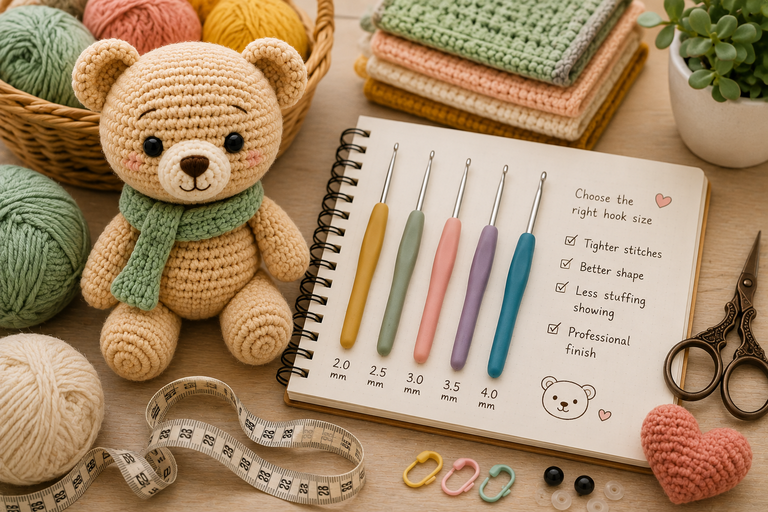
Tiny details demand precise hook sizes. If stitches look loose, try a smaller hook; if they look tight or yarn splits, move up a size. For most fine yarns, a 2.0–2.5 mm size is a good starting point, but your yarn and grip may vary. Crochet a small practice swatch and gauge: aim for uniform loops and even height. The right hook yields a smooth fabric that holds its shape in every limb and ear.
Different shapes matter too. A tip too sharp can snag small stitches; a rounded tip glides through with less snagging. If you’re stabbing at stiff fabric, switch to a smoother tip. Control matters more than exact size. If your stitches form evenly with a relaxed hand, you’ve found your sweet spot.
When unsure, crochet a small practice swatch with several hook sizes. Compare fabrics: the right hook gives a smooth surface with even height and no gaps. Tiny details should look deliberate, not messy.
Adjust your grip for crochet hook grip comfort for amigurumi makers
Grip comfort matters every stitch. If you grip too tightly, fingers tire quickly and control suffers. Try a relaxed grip: rest the hook between your thumb and forefinger, with the base of your palm lightly touching the shaft. Let your wrist do most movement, not your entire arm. A light touch improves control in tiny stitches.
Switch to a lighter hold to prevent cramping. If you notice numbness or a sore joint after long sessions, switch to a bigger handle or padded grip. Cushioned handles can reduce friction. If you try one and feel relief, you’ve found a key upgrade. Rotate your grip during a project and switch positions between rounds or color changes. With practice, you’ll keep steady for tiny stitches without burning out.
Checklist to choose hooks for small stitches
- Ensure the hook tip fits cleanly into small loops without splitting yarn
- Prefer a smooth, rounded tip for less snagging
- Pick a size that gives consistent tension
- Check for a comfortable handle or consider ergonomic options
- Test grip and motion: can you move easily without squeezing hard?
- Match hook to yarn fiber and weight
- Add a few tiny hooks for delicate details and repairs
Compare ergonomic vs standard hooks for amigurumi
Comfort matters as much as stitch control when shaping tiny shapes. Ergonomic hooks feel different in your grip, with thicker handles and softer touches that fit your hand during long sessions. Standard hooks are lighter and slim, which can help you move quickly and maintain tension if you’re used to them. The choice affects fatigue, accuracy, and how long you can crochet before your hand aches. In amigurumi, small, tight stitches help your yarn stay neat, and the right hook makes that easier.
Ergonomic hooks often have rounded, contoured handles that sit naturally in your palm, reducing thumb and finger pressure. You might notice less cramping after long projects. Standard hooks let you feel the yarn directly, giving a very tactile sense of each wrap. If you’re learning, you may prefer standard hooks to build consistent stitch size before trying ergonomic designs. Your hands, your pace, your project—your hook should match that.
Trying both is the fastest way to decide. If you crochet a lot and your hand protests during long amigurumi sessions, ergonomic hooks might be worth testing. If you’re short on time or crochet in quick bursts, standard hooks can keep you moving with less tool distraction. The best hook is the one that lets you stitch with a smile, not pain.
Ergonomic vs standard crochet hooks amigurumi: key differences
- Hand position: ergonomic hooks wrap the grip; standard hooks stay slim and direct
- Control and feel: ergonomic hooks offer steadier tension; standard hooks give more tactile yarn feedback
- Price and weight: ergonomic sets are often pricier and heavier; standard hooks are cheaper and lighter
When a standard hook still works for you
If you crochet in short bursts or you’re new to amigurumi, a standard hook can be your best friend. They travel easily, switch well between yarn weights, and still yield clean stitches for tiny details. It’s a low-risk way to build technique while keeping motions natural.
Quick pros and cons to guide your choice
- Ergonomic hooks: pros — greater comfort, reduced fatigue, steady grip; cons — heavier, pricier, may slow you down if you’re used to light-touch
- Standard hooks: pros — lighter, cheaper, excellent tactile feel; cons — more hand fatigue in long projects, less grip support
Find the best ergonomic brands for detailed amigurumi
Ergonomic brands aim to fit your grip and reduce fatigue so you can shape tiny details with ease. Look for rounded handles, smooth grips, and balanced weight. Test a few in-store or read user notes to feel the comfort for long sessions. A well-balanced hook lets you move your wrist with minimal effort, keeping stitches neat.
Choose brands that advertise comfort features and offer a range of sizes. Materials should glide smoothly over yarn fibers to prevent snagging. Consider whether you want a larger, cushioned handle or a slimmer grip. A lightweight set is handy for on-the-go crocheting.
A good ergonomic brand should feel like a natural extension of your hand, enabling consistent tension. A varied selection helps you switch for tight single crochets or looser rounds without hunting for a new tool.
Best ergonomic crochet hook brands for amigurumi to try
Look for contoured handles, soft grips, and balanced shafts. Smooth, snag-free finishes help yarn glide, especially on fluffy fibers. Try a few shapes to see which feels best in your palm. If you crochet long sessions, prioritize comfortable weight and a grip that reduces friction. Reviews from amigurumi makers can guide your choice, and interchangeable sets save time and keep your hands relaxed.
Material and finish matter too. A well-polished surface reduces snagging on cotton or soft acrylic. Ergonomic shapes vary, so test whether you prefer a wider cushioned handle or a slimmer grip. The right brand should feel natural in your hand and encourage consistent tension.
Best crochet hooks for amigurumi detail work by price
- Under $5: budget ergonomic hooks with cushioned grips are great for testing comfort and learning tension
- Mid-range ($5–$15): sturdier materials, more pronounced ergonomic handles, snag resistance; good for detailed work
- Premium ($15): premium materials, ultra-smooth finishes, and comfortable grips; ideal for long sessions on tiny features
Practical tips for using ergonomic crochet hooks on amigurumi
Switching to ergonomic hooks can reduce fatigue while shaping detailed amigurumi. Start with a grip that fits your hand size and feels natural. Keep shoulders relaxed and wrist neutral. Test different grip styles and adjust size if cramping occurs. Organize your workspace so yarn is within easy reach. Rotate between hooks on large projects to avoid overusing one hand.
Tips for using ergonomic crochet hooks on amigurumi everyday
Create a simple daily routine: warm up wrists and fingers, pick a light hook, and maintain a relaxed posture. Check tension often and adjust your grip to keep stitches even. Take short breaks every 20–30 minutes. Store hooks in a cushioned case and organize by size.
Care and maintenance to keep grip comfort
Wipe grips after use to remove oils, and use a tiny amount of safe conditioner if grip gets slippery. Inspect tips for wear and replace worn hooks. Keep hooks away from heat and direct sunlight. Store in a padded case or labeled drawer to stay organized.
Troubleshooting common fit and tension problems
If stitches are uneven, loosen an overly tight grip and adjust your working height to keep your wrist in a natural line. If you feel wrist or forearm pain, check posture: sit tall, open your chest, and take breaks to shake out your hands. If gauge drifts toward the end of a project, compare hook size to yarn and test with a tiny swatch before continuing. Small gauge tweaks can improve the final look significantly.
Ergonomic Crochet Hooks: Are They Worth It for Amigurumi?
Short answer: for many crocheters, yes. If you crochet long sessions, ergonomic hooks can cut fatigue, improve tension consistency, and help maintain comfort across detailed amigurumi work. The best hook for you depends on your grip, project length, and personal preference. Try a few ergonomic options alongside your usual hook to see what truly supports your technique and enjoyment. In the end, the choice should feel natural in your hand and make stitching more enjoyable.
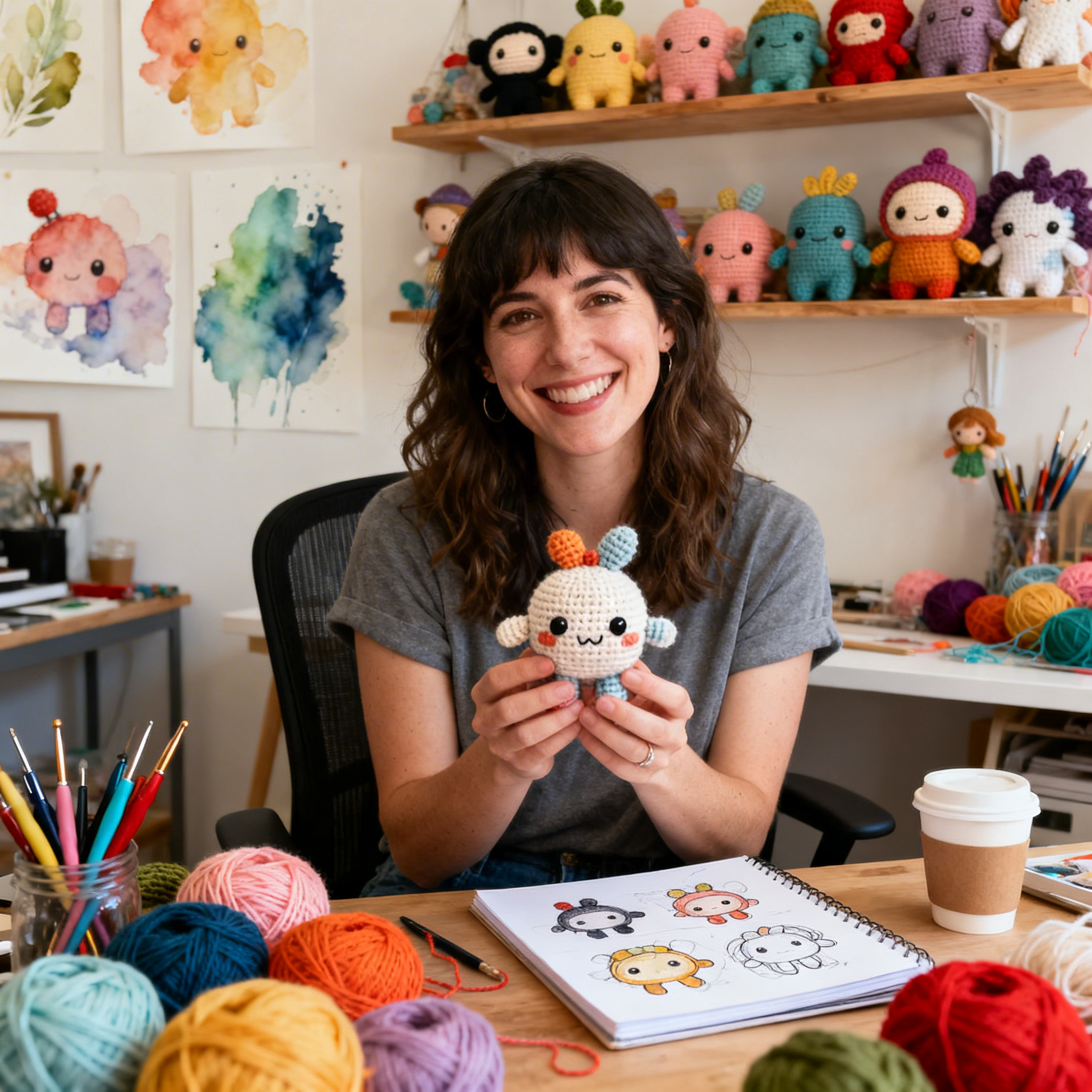
Clara Fern — Crochet Artist & Amigurumi Designer
Clara Fern is a crochet artist and amigurumi designer based in Austin, Texas. With 9 years of experience working with yarn and hook, she transformed a lifelong passion for handcraft into a creative mission: making amigurumi accessible, fun, and deeply rewarding for crafters of all levels.
Clara discovered amigurumi during a trip to Japan in 2017, where she fell in love with the art of bringing tiny characters to life through crochet. Back home in Texas, she spent years studying color theory, design principles, and advanced crochet techniques — developing her own signature style that blends kawaii aesthetics with original character design.
Through maclafersa.com, Clara shares everything she has learned — from choosing the right yarn and reading your first pattern, to designing fully original amigurumi characters from scratch. Her writing is known for being clear, detailed, and genuinely helpful, with no steps skipped and no secrets kept.
When she’s not crocheting, Clara enjoys watercolor painting, visiting local yarn shops, and drinking way too much coffee while sketching new character ideas.