Decoding Crochet Abbreviations: The Complete Glossary
Decode Crochet Abbreviations Quickly
When you start amigurumi, abbreviations can feel like a secret language. This section helps you read the most common terms fast so you can keep stitching without guessing. Each abbreviation maps to a real stitch, building confidence as you work. Understanding abbreviations also helps you spot mistakes early, keeping your final piece cuddly and correctly shaped. Think of it as unlocking a toolbox: knowing each tool makes your repairs smoother and faster.
Crochet abbreviation meanings for beginners
- SC: Single crochet — small, tight stitch for a clean edge.
- DC: Double crochet — taller stitch for quicker fabric.
- TR: Treble crochet — even taller, with open texture.
- slst: Slip stitch — tiny join or move without adding height.
- ch: Chain — foundation or spacer stitches.
- sc2tog: Single crochet two together — a common decrease to shape.
- inc: Increase — add stitches to grow shape.
- dec: Decrease — remove stitches to shape.
How you read stitch symbols
Stitch symbols form a tiny map. Keep a small symbol key handy and follow the sequence to place each stitch correctly. Rounds are shown as circles or ovals; parentheses or repeat numbers indicate repetition. A plus sign or a bar across stitches often marks joining or moving to the next part. Start each round in the same spot, count stitches, and keep tension even to maintain the correct shape.
Quick reference list for beginners
- SC: Single crochet — neat edge.
- DC: Double crochet — taller fabric.
- TR: Treble crochet — tall, open texture.
- slst: Slip stitch — join or reposition without bulk.
- ch: Chain — foundation or spacer.
- inc: Increase — add stitches.
- dec: Decrease — remove stitches.
- Follow the pattern’s round markers and repeat counts exactly.
Decoding Crochet Abbreviations Quickly
Relief comes when abbreviations click. Patterns feel friendlier, and projects come together faster. When you know the basics, you can skim a page and know where to focus. This speed is about confidence, so your amigurumi ends up cuddly, not confusing.
Practice with a simple project first, then apply these tricks to more complex patterns. As you grow, you’ll spot shortcuts and common sequences, saving time without sacrificing cuteness. The more you decode, the more you enjoy the process. Decoding Crochet Abbreviations: The Complete Glossary becomes your quick reference, helping you tackle any pattern with ease.
US vs UK Crochet Abbreviations
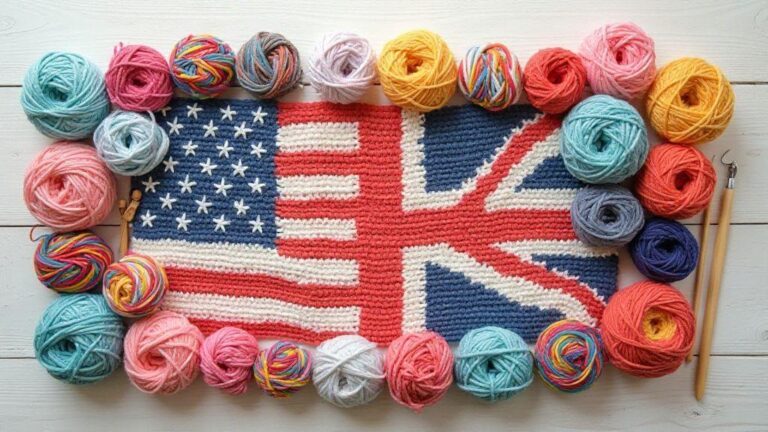
Different places use different shorthand. In the US, you’ll see DC and SC; in the UK, terms may differ (and some designers use other abbreviations for the same stitches). The key is to check the pattern glossary before you start. A handy US-to-UK cheat sheet can save time and keep your tension steady, ensuring smooth AMIGURUMI sessions.
US vs UK abbreviation explained
In the US, DC and SC are standard. In the UK, DC is still double crochet, but you may encounter terms like tr (treble crochet) or dtr (double treble). Skim the notes or glossary first to identify which system a pattern uses, then translate as you go.
How you avoid pattern mix-ups
Open the pattern and glossary first, then create a mini cheat sheet with US/UK equivalents for stitches you see often. Keep it handy to translate on the fly and maintain consistent tension and stitch counts across patterns.
Convert abbreviations step-by-step
1) Find the first instruction and map it to your cheat sheet. 2) Count foundation stitches to confirm rounds. 3) Crochet the stitch with the expected wraps and steps. 4) Translate the next instruction. 5) Compare finished measurements to confirm accuracy. This step-by-step approach helps you convert without drama.
Essential Amigurumi Abbreviations
Abbreviations speed up your work and keep your notes tidy. They map directly to real motions—pulling through a stitch, closing a gap, or moving to a new section. The core terms you’ll use daily include sc, inc, dec, blo (back loop only), and f/o (fasten off). With practice, these shortcuts become second nature, helping your stitches stay uniform from start to finish.
Increases and decreases for toy shaping
- Increases (e.g., inc) grow the piece, often placed in rounds to widen fingers, ears, or heads.
- Decreases (e.g., dec, sc2tog) taper edges and shape curves. Invisible decreases keep seams neat, especially on faces and paws.
Working in rounds vs rows for amigurumi
- Rounds create seamless tubes and smooth surfaces; common terms include slst to join and working in continuous rounds.
- Rows produce flat panels or panels that lay side by side. Rows use turning chains and a grid-like feel.
Amigurumi cheatsheet for stuffing & sewing
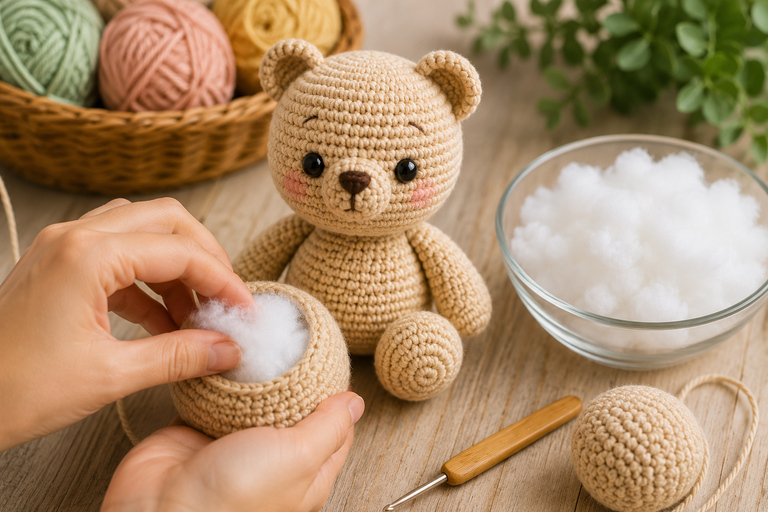
- Stuff in small amounts to shape corners and curves; avoid overstuffing to prevent distortion.
- Sew parts with a yarn needle, aligning pieces first and securing with firm passes. Anchor joints (e.g., three or four points at the neck) to prevent wobble.
- Weave in ends cleanly for a professional finish.
Common Crochet Abbreviations List
Patterns use a small, consistent vocabulary. Familiarize yourself with ch, sc, dc, tr, and sl st, then translate actions stitch by stitch. A one-page cheat sheet nearby speeds up work and helps you stay in the flow.
Basic stitches: ch, sc, dc, tr, sl st
- ch: Chain — base or turning chain.
- sc: Single crochet — tight, sturdy fabric.
- dc: Double crochet — taller fabric.
- tr: Treble crochet — very tall, open texture.
- sl st: Slip stitch — join or move without height.
- Example sequence: ch, sc around, sl st to join.
Special stitch abbreviations explained
Special stitches add texture, shape, or a clean finish. You’ll see inc, dec, and variations like post stitches (fps, bsp) for ridges. Use them to widen or trim fabric precisely, shaping your toys.
One-page printable cheat sheet
A pocket reference with core abbreviations and quick actions to keep you in rhythm and finish projects with confidence.
Printable quick keys for amigurumi
Print a quick reference to keep near your chair for fast checks while you work. It helps you stay in the groove and reduce mistakes, especially when starting out.
Mobile apps and resources to decode
Glossaries, stitch counters, and pattern libraries help you translate abbreviations quickly. Use them as study aids to improve pattern literacy and compare terms across designers.
Save it to your phone
Keeping a quick reference on your phone lets you access the glossary anywhere, update as you learn, and stay prepared for late-night or on-the-go projects.
Avoiding Common Abbreviation Mistakes
Misreading abbreviations can throw off size and stitch counts. Double-check each step, keep a simple notes system, and cross-check with the pattern glossary. Slow down to verify before you stitch. If you notice a mismatch, recount and compare with the chart or glossary. Small, targeted corrections save time and keep your project on track.
Errors that change size and shape
A wrong abbreviation (e.g., reading dc as sc) can alter growth and balance. If you misread inc or dec, the shape may drift. When in doubt, recheck the abbreviation and stitch count for that round, compare with the pattern, and adjust only the necessary section.
How you test a tricky abbreviation
Use a tiny swatch to confirm understanding. Compare the sample to the pattern notes or gauge. If it matches, you decoded correctly; if not, adjust and retry. This safety net helps you avoid major mistakes on a full project.
Fixes without redoing work
Often you can fix a round by adjusting a few stitches in place or inserting a missed step at the right point. If the error affects shape, add or remove only the necessary stitches in the next round. Small, precise corrections keep your amigurumi looking cute and save time.
Decoding Crochet Abbreviations: The Complete Glossary is your ongoing companion as you crochet. Use it to translate terms, check equivalents across US and UK patterns, and maintain your rhythm from start to finish. Your confidence grows with each project, and your amigurumi becomes more polished and consistent with every stitch.
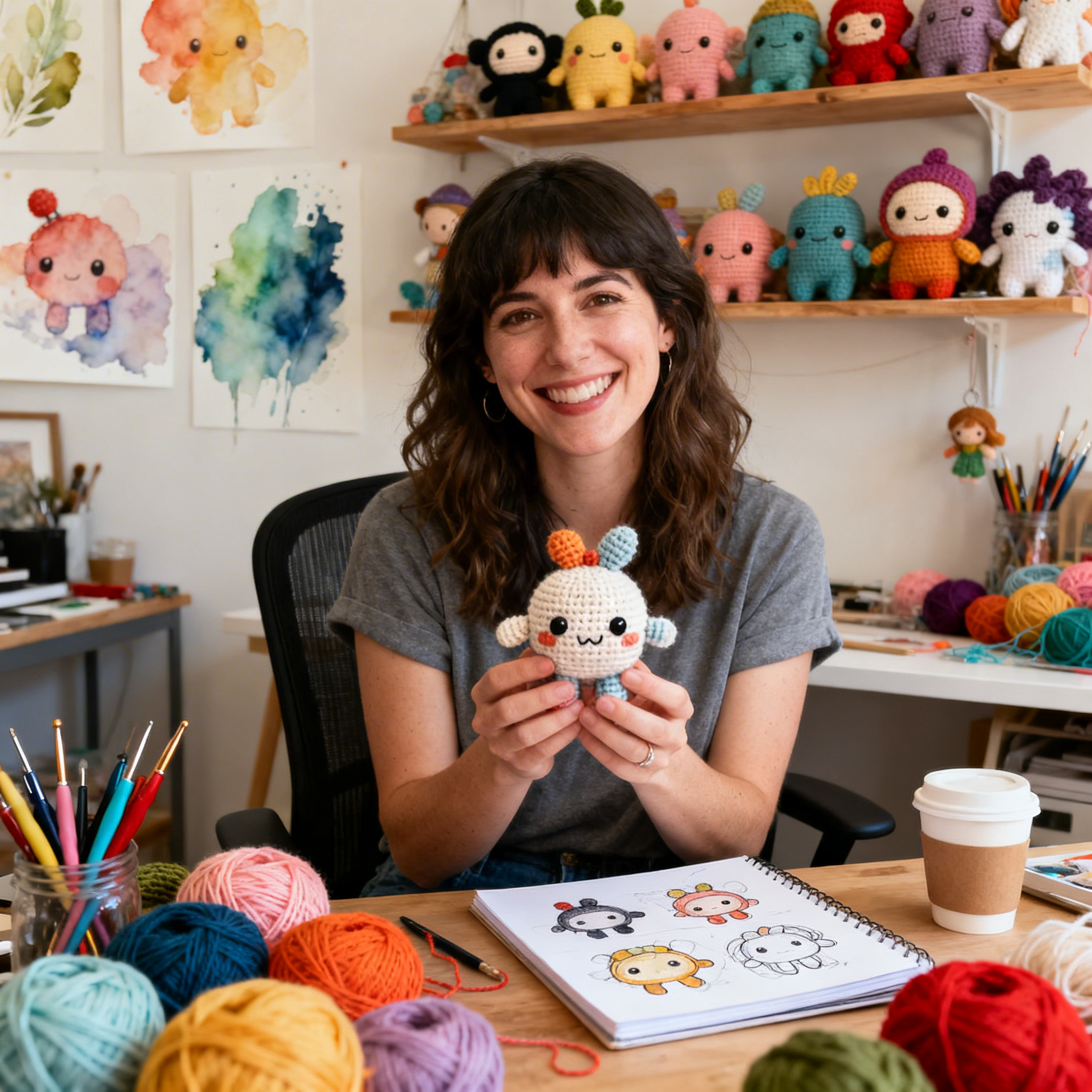
Clara Fern — Crochet Artist & Amigurumi Designer
Clara Fern is a crochet artist and amigurumi designer based in Austin, Texas. With 9 years of experience working with yarn and hook, she transformed a lifelong passion for handcraft into a creative mission: making amigurumi accessible, fun, and deeply rewarding for crafters of all levels.
Clara discovered amigurumi during a trip to Japan in 2017, where she fell in love with the art of bringing tiny characters to life through crochet. Back home in Texas, she spent years studying color theory, design principles, and advanced crochet techniques — developing her own signature style that blends kawaii aesthetics with original character design.
Through maclafersa.com, Clara shares everything she has learned — from choosing the right yarn and reading your first pattern, to designing fully original amigurumi characters from scratch. Her writing is known for being clear, detailed, and genuinely helpful, with no steps skipped and no secrets kept.
When she’s not crocheting, Clara enjoys watercolor painting, visiting local yarn shops, and drinking way too much coffee while sketching new character ideas.