How to Crochet a Poseable Amigurumi Figure from Scratch
Gather tools and yarn you need
You’re about to start a fun project, so gather everything in one place. If your space is cluttered, set a five-minute timer and pull together the essentials. Having tools within arm’s reach keeps momentum, and you’ll feel confident as supplies line up like soldiers ready for battle—fighting boring projects, not you. This is the first step toward mastering How to Crochet a Poseable Amigurumi Figure from Scratch.
Choosing the right tools smooths the process. When your yarn colors are laid out, you’ll be inspired to mix textures and add personality to your figure. The goal is a clean, organized workspace so you can focus on shaping and stuffing without hunting for hooks or spare yarn.
Pick the right yarn and hook
Your yarn choice shapes the look and feel of your amigurumi. For beginners, start with a medium-weight yarn (like worsted) in a solid color; it’s easier to see stitches and correct mistakes. If you want a softer toy, try DK weight, but keep your hook size consistent with the yarn label. A hook that matches the yarn’s recommended size helps prevent holes and loose stitches, and a comfortable grip reduces hand fatigue.
Test a few stitches on scrap yarn to confirm you like the tension. The right yarn and hook set the foundation for clean, tight stitches and a sturdy poseable figure.
Get wire, stuffing, and safety eyes
Wire lets your amigurumi pose. Choose thin, flexible craft wire that bends without losing shape. For stuffing, select soft yet resilient fiberfill so your figure feels plush yet poses well. Safety eyes add personality; for children, opt for yarn embroidery or safety eyes with a locking washer. Choose eye size based on head proportions—too big or too small can throw off the look. Keep spare eyes on hand to adapt colors as your design evolves.
Basic supplies list
Keep a compact toolkit ready: mini scissors, a tapestry needle, stitch markers, and a measuring tape. A pair of pliers helps with wire joints, and a pin or needle assists with shaping. Don’t forget extra stuffing, spare safety eyes, and a reliable yarn ruler for quick checks. With these basics, you’ll be ready to bring your character to life.
Learn basic stitches you must know
Mastering the core stitches unlocks most amigurumi projects. Start by sensing how each stitch feels—tension, rhythm, and yarn flow. When patterns come later, you’ll glide through them because you already know the motions. Practice builds confidence and smooths every project.
Single crochet gives you clean, tight fabric that holds shape, which is essential for amigurumi. Increases open your work just enough to form rounds and curves. Keep a small notebook of what feels right and what doesn’t—notes help you choose the right hook size, yarn weight, and technique for your next piece.
Master single crochet and increases
Mastering single crochet yields a sturdy, even fabric. Turning chains matter less when core stitches stay true and rows stay aligned. Increases shape rounds smoothly, turning flat pieces into heads, limbs, or details on a poseable figure. Watch for tiny gaps where stitches meet; slow your hook a touch to improve tension.
Practice with a simple circle, then try one increase per stitch around. Vary between increases to keep forms even. If you see a wobble, re-check your gauge and hook size.
Practice magic ring and slip stitch
The magic ring starts amigurumi cleanly by tightening the center so stuffing can’t peek through. Practice pulling a snug loop, then work stitches around it with even tension. Slip stitch finishes neatly, seams without bulky texture.
Switch between the magic ring and other starts as patterns call for. Practice both so you can choose quickly. Keep yarn snug but not tight to keep rounds tidy with fewer center bulges.
Stitch practice tips
- Set a timer for 5–10 minutes daily. Consistency beats long, sporadic sessions.
- Use a light, smooth yarn to see stitches clearly.
- Mark your starting stitch to avoid losing your place.
- Take progress photos to compare over time.
Build a simple wire armature for limbs
A simple wire frame lets your amigurumi pose like a tiny sculpture. Start with a straight thigh, a curved knee, and a shorter curled arm. Leave a little extra length at joints for later adjustments. The armature should move like a real joint while staying lightweight and yarn-wrapped for safety.
Aim for a balanced silhouette: thicker wire for the torso, thinner for fingers and toes. Do a quick bend test before wrapping with yarn to spot tight spots or weak edges.
Wrap limbs tightly to keep the wire close to the core, preventing bulk under stitching. Add tiny twists at joints for natural creases. If a limb feels loose, reinforce with extra yarn or a second wrap.
Choose wire and pliers safely
Pick non-sharp wire that won’t slip through yarn. Use pliers with smooth jaws and cushioned grips to avoid marring the wire or skin. Practice with a short length first, and always work on a padded surface. Cap and tuck ends when finished to keep the project safe for little hands and pets. Look at poseable examples for reference, and learn where to place joints for the best movement.
Follow an amigurumi wire armature tutorial
Follow a step-by-step amigurumi wire armature tutorial to place joints correctly and secure them without sacrificing flexibility. Practice a few times to see patterns emerge: hips sway, elbows bend, knees crease.
Watch how the wire interacts with yarn wraps and avoid poking through the surface. If tension falters, pause and re-check. You’re building muscle memory, so the process gets cleaner with each project.
If you want variations, tutorials often suggest different joint placements for heads, torsos, or tails. Adapt ideas to your character and grow more expressive with each joint you place.
Armature safety notes
Keep ends capped and tucked; check for sharp edges. Use a soft wrap to cover exposed tips. If sharing your project, explain joint locations and safe movements to prevent pulling or tugging.
Create joints for movable limbs
Movable joints unlock expression. Plan where each limb will bend and how far it should rotate. Choose joint styles and fabric tension that fit your yarn thickness and hook size to maintain balance. Start with a simple two-joint setup if you’re new, then add complexity later.
Balance matters: heavier limbs need sturdier anchors, lighter limbs can use simpler connections. Test as you go to maintain smooth movement. A well-placed joint lets a leg bend naturally or a head tilt with attitude.
Sew-through joint and hinge methods
Sew-through joints anchor inside for a clean look and stability. Use secure passes and consistent tension to prevent wiggling. Hinge joints insert a stiff core and sew around it to create a living hinge. Keep the core straight and centered for even bending; reinforce with extra stitches if gaps appear.
Try combining methods for different limbs to achieve a natural range of motion without sacrificing durability.
Use crochet jointed amigurumi techniques
Begin with a separate limb piece that mirrors the body’s stitch pattern, then sew the seam closed before attaching. Crochet stitches in the joint area should allow slight stretch—slip stitches or half-double crochet work well. Align limbs to natural angles with a quick trial fit before final sewing. Use color-matching thread to bury knots inside.
Crochet-deep joints can include hidden inserts for extra durability. Reinforce with surface stitches after attachment if you want added security. When friends ask about your technique, you can describe how crochet jointed amigurumi techniques create natural movement.
Joint durability tips
Test movement often during assembly. A quick bend-and-test after a few stitches catches looseness early. Use elastic thread for the join so movement doesn’t stretch fabric. If wobble appears, add anchor stitches and recheck alignment. Distribute weight to prevent sagging and keep the figure crisp in pose.
Follow a step-by-step poseable pattern
A clear, step-by-step pattern guides you through joints, secure sewing, and tension control. Each stage builds a repeatable system you can carry forward, making it easier to adjust for balance and proportion as you go.
- Stay organized: mark pages, note hook size, and keep a sampler swatch for gauge checks.
- Expect small wins: smoother neck joints, sturdier leg connections, and more confident posing.
- Patience and practice matter: a calm pace helps you avoid loose stitches and sloppy joins.
Start with a beginner guide pattern
Begin with a friendly, easy-to-follow starter pattern that teaches the basics without overwhelm. Practice slipping, single crochet, and increases in simple spots. A tiny practice doll helps you spot and fix mistakes on a small scale. Learn to join limbs to a simple torso, ensure even stuffing, and secure ends with clean seams.
Make poseable crochet dolls step by step
Build gradually from head to toe. Shape the head, attach a sturdy neck, build the torso, and place limbs with careful joint alignment. Add ears, facial features, and clothing for personality, keeping tension even and seams clean. Finish with removable outfits and simple wigs for versatility.
Pattern scaling tips
To scale a pattern, adjust yarn thickness and hook size while keeping the same gauge. For larger dolls, increase yarn weight and hook size and retake key measurements. For smaller dolls, switch to finer yarn and a smaller hook, always testing joints for free movement. Keep notes on stitch counts for consistency in future projects.
Stuff and weight your figure for balance
Stuffing should give the body a solid feel without sacrificing poseability. Distribute stuffing evenly, adding a bit more where stability is needed and a bit less where you want squash. If wobble occurs, add core stuffing around the center and limbs. Decide where the core needs extra weight—placing a small amount low in the torso helps with balance. Test poses and adjust weight placement as needed.
Use stuffing and core wire for shape
A firm core wire establishes the neck, spine, and bendable limbs. Stuff around the wire in layers to keep the wire in place and allow pose adjustment. Use shorter wire for small joints and longer segments for bending limbs. Ensure the wire doesn’t poke through the stuffing and cover exposed ends with extra stuffing or fabric.
Add weights for stable poses
Safe weights help the figure stay in pose. Start light and add gradually, placing weights near the torso base or inside hidden pockets. If a limb tips, shift weight to the opposite side. Weights can be craft weights, pellets, or rolled fabric pieces hidden inside seams. Test poses on various surfaces to confirm stability.
Balancing tips
- Pad heavier areas to lower the center of gravity; keep lighter parts flexible for posing.
- Check balance on multiple surfaces; a pose that’s steady on a table might drift on a couch.
- Make small adjustments; a gram can change stability a lot.
- Hide weights when possible for a clean look.
Customize face, hair, and clothing safely
Keep faces simple with soft, skin-toned yarns and small, friendly features. Embroider eyes for control or use safety eyes with a washer if the piece is for older kids. Plan hair and clothing to be easy to remove and reposition; removable outfits and wigs add play value without stressing the crochet stitches. Use washable yarns that don’t bleed, secure knots, and hide ends. For clothes, consider snaps or Velcro for simple changing.
Embroider eyes or fit safety eyes
Embroidery gives soft, friendly eyes that stay secure. If using safety eyes, push the post through from inside and secure with a washer. For children, cover posts with a felt patch or extra yarn.
Create removable clothes and wigs
Snaps or Velcro at the back let outfits come on and off easily. Hats or wigs should fit over a head-cap to pop on and off without disturbing stitches.
Child-safe finishing tips
Weave in ends tightly, trim close, and use non-toxic yarns. Keep embellishments small and secure, and test seams for rough spots with a fingertip.
Troubleshoot common poseable issues
If joints slip, add a little friction with a tight knot or a tiny bead of glue inside the joint. If a limb feels soft, add stuffing or a rigid core wrapped in yarn. Tighten surrounding stitches to prevent seam failure. Balance and weight distribution matter—reposition weights or stuffing to keep poses stable.
Fix floppy limbs and loose joints
For floppy limbs, add internal stiffeners or wrap wire inside the limb. If joints rotate too easily, tighten the base with a snug wrap. Small adjustments now save bigger fixes later.
Use a beginner guide to crochet poseable figures
A beginner guide helps you stay consistent and practice essential joints—shoulder, elbow, and knee—before advancing. Keep a quick sketch of poses to plan joint placement and stuffing distribution. Practice on a small piece first to learn stiffness and give without stressing the yarn.
Quick fixes
If a pose won’t hold, recheck joint tension and add stiffener or adjust the joint core. For limp limbs, add stuffing or a slim core wrapped in yarn.
Finish and care for your poseable amigurumi
Secure seams and neat finishes help your doll hold its pose longer and photograph better. Double-check joints, weave in ends, and test with a gentle wiggle. Finish with a tidy seam and ensure moving parts glide smoothly after weaving.
Secure seams and weave in ends
Weave ends tightly, hide knots inside, and reinforce seams. After stuffing, tug gently to check for weak spots. If you spot a loose seam, reinforce and trim.
Clean, store, and maintain your doll
Dust with a soft brush, spot-clean with a damp cloth if needed, and air dry away from heat. Avoid direct sunlight to prevent fading. Store in a breathable container or bag to prevent moisture.
Care instructions
Wash by hand and air dry flat if necessary. Use cool water and mild detergent, avoiding high heat. Test color fastness on a hidden fiber before washing the whole piece.
How this guide maps to How to Crochet a Poseable Amigurumi Figure from Scratch
This article mirrors the steps you’d follow when learning How to Crochet a Poseable Amigurumi Figure from Scratch: organizing your tools, selecting yarn and hooks, building a wire armature, creating movable joints, following a step-by-step pattern, stuffing for balance, adding removable clothes and eyes, and finishing with care for durability and safety. By approaching the project methodically, you’ll develop the confidence to tackle more complex poseable figures.
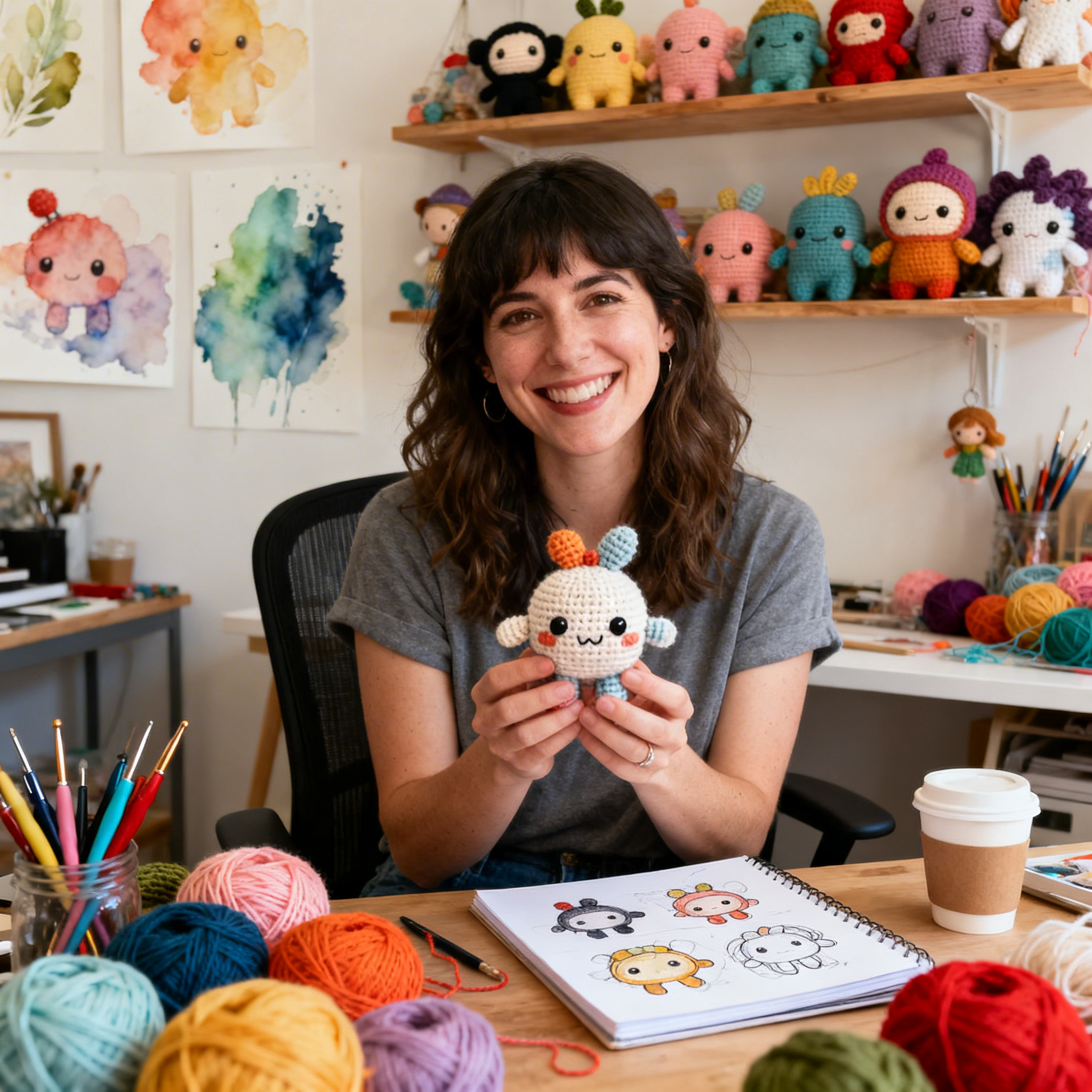
Clara Fern — Crochet Artist & Amigurumi Designer
Clara Fern is a crochet artist and amigurumi designer based in Austin, Texas. With 9 years of experience working with yarn and hook, she transformed a lifelong passion for handcraft into a creative mission: making amigurumi accessible, fun, and deeply rewarding for crafters of all levels.
Clara discovered amigurumi during a trip to Japan in 2017, where she fell in love with the art of bringing tiny characters to life through crochet. Back home in Texas, she spent years studying color theory, design principles, and advanced crochet techniques — developing her own signature style that blends kawaii aesthetics with original character design.
Through maclafersa.com, Clara shares everything she has learned — from choosing the right yarn and reading your first pattern, to designing fully original amigurumi characters from scratch. Her writing is known for being clear, detailed, and genuinely helpful, with no steps skipped and no secrets kept.
When she’s not crocheting, Clara enjoys watercolor painting, visiting local yarn shops, and drinking way too much coffee while sketching new character ideas.