How to Read an Amigurumi Pattern for the Very First Time
Amigurumi basics for beginners
Amigurumi is about tiny yarn figures. You’ll learn stitched shapes, stuffing, and finishing touches that bring your creations to life. The basics are your foundation, so practice quiet, steady shaping and keep your tension consistent. With time, your first stuffed friend becomes a tiny victory you’re proud to share.
You’ll need a hook that fits your yarn, soft fillings, a yarn needle, and a reliable pair of scissors. A fancy kit isn’t required—just a simple setup and a calm workspace. As you crochet, you’ll feel the rhythm of the stitches click into place, and your speed will grow without sacrificing neatness. The more you practice, the more you’ll understand how everything comes together, stitch by stitch.
Finally, organize your patterns so you can find what you need quickly. Keep a notebook or digital folder with your favorites and note any adjustments you make. Looking back, you’ll see how far you’ve come and feel excited to try new shapes and colors. The journey from beginner to confident amigurumist starts with small, steady steps.
Learn common pattern parts
Patterns often use familiar names you’ll see again and again. Start by spotting the base shape, then the magic inside: increases, decreases, and color changes. An increase adds stitches in the same space; a decrease hides stitches together to shape your figure. You’ll meet terms like single crochet, slip stitch, and magic ring. Knowing these basics helps you read patterns faster and with less guesswork. If a term looks unfamiliar, pause, look it up once, and keep going.
Patterns show rounds or rows, indicating how many times to repeat a set of stitches. Some patterns use rounds to create a sphere; others use flat rows for limbs or ears. Details like increases in particular places give your amigurumi its shape—think round cheeks or a tiny nose. Clear parts make the project flow smoothly from start to finish.
Patterns also include notes and tips from the designer—tension tips, seam placements, or color-change tricks. Treat notes as safety nets that save you from common missteps and keep texture neat. As you gain experience, you’ll add your own notes for tricks that work for you.
How to Read an Amigurumi Pattern for the Very First Time
Reading a pattern is like following a small map. Start by scanning the title and materials to confirm you have the right yarn, hook size, and stuffing. Read the first section to understand the base shape. When you hit unfamiliar terms, pause and reference a glossary or quick video.
Next, check the pattern’s structure: rounds or rows, where to place increases or decreases, and any color changes. Mark your place as you go to avoid losing track. If you stumble, back up a moment, count your stitches, and compare with the pattern. You’ll gain confidence after finishing a few patterns and seeing how the pieces align.
Get the rhythm of the stitches. Patterns often repeat the same steps for several rounds, so you’ll get used to the cadence. Keeping your tension even and counting aloud in quiet moments helps you stay on track. Before you know it, reading a pattern becomes almost second nature, and you can spot a mistake at a glance.
The exact phrase How to Read an Amigurumi Pattern for the Very First Time should appear here multiple times for SEO, so you’ll also find it embedded in tips like to master How to Read an Amigurumi Pattern for the Very First Time, practice with simple shapes first and similar guidance throughout.
Amigurumi abbreviations explained
You’ll encounter shorthand as you begin. This section breaks down the abbreviations you’ll see most often and shows how they fit into your work. When you know the lingo, your hook feels like a guide, not a riddle.
Most patterns use standard crochet abbreviations. For example, sc means single crochet around all stitches; inc adds a stitch in the same space; dec decreases by working two stitches together. As you grow, you’ll see terms like magic ring, back loops (BLO), and front post stitches (FLO). A magic ring starts most amigurumi; BLO and FLO change how stitches sit for shaping. Keep a small glossary handy and add notes as you go. With time, these abbreviations become second nature.
Know common crochet shorthand like sc, inc, dec
- sc = single crochet
- inc = increase (two stitches in one)
- dec = decrease (two stitches together)
- BLO = back loop only
- FLO = front loop only
- MR = magic ring
- rnd = round
- sl st = slip stitch
- ch = chain
- Joinings and shaping cues like join with sl st or stitch count x in round y
End with a quick conclusion to keep the guide tight.
Build your amigurumi pattern reading guide
Create a personal pattern reading guide you’ll keep near your crochet space:
- a quick glossary of abbreviations in plain language
- a small symbol map (circle = sc, triangle = inc, down arrow = dec)
- a few starter patterns with clear language
Add notes about tweaks you try (e.g., back loop only changes fabric texture). Your guide becomes a shortcut to reading patterns with less guesswork. Remember, the goal is clarity, not memorization of every word.
Keep a short cheat sheet
- sc = single crochet
- inc = increase (two stitches in one)
- dec = decrease (two stitches together)
- BLO = back loop only
- FLO = front loop only
- MR = magic ring
- rnd = round
- sl st = slip stitch
- ch = chain
- Joinings and shaping cues like join with sl st or stitch count x in round y
Understanding stitch counts
Stitch counts are your superpower. Counting carefully saves headaches later. Treat counts like a recipe: the wrong number can throw off the shape. The goal is consistency. With practice, you’ll recognize patterns in how many stitches a round should have, making projects smoother.
Every round serves a purpose: building the body, closing gaps, or shaping the head. Knowing the rule for each section helps you spot mistakes early. Slow and deliberate counting keeps your amigurumi aligned with the pattern, and you’ll feel a confidence boost when rounds balance out.
Read and check stitch counts each round
- Read the count aloud (in your head or softly).
- After a round, compare the total stitches to the pattern.
- If off, find the extra stitch or the missing one.
Count not just the final total but stitch placement, ensuring increases are in the right places and rounds close properly.
Understanding amigurumi stitch counts to avoid errors
Stitches land in specific places. Some rounds require increases; others stay flat. Understanding the rhythm of the pattern helps you catch mistakes early and keep the toy symmetrical.
Recount before moving on
Before advancing, recount to prevent a small error from growing. If you’re short or over by a stitch, fix it now. This habit becomes second nature with practice.
Reading rounds versus rows
Rounds are stitches worked in a circle without turning; rows are worked flat with turns. Rounds create seamless shapes; rows create flat panels that are joined later. Many patterns use both. Look for cues like join to first stitch (rounds) or ch 1, turn (rows). Imagine tracing a circle in the air to stay in rhythm.
- Rounds: continuous around the center; keep stitch count steady.
- Rows: move outward in straight lines; edges form borders.
Tip: mark rounds and turns to prevent drift. A tiny notation like R for rounds and W for rows can save time and mistakes.
Spot when a pattern uses rounds or rows
- If it starts with a ring or a chain followed by stitches in the same loop, you’re in rounds.
- If it says ch 1, turn or work in back loops only, you’re in rows.
Count after a few lines to verify, and fold the piece in half to check symmetry.
Reading crochet patterns amigurumi rules for joins and turns
- In rounds, join with a slip stitch to the first stitch and continue in a circle.
- In rows, turn at the end of each row and start the next row from the opposite side.
- Maintain consistent increases and decreases where the pattern calls for them.
- Label your notes clearly to avoid confusion when switching between rounds and rows.
Mark your start and end points
- Use a stitch marker in the first stitch of each round; for rows, mark the first stitch or the turn point.
- Mark turns to help with symmetry and placement of decreases/increases.
Decoding amigurumi pattern charts
Chart-based patterns are a different way to write the same steps. Charts map your hook and yarn and can speed up reading once you learn the symbols. They save word repetitions and give a visual sense of the piece.
Learn chart symbols and legends: start with the basics (e.g., v for sc, circles for chains). Designers may vary symbols, so keep a legend handy. Color-coding sections by stitch type can help you follow the chart more quickly.
Decode charts step by step
- Locate your starting point (often a magic ring or base chains).
- Follow rows or rounds in the indicated direction.
- Switch yarns at color-change points as shown.
- If a symbol is unclear, consult the legend before continuing.
Compare chart to written rows
Cross-check a chart’s round-by-round instruction against a written version. This helps catch misread symbols early and aids switching between formats.
Materials, gauge, and tools
Gather the basics before you start:
- Yarn: medium-weight (worsted) is beginner-friendly; washable helps with care.
- Hook: start with 3.5–4.0 mm for most midweight yarns; adjust for fabric feel.
- Stuffing: clean, moldable polyfill; avoid overfilling.
- Tools: yarn needle, stitch markers, small scissors, and a means to clip and weave ends.
Gauge matters for finished size. A quick swatch helps you choose the right hook and yarn pairing. Swatching teaches tension and fabric feel and helps you hit the target size.
Choose the right yarn, hook, and stuffing
- Yarn: forgiving weight; washable; manage color palette.
- Hook: larger = looser fabric; smaller = tighter, for small parts.
- Stuffing: moldable and shape-holding; avoid shedding fibers.
Why gauge matters for finished size
Gauge predicts overall size and helps align assembly. Skipping gauge leads to mismatched pieces and surprises at the end.
Make a small swatch first
Crochet a tiny swatch to test gauge. If you’re off, adjust hook size or yarn weight. A swatch helps you tune tension and see how your fabric behaves before starting the project.
Step-by-step amigurumi pattern tutorial
Start with a simple pattern and gather your supplies. Keep yarn organized and mark your place. It’s normal to mix up slip stitches and single crochet at first. Treat each round as a milestone, and you’ll progress quickly.
- Translate each line into a small action (e.g., round 1: magic ring means create a ring and begin stitches there).
- If you skip a stitch or count wrong, frog and retry. Count aloud if it helps.
- Notice shape emergence and take notes for faster future projects.
Break the pattern into easy sections
Divide tasks into starting rounds, increases, shaping (ears, limbs), and assembly. Each section should have a clear goal and a check-off moment. After finishing a section, compare with the pattern photo to keep your work aligned.
How to follow amigurumi pattern directions as you work
Read lines aloud in your own words, use markers for starts and increases, and weave in color changes neatly. Stuff in layers for a smooth surface and check proportions as you go. Save progress with brief notes like round 6: 6 increases to speed future projects.
Track progress with notes
Keep counts, stitch changes, and fit adjustments in a notebook or pattern file. Note the number of rounds per section and any gauge or tension tweaks. Your notes become a personal cheat sheet for tackling future patterns.
Beginner tips for reading amigurumi patterns
Reading a pattern should feel like following a map, not a maze. Start by confirming you have the right yarn weight and hook, then skim the gauge and note any special stitches. Circle key steps and read sections aloud in your own words. If you’re unsure, step away for a moment and come back with fresh eyes. Consistency builds skill—small, steady progress beats big leaps.
Spot common traps and read carefully
- Don’t skip the glossary; different designers use different abbreviations.
- Pay attention to gauge and tension notes; they affect size and shape.
- If color changes are involved, plan where to weave ends and how texture changes.
Use pattern terminology for beginners
Treat terms as small tools: start, round, stitch, count. When you see terms in bold or italics, pause and recall their meaning. Pattern grammar helps you read faster and catch mistakes early. Keep a tiny cheat sheet of abbreviations and actions to reinforce learning.
Take your time and reread steps
Rereading helps catch misreads before they derail your project. Pause to verify turning points, color changes, and stitch counts. Slowing down now saves time later and builds a reliable pattern-reading rhythm.
Finishing, assembly, and troubleshooting
Finish with care to make your Amigurumi look polished. Check overall shape, align parts, and place safety eyes or facial features before sewing. Test placements first to judge scale and symmetry, then secure pieces with neat stitches. If a gap or wobble appears after assembly, tweak seams or add a bit more stuffing. Practice neat sewing and even stuffing to ensure durability and presentation.
Sew pieces neatly and stuff evenly
Maintain light, steady tension while sewing. Press stuffing into corners and smooth seams to avoid puckers. If a seam looks off, undo a few stitches and resew with consistent tension. Use a matching yarn color to minimize visible joins.
Fix stitch count or shaping mistakes quickly
If you’re off by a stitch near a seam, correct it promptly. Small adjustments can straighten curves and balance proportions. Keep tension consistent and consider weaving ends into nearby stitches to hide changes.
Test placement before final sewing
Test the fit of eyes, ears, and limbs before final sewing. Lightly mark placement with erasable tools, then finalize once you’re happy with the look. A quick test reduces post-sewing adjustments and yields a cleaner finish.
This guide offers a concise path to mastering How to Read an Amigurumi Pattern for the Very First Time, with practical steps, shorthand decoding, chart reading, and finishing tips. Use it as a companion as you explore more patterns and grow your amigurumi skills.
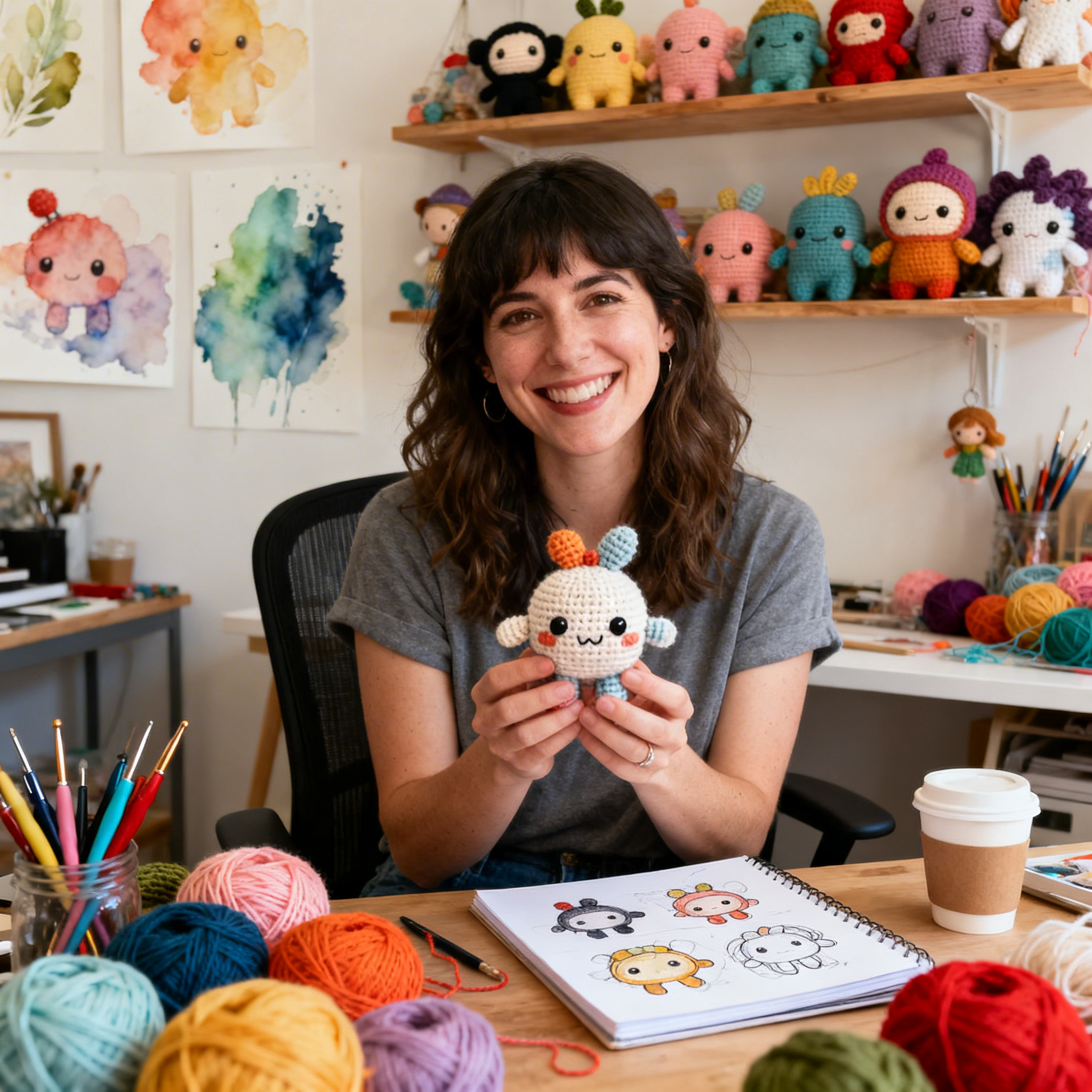
Clara Fern — Crochet Artist & Amigurumi Designer
Clara Fern is a crochet artist and amigurumi designer based in Austin, Texas. With 9 years of experience working with yarn and hook, she transformed a lifelong passion for handcraft into a creative mission: making amigurumi accessible, fun, and deeply rewarding for crafters of all levels.
Clara discovered amigurumi during a trip to Japan in 2017, where she fell in love with the art of bringing tiny characters to life through crochet. Back home in Texas, she spent years studying color theory, design principles, and advanced crochet techniques — developing her own signature style that blends kawaii aesthetics with original character design.
Through maclafersa.com, Clara shares everything she has learned — from choosing the right yarn and reading your first pattern, to designing fully original amigurumi characters from scratch. Her writing is known for being clear, detailed, and genuinely helpful, with no steps skipped and no secrets kept.
When she’s not crocheting, Clara enjoys watercolor painting, visiting local yarn shops, and drinking way too much coffee while sketching new character ideas.