Advanced Techniques for Crocheting Realistic Animal Fur Textures
Overview: Advanced Techniques for Crocheting Realistic Animal Fur Textures
Delve into Advanced Techniques for Crocheting Realistic Animal Fur Textures. This guide covers fiber choice, yarn weight and pile length, loop and pile stitches, brushing and carving, color shading, and finishing touches to achieve lifelike fur in crochet. Use these techniques to build depth, movement, and realism into your fur projects.
Choosing yarn for realistic crochet fur techniques
You’ll want yarn that behaves like real fur, not yarn that clings or shines too much. When you pick your fiber, you’re deciding how the fur will look and feel in the end. Think about how easy it is to separate fibers, how soft the touch is, and how well it holds up to brushing. If you imagine petting a real animal, you want a yarn that feels close to that softness and has a natural, matte finish rather than a slick shine. Your goal is to create texture that reads as fur when you stitch.
Your choice matters for technique and speed. Softer, warmer fibers can give you a more forgiving surface, while stiffer blends help you keep shape in long fur patches. Matching the yarn to your project’s scale is key too—tiny amigurumi fur uses fine fibers, while larger sculpted animals benefit from a slightly chunkier feel. Remember, the yarn you pick will influence how your stitches hide or reveal texture, so choose with your project’s realism in mind.
Finally, test small swatches before you commit. Run your fingers through the fabric, brush it lightly, and see how the fibers separate. If the fur looks clumpy or flat, swap to a fiber with a more even twist or a softer pluck. This quick check saves you from finishing a big piece only to undo it because the yarn isn’t giving you the look you want.
Fiber types and why they matter
Your fiber choice changes everything about realism. Natural fibers like wool or alpaca bring warmth and subtle variation in color that reads as real fur, while synthetic blends offer easy care and consistent texture. Fibers with a slight halo—tiny fuzzy ends—help the fur look dimensional rather than flat. Depth in the fiber adds character; avoid shiny plastics that look artificial.
Acrylics can be great for practice and colorwork, but they often lack warmth and drift. If you’re aiming for Advanced Techniques for Crocheting Realistic Animal Fur Textures, mix a natural base with a touch of synthetic to balance softness and ease. Creative blends let you control how the fur moves as you work, imitating how real fur lays in a breeze or resting posture.
Texture also ties to fiber diameter. Thicker fibers read as longer, more dramatic fur; finer fibers yield delicate, short fluff. Keep a range in your stash to match fur length. Softer, creamier fibers hide gaps better, while rougher fibers highlight stitch gaps for a tufted look. Choose fibers that behave the way you want your piece to read.
Yarn weight and pile length choices
Yarn weight guides fur density. For tiny creatures, choose lighter weights to avoid crowding stitches. For larger subjects, a medium weight can provide believable bulk without losing detail. Balance weight with project scale so the fur reads naturally, not cartoonish. You want stitches to melt into fur fibers, not shout seams.
Pile length is your brush, not the actual brush. Longer pile creates bold, dramatic fur; shorter pile looks practical and tidy. If realism matters in a living pose, mix pile lengths in small patches to mimic layered fur growth. Layer and brush fibers after stitching—the pile length will guide your brushing approach and final texture.
Try starting with a short, even pile for most of the body, then switch to longer strands for accents like cheeks, neck, or a fluffy tail. This contrast adds movement. If fur feels stiff, switch to a lighter weight or a fiber with less bulk at the pile end. The right combination helps fur behave like real fur.
Recommended blends and brands
Look for blends that balance softness with control. A wool blend with a touch of acrylic offers warmth, manageability, and a subtle sheen that reads as real fur. Seek colorfast neutrals and earthy tones so fur stays true after brushing. Choose fibers that separate and comb easily. A small percentage of polyamide or nylon can help fur hold shape during brushing while staying soft to the touch.
For shading or dyeing, pick fibers that take dye evenly and stay colorfast after manipulation. Keep a few branded options in your kit to compare feel and performance. Once you find favorites, you’ll work faster and your fur will read more like real animal hair.
Essential tools for advanced crochet fur finishing
Choosing the right tools makes finishing fur easier and your texture more natural. Start with high-quality hooks and needles that glide through faux fur yarn, and ensure your grip is comfortable for long sessions. A comfortable handle reduces fatigue, while a sharp pair of scissors trims cleanly. A small brush or comb lifts stray fibers and blends seams for convincing realism. Store tools in a tidy setup so you can reach the exact size you need quickly.
Use heat-safe tools if you’re shaping with heat, and follow the yarn maker’s guidelines. Gentle, controlled strokes prevent crushing the pile. Protective eyewear and a reusable cloth help protect you and your work from stray fibers or glue residue. Good habits and the right tools bring the Advanced Techniques for Crocheting Realistic Animal Fur Textures to life.
Hook sizes and needle tips to use
Choosing the right hook size is the quiet hero in creating believable fur textures. For lightweight faux fur yarns, a smaller hook gives you control and tight stitches that won’t shed; a larger hook yields looser stitches for a fluffy, windblown look. Test a few swatches to find the balance that reads true to your fur character. If a yarn label suggests a size, start there and adjust by one size up or down based on texture and fiber lay.
Needle tips matter as much as needle size. Use a smooth shaft and rounded tip to minimize snagging on faux fur fibers. For seams, a blunt tapestry needle protects the fur while guiding threads through the backing. If you’re layering undercoats with longer guard hairs, a slightly longer point helps without catching fibers. The right tip helps you avoid pilling and uneven edges in your fur finish.
Practice with a swatch that includes your planned stitch pattern and fur length. If you notice snagging, switch to a softer tip or a smaller hook to keep the surface smooth. Locking in a preferred combo of hook size and needle tip yields consistent results and a deliberate look.
Brushes, scissors, and carving tools
Your finishing toolkit needs a dedicated set of brushes for brushing and blending fibers. A soft-bristle brush lifts fibers without pulling stitches, while a stiffer brush reshapes short sections without flattening the pile. A clean brush smooths transitions where fur lengths meet, creating a natural look. Don’t skip brushing—fur texture hinges on it.
Sharp scissors are essential for clean cuts and trimming stray ends. Small scissors give you control in tight spots, while longer blades cover bigger edits quickly. Carving tools help define features or add subtle texture lines without digging into the backing. Choose tools with comfortable grips to avoid fatigue.
For delicate areas like facial fur or paw pads, use micro brushes and tiny combs to refine the look. Keep tools clean between steps to prevent fiber transfer. A cohesive, polished fur texture comes from steady hands and the right toolkit.
Safe tools for working with faux fur yarn
Protect hands and project with safe, purpose-built tools. Look for rounded tips and smooth finishes that won’t snag fur fibers or catch on backing. A comfortable grip reduces strain during long sessions. Tools labeled for yarn or fiber work are designed to handle faux fur without causing pilling or fraying.
If you use hot tools for shaping, choose heat-safe options and follow yarn guidelines. Low heat is often enough to set small tufts without melting fibers. Avoid heavy pressure that flattens the pile; use light, controlled strokes to maintain natural lift. Safety gear, like protective glasses, helps keep you safe as you practice Advanced Techniques for Crocheting Realistic Animal Fur Textures.
Loop stitch faux fur crochet basics
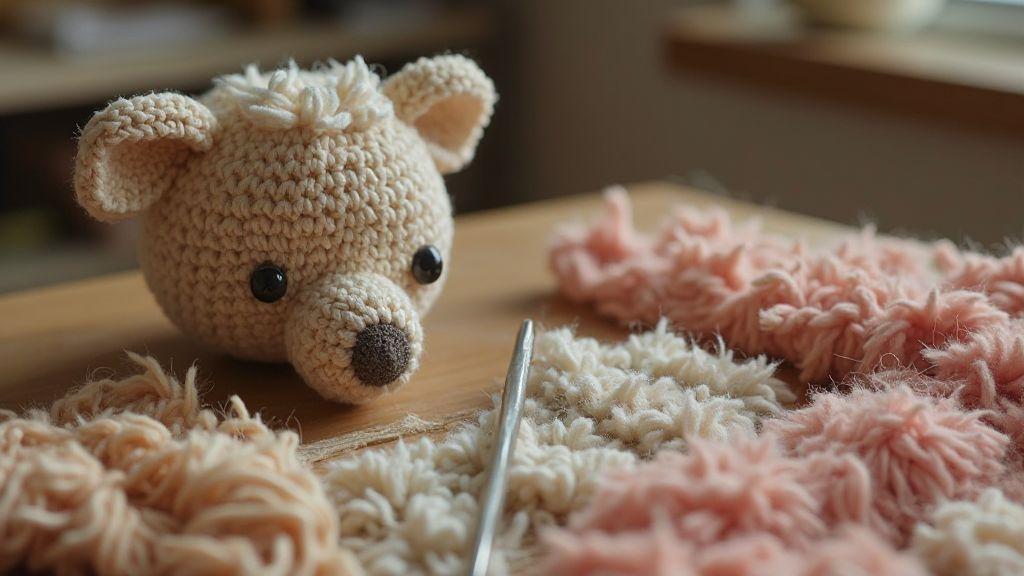
The loop stitch creates soft, fluffy faux fur textures by forming loops that stand up from the fabric. Consistency in loop height yields even fur across the piece. You can add depth by varying loop height in small sections to mimic movement. It’s a straightforward path to fur that looks alive and tactile.
Choose a halo-yarn and a hook that matches its weight. Practice on a small swatch with relaxed tension; you’ll learn how loops pop up and how to keep them uniform. As you gain confidence, experiment with longer loops on select rows to simulate direction and movement. Loop stitch is a foundational technique for Advanced Techniques for Crocheting Realistic Animal Fur Textures.
Think in layers: loops sit on top of fabric, adding volume without bulk. With patience, you’ll create plush, dense fur that reads as living texture rather than flat fabric. This technique doesn’t require fancy tools—just loop stitch, steady tension, and practice.
How the loop stitch creates pile
The loop stitch builds pile by standing loops up from the base fabric. Each loop forms a small tuft; keep heights uniform for even pile. Slight height variation adds natural shading where light catches the fur.
The pile grows quickly, with loops projecting away from the surface. Longer loops in directional patterns simulate fur flowing in the wind or lying flat in shade, adding realism. Matching loop heights and tension helps your fur look dense and inviting.
When to choose loop stitch over others
Choose loop stitch for immediate volume and a soft surface. It’s ideal for plush edges on accessories or for a living pose where fur is the star. Loop stitch outshines basic stitches for dense, lofted fur textures and is forgiving enough to adjust as you go.
Use loop stitch when you want texture that reads as fur without heavy shaping. For sleek, drapey fabrics or rigid substrates, other stitches may be better, but loop stitch can be your quick path to a realistic fur look in many projects.
Simple loop stitch pattern tips
Maintain uniform loops by careful stitch counting and steady tension. Let your non-dominant hand guide the yarn to avoid snagging. If loops flatten in high-traffic areas, adjust your grip to keep them buoyant. Practice with a contrasting color swatch to clearly see loop placement, then switch to your project color.
Direction matters: running loops in the same direction across a panel reads cohesive, while deliberate alternation adds dynamic fur patterns. Introduce a sparing second color to simulate shadowed fur, then return to your main shade.
Remember: practice, consistency, and control are the keys to loop stitch realism in Advanced Techniques for Crocheting Realistic Animal Fur Textures.
Pile stitch crochet techniques for lifelike fur
Pile stitch crochet builds depth with layered loops, varying loop length and density to imitate fur. Practice on scraps to see how different yarns behave. Choose a yarn with a soft halo and colors that blend or contrast as needed. Real fur has short, tight areas and longer, looser sections; your pile height and stitch spacing should mimic that variation.
Maintain steady tension and consistent stitches. Subtle changes, like slightly longer loops in some rows or tighter bases in others, create natural randomness. Layer piles and adjust grip to achieve depth and movement. With time, your pile stitches will read as plush and realistic, not flat.
Differences between short and long pile
Short pile yields a dense, plush surface; long pile adds drama and light reflections. Use short piles for undercoats and defined areas; longer piles suit areas where fur grows longer, like the neck or back. Mixing both creates a lifelike coat with shading and depth.
Map your sections before crocheting and test rows on scraps to see how stitch heights interact. The balance between short and long pile enhances realism and helps transitions stay seamless.
Adjusting stitch height for realism
Tune stitch height to control pile. Taller stitches create more volume; shorter stitches keep things compact. Test on swatches by tweaking loops in different areas. Think light and shadow: taller piles catch more light for highlights; shorter piles deepen shadows. Anchor piles with a base or let loops float for softer edges, adjusting to achieve wind-blown or plush finishes.
Pile stitch tension tips
- Keep tension consistent across rows for even piles.
- Practice with different yarns to understand each behavior.
- When in doubt, err on slightly looser tension for a fuller look, then adjust as you go.
- Lightly brush your work to check for flat spots and add height where needed.
Brushing and carving crochet fur for realism
Brushing and carving wake up fur textures. Brushing lifts the surface, making fibers stand out and creating depth where you want it. Carving defines features and adds subtle shadows without harsh lines. Brushing reveals gaps and builds volume in the right places, like cheeks or chest. Combined, these techniques transform flat stitches into believable fur.
Brushing also helps you spot areas needing more light or darker shading. Work with small, precise motions and rotate the piece to catch light from different angles. Compare with real fur references to ensure natural variation in length and direction. Fine-tune by carving small adjustments after brushing for cohesion and character.
Keep brushes clean and stitches intact. A quick brush maintains lift, while careful carving preserves texture. A light touch and mindful comparison to references yield a furry finish that’s tactile and convincing.
Brushing motions that open fibers
Begin with short, light strokes that follow the fur grain to open fibers without damage. Longer sweeps add depth in larger areas, blending colors and lengths to avoid harsh lines. Rotate the piece to catch light from different angles and wake up any flat spots. Finish with a light combing to smooth the surface while preserving lift.
Carving to shape faces and paws
Carving shapes subtle features without heavy lines—focus on shadows and volume around the brow, cheeks, and jaw for realism. When sculpting paws and pads, use light, upward strokes to suggest shape without removing fur. Check progress against real references to ensure fur sits and curves naturally. Delicate carving adds depth and grounds the piece in lifelike anatomy.
Safety and cleanup methods
Always use a sharp, clean tool and carve with care to protect stitches. Wear eye protection for close-ups and keep your workspace tidy. After carving, brush away dust and stray fibers with a soft brush or microfiber cloth. Dispose of offcuts promptly to keep the work area clean.
Wipe blades clean and store tools properly. If using water, ensure the crochet piece is completely dry before storing to prevent mold. Regularly inspecting your project during and after brushing and carving keeps fur texture natural and your hands safe.
Blending yarn fibers to mimic animal coats
You’re aiming for coats that look and feel alive, not flat. Blend soft matte yarns with shiny or fuzzy ones to create depth and subtle color shifts. Vary the ratio to mimic real fur, testing small swatches to refine the effect. A feathered edge where fibers meet creates a natural transition, not a harsh line.
Choose blends that resemble common coats: a soft base with longer guard hairs to create lift. Even small ratio changes alter the overall feel, so practice with scraps until your stitches breathe. Layering natural and synthetic fibers can yield warmth, structure, and a lifelike sheen where it matters.
Mixing natural and synthetic fibers
Natural fibers offer warmth and softness; synthetics add durability and sheen. Balance is key so neither fiber fights the other. A gentle mix—like wool with a touch of acrylic—gives body while maintaining softness. A hint of metallic or high-sheen fiber can catch light in just the right spots.
You can also experiment with plant fibers such as bamboo for a different mood. Test softness and strength by tugging gently on swatches. The goal is a coat that looks layered, moves naturally, and stays lush after handling.
Layering yarns for depth and loft
Layering creates depth without bulk. Start with a soft underlayer close to the surface, then add a longer top layer for fluff. The underlayer provides structure and warmth, while the top layer adds motion and lift. Use dense underlayers where you want grip and looser top layers where you want softness. Vary stitch length and fiber across layers to mimic directional fur growth.
Texturizing stitches for animal fur effects
Build fur that looks alive by using stitches that create volume and direction. Start with a snug base, then layer tiny variations. Combine tight base stitches with overlays like overcast or slip stitches to imply shading without hard lines. If your pattern has directional fur, work one direction for the body, then shift slightly at the edges to suggest movement. Subtle variation reads as depth up close.
Test tension and yarn choice. A plied yarn with a bit of sheen reads as healthy fur, while matte yarn hides fabric flaws. You can add a tiny amount of stuffing or hair-like filler to push stitches out slightly for a puffier look. The aim is believable texture, not perfect uniformity.
Stitches that add nubs and waves
Introduce nubs and waves to give fur character. Start with a basic stitch, then insert a contrasting stitch to form a nub. For waves, alternate slightly longer stitches with shorter ones in a flowing rhythm. Keep nub sizes and wave depths consistent across the area for cohesion. Blend edges with a light pass of your hook to soften transitions and maintain a unified coat.
Combining textures for lifelike results
Mix base stitches with textured accents to imitate fur’s depth. Pair a dense base with raised guard-hair stitches. Vary loop heights to create layered texture and movement. Use directional textures for the body, then add short bursts against the flow to suggest wind or twitch. Use color variation sparingly to imply shadow or sunlit fur without overpowering the coat. Always test on a swatch first.
For a believably scruffy edge, add a fringe of longer stitches along the outer border. Finish with a light color wash to blend raised areas into the body texture. Your fur should feel alive, not a stitched label.
Stitch charts and counts
Create guides by listing stitches per row and sequences for each texture. Start with a base count, then mark nubs or waves. Record stitch types, counts, and any row changes. A precise chart reduces guesswork on future projects and helps you reproduce effects consistently.
Keep charts readable with bold stitch names and numbers. Add notes about yarn weight, tension, and color to influence texture reads. The more precise your chart, the more confident your next project will be.
Color shading for crochet fur to add depth
Color shading makes fur feel alive. Start with a base color for the simplest fur tone, then add subtle darker and lighter shades to build depth. Use small, deliberate color changes to imply undercoats and wind-blown fur. Avoid large blocks that look like painting-by-numbers. Work in sections and blend edges where tones meet.
Think about anatomy and placement: darker fur on the back and lighter underbelly, with shading following light sources. Test swatches and transfer the look to the project. Keep yarns parallel to the work to prevent gaps, and let the stitch grain guide where light should land.
Using variegated yarns and gradients
Variegated yarns and gradients can mimic natural fur if used carefully. Choose a palette that shifts gradually from light to dark and plan color changes to land on the model strategically. Avoid abrupt jumps; let the yarn’s natural shifts read as gradual transitions. Alternate single-color sections with variegated portions on longer fur to avoid striped looks. Practice on a scrap piece to understand how your yarn behaves.
Place light tones against dark ones to simulate multi-layered fur. Maintain color band scale similar to real fur—avoid wide, cartoonish bands. With careful placement, variegated yarns become a natural part of your fur texture rather than a distraction.
Embroidery and short rows for highlights
Embroider fine details for highlights like sun-kissed tufts or whiskers. Use a thinner thread for subtle glow and place short rows to create gentle highlights along curves. Practice on a small motif before applying to the main piece. Weave highlights into the top surface to keep texture crisp and fluffy, not matted. Pair embroidery with thoughtful stitch placement to guide the eye to the most expressive parts of your project.
Finishing touches and projects using realistic crochet fur techniques
Apply finishing touches that let fur read as plush and natural. Focus on areas where fur should appear most natural—chest, belly, and face—using longer, looser stitches for lift. Use subtle shading to suggest depth, but keep accents sparing: a single strand tucked in can read as a gleam without shouting.
Consider motion and wear: block lightly to set shape, then brush with a fine-tooth comb or pet brush to reveal natural lay. If brushing flattens the fur, tease the fibers with a gentle rake to restore lift. Always test techniques on a swatch first so you understand how they affect texture. Realism lives in small decisions, not loud textures.
Durability matters for toys and costumes. Reinforce seams with a tiny overcast stitch and hide joins by blending fur patterns—muzzle lines, ear tufts, or behind the tail. This creates a clean finish that survives play and handling with its lifelike fur intact.
Seaming, trimming, and hiding joins
Choose a thread color that disappears into the fur for joining pieces. A slightly thicker anchor yarn can help seams stay secure without showing through. Use a mattress stitch to create a nearly invisible line, keeping fur lying flat as you work.
Trim carefully: leave a tiny fiber length at seams to blend into the join. If fur catches on the needle, nudge it back with a crochet hook or fingernail rather than cutting. Align fur directions across seams to hide joins. After finishing, brush from the outside to wake the fibers and mask the line. If you see a ridge, tease the edge with a small comb to soften the transition.
Project ideas: toys, costumes, and props
Toys: treat fur as soft skin; start with simple patterns like a small animal head. Practice color shifts to imitate natural fur bands. A small, washable label under fur can be handy for care notes.
Costumes: longer fur around the torso, shorter fur on limbs; reinforce seams in bend areas to prevent shedding. Detach or lightly stitch ears or tails for airflow and wear. Props: add a soft lining to help fur drape and stay shaped. Plan for storage and transport to keep fur untangled and smooth.
Care and washing instructions
Hand wash in cool water with a mild detergent. Gently swirl to avoid fiber pull. Rinse well, then press out water by laying flat on a towel and rolling to squeeze moisture. Dry flat away from direct heat. If shedding occurs after washing, brush with a soft brush in the direction of the fur to restore lay.

Clara Fern — Crochet Artist & Amigurumi Designer
Clara Fern is a crochet artist and amigurumi designer based in Austin, Texas. With 9 years of experience working with yarn and hook, she transformed a lifelong passion for handcraft into a creative mission: making amigurumi accessible, fun, and deeply rewarding for crafters of all levels.
Clara discovered amigurumi during a trip to Japan in 2017, where she fell in love with the art of bringing tiny characters to life through crochet. Back home in Texas, she spent years studying color theory, design principles, and advanced crochet techniques — developing her own signature style that blends kawaii aesthetics with original character design.
Through maclafersa.com, Clara shares everything she has learned — from choosing the right yarn and reading your first pattern, to designing fully original amigurumi characters from scratch. Her writing is known for being clear, detailed, and genuinely helpful, with no steps skipped and no secrets kept.
When she’s not crocheting, Clara enjoys watercolor painting, visiting local yarn shops, and drinking way too much coffee while sketching new character ideas.