Understanding Gauge in Amigurumi Patterns
Why Understanding Gauge in Amigurumi Patterns Matters for You
Understanding Gauge in Amigurumi Patterns is your first big step to consistent toys. When you know your gauge, you can trust the finished size will match the designer’s target. It’s a practical tool for planning, comparing, and avoiding surprises like a ball that looks marble-sized or tiny limbs. With gauge in mind, you save time, yarn, and frustration and gain confidence in your makes.
Your gauge tells you how tightly you crochet and how thick your yarn is relative to the pattern’s expectations. Skipping gauge can let small changes in tension or yarn lead to big size and detail differences. Gauge affects not just size but how your toy stands, stays round, and holds features like eyes and noses. Make gauge a habit and you’ll enjoy predictable results.
Gauge also lets you customize patterns to fit your needs. Want a bigger bunny or a smaller fox? Change yarn weight or hook size to adjust gauge. Understanding Gauge in Amigurumi Patterns gives you control so you aren’t stuck with someone else’s finished look—and you’ll enjoy crafting more when outcomes align with your expectations.
How wrong gauge changes finished size
If your gauge is off, your finished toy can drift from the intended size. A looser gauge makes everything larger, affecting head rounds, limb feel, and proportions. You may need more stuffing, altering weight and balance. A tighter gauge makes stitches crowd, shrinking the piece and blurring details like eyes or noses. To fix this, adjust hook size or yarn, make a gauge swatch, and tweak until your swatch matches the pattern’s gauge. Nail the gauge and the finished toy will align with expectations.
How gauge affects your toy shape and detail
Gauge influences more than size; it shapes smooth curves and crisp features. Off gauge can distort stripes, ears, and facial details. A proper gauge keeps stitches even, seams clean, and features accurate. Treat gauge as a design rule: test with a swatch, compare, and adjust before starting the project to preserve the designer’s intent and your own consistency.
Quick gauge check before you start
Before you begin, crochet a quick gauge swatch in the same yarn and hook you’ll use. Measure stitches and rows per 4 cm (about 1.6 inches) and compare to the pattern’s gauge. If you’re off, tweak your hook size or yarn weight until you hit the target. This single check saves a cascade of size and shape issues later.
How to Make a Gauge Swatch for Amigurumi
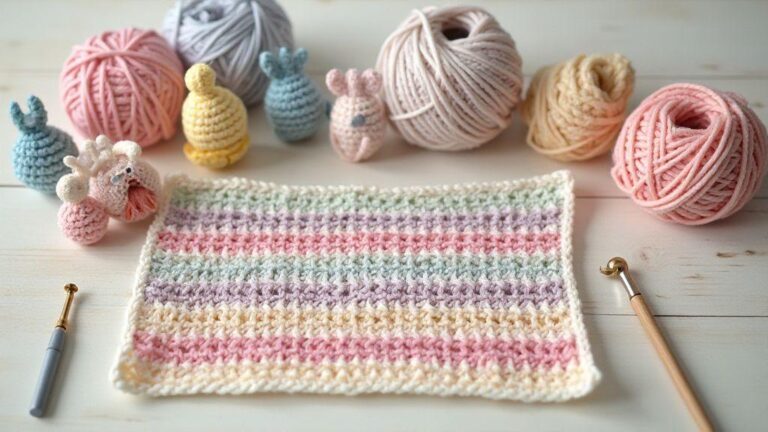
A gauge swatch is your secret weapon for consistent amigurumi. It shows how your yarn, hook, and tension work together in real life and helps you avoid toys that are too small or too big.
Think of a gauge swatch as a practice run for a bigger project. Knowing your gauge helps you pick the right hook and yarn so your finished piece matches your vision. It saves time, yarn, and frustration and boosts confidence when starting new patterns.
Let’s get practical. Set up a simple swatch, count stitches and rows, and measure in the right spot. The steps are straightforward, but the payoff is big: you’ll crochet with intention rather than guesswork.
What size gauge swatch you should crochet
Aim for a swatch large enough to clearly count stitches and rows—usually about 4 inches by 4 inches (10 cm by 10 cm) works well. Some patterns call for different sizes, so you can also make a 6×6 inch swatch for very dense stitches or bulky yarn. Bigger swatches reduce measurement error and are easier to read.
Make the swatch with the same yarn, hook, and tension as the real project. If you’ll add stuffing or shaping, treat the swatch the same way. Use the same stitch pattern so the gauge you measure reflects the final piece.
When deciding size, ensure you can clearly count multiple stitches and rows. If you can only count a few stitches across, redo the swatch a bit larger.
How to count stitches and rows in your swatch
Lay the swatch flat and count stitches across a row with a ruler or eyes. Count several rows to get an average. Mark the first stitch of each row to avoid losing track. Then count rows in representative columns and average. Record stitches per inch and rows per inch. If numbers aren’t stable, adjust your hook size and re-swatch.
Measure center of swatch for best result
Measure near the center of the swatch to avoid edge distortion. Place a ruler along the middle and count stitches and rows in a few inches, then convert to per-inch values. After washing or blocking, re-measure if needed, and write down final numbers for easy reference when starting the pattern.
Match Hook Size and Yarn Weight for Accurate Gauge
Choosing the right hook size and yarn weight unlocks accurate gauge in amigurumi. When your stitches match the pattern, the toy stays the right size and the details stay crisp. Minor changes in hook or yarn can make your finished piece puffier or skinnier than planned. Treat gauge as a living part of your project to avoid surprises later and keep your amigurumi true to the designer’s intent.
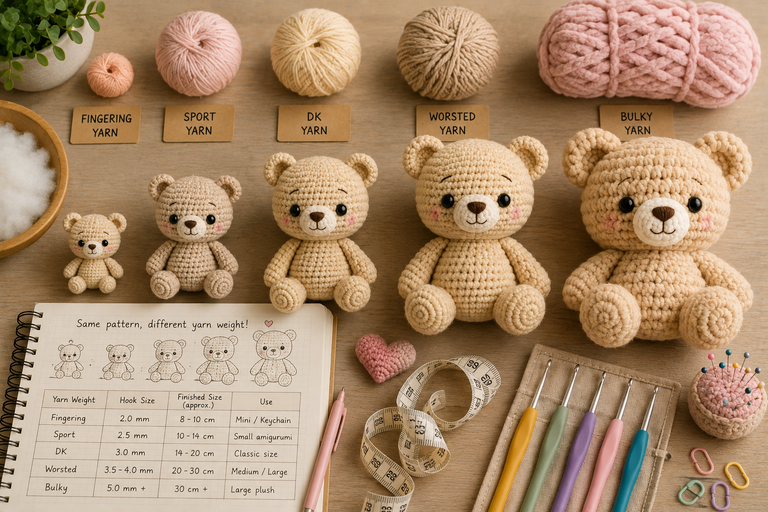
Start by checking gauge swatches and comparing them to the pattern’s gauge. If your swatch is larger than the pattern gauge, try a smaller hook or thicker yarn; if smaller, try a bigger hook or lighter yarn. Think of gauge as a recipe: hook size and yarn weight are ingredients, stitches are measurements. When you measure correctly, your finished amigurumi will be true to size and proportion. Keep a small gauge log to help with future projects.
How hook size changes your stitch size
Hook size determines whether stitches are dense or loose. A smaller hook tightens and shrinks the piece; a larger hook slackens and enlarges it. Test with a small round swatch to verify stitch counts per inch. If your stitches per inch don’t match the pattern, adjust hook size accordingly.
How yarn weight affects amigurumi gauge
Yarn weight also affects gauge. Heavier yarn yields chunkier stitches; lighter yarn yields finer stitches. If substituting yarn, crochet a test swatch and compare to the pattern gauge. If needed, adjust the hook size up or down to bring your gauge in line with the pattern.
Try one hook bigger or smaller
If gauge is off, try shifting your hook by one size up or down. Keep a small notebook of which hook size works best with each yarn to reuse for future projects. Test with a short round and compare to the pattern’s gauge to decide whether you need to adjust further.
Control Your Stitch Tension to Reach Gauge
Stitch tension maps to gauge and final size. Tighter stitches shrink the piece; looser stitches enlarge it. Tension also affects how easily you crochet details like feet, ears, and noses. Measure tension weekly when changing yarns or hooks, and learn to keep it steady for predictable gauge.
How your stitch tension tightness alters size
Tight tension can make arms and heads look smaller; loose tension can cause extra bulk. Tension varies with humidity, mood, and fatigue. If size creeps, ease your grip slightly or loosen the yarn between stitches. Gauge isn’t magic—it’s feedback guiding you to adjust.
Simple practice moves to steady your tension
- Start with a light, relaxed grip and slow, deliberate motions.
- Warm up hands with gentle stretches before crocheting.
- Test a swatch after every yarn swap and compare to gauge.
- Practice consistent turning and stitch height to keep rows neat.
Keep a steady hand and count often
Counting stitches regularly helps catch drift early. After a few rounds, recount to ensure you’re on track. Use markers to mark the start of each round and pattern changes, and count in small groups (e.g., 5 or 10 stitches) to keep rhythm steady.
Check Stitch Count Accuracy as You Crochet
Counting stitches as you crochet keeps you on track and helps you spot mistakes before they cascade. If a round doesn’t match the pattern, fix it early. Recount rounds with markers or a countdown method to stay aligned.
How to recount rounds quickly while you work
Use a stitch marker at the start of each round and recount from marker to marker after finishing a round. Count in consistent groups to speed up the process and maintain a steady pace.
How to fix missed or extra stitches fast
If you spot a missed stitch, insert your hook where it should be and fix. For extra stitches, undo a small section or use a quick fix method (like a slip stitch back to the correct count). Recount to confirm you’re back on track.
Use stitch markers and recount each round
Stitch markers help you stay honest about your round counts, especially through changes in pattern. Recount every round to ensure your Amigurumi holds its shape from start to finish.
Adjust Patterns When Your Gauge Differs
If your gauge doesn’t match the pattern, your Amigurumi may come out off-size or in an odd shape. Understand Understanding Gauge in Amigurumi Patterns to tune quickly and keep the project enjoyable. Start by testing gauge and deciding your path: adjust hook size, yarn weight, or stitch counts. Keep notes so you can reproduce the result later. Think of it as tuning a guitar—small changes yield big results.
How to change hook or yarn to match gauge
If gauge is off, begin with the hook. Up a size loosens stitches; down tightens. Test with a swatch before committing. If needed, swap to a lighter or heavier yarn. When you find a hook-and-yarn combo that matches the pattern’s fabric feel, document it for future projects.
How to alter stitch counts for size scaling
To change size, adjust stitch counts while preserving gauge feel. For smaller scales, reduce rounds or shaping stitches; for larger scales, add. Keep proportions intact (head, body, limbs) and adjust increases/decreases to maintain balance. Recalculate before joining pieces to ensure clean seams and proper alignment.
How Stuffing Density Changes Final Size
Stuffing density affects final size and shape. Firm stuffing yields a solid look and a bit less squish; overstuffing can distort tension and warp shape. Medium density provides predictable form for poseability and cuddly feel, while too much or too little stuffing shifts proportion. Remember that stuffing interacts with crochet tension, so gauge stays important across parts.
How tight stuffing shrinks your amigurumi
Tight stuffing pushes against stitches, reducing roundness and making limbs look shorter. Add stuffing gradually and redistribute to avoid hard lumps or flat surfaces.
How loose stuffing makes toys floppy
Loose stuffing creates softness and lift, potentially compromising structure. Add stuffing in small amounts and press into corners to support the form.
Stuff in small layers and check shape
Fill in small layers and pause to check the shape often. Layering helps you see where to add bulk and where to stop. Smooth the surface as you go to maintain a uniform texture and avoid hollow spots.
Size Scaling Tips for Amigurumi Accuracy
Size scaling tips help you keep parts proportional from head to toe. Plan the final size before you start, then scale consistently across parts using the same gauge, yarn weight, and stitches per inch. Test with a mini swatch to catch scaling mismatches early.
How to measure parts for correct size scaling
Measure from reference points such as head width, arm length, leg length, and torso height with a soft tape. Record target measurements, gauge, and adjustments so future projects stay predictable. If you need to adjust mid-project, re-measure to stay aligned.
How stitch count accuracy keeps parts aligned
Use consistent stitch density across pieces so eyes, ears, and limbs align when joined. If one part has more stitches per inch than another, fix it before sewing. Work in repeatable segments (e.g., 10-stitch rounds) and keep a tally to spot differences quickly.
Keep a ruler and note measurements
Have a ruler handy and measure after rounds to catch drift early. Write sizes, gauge, and adjustments next to each part in your pattern so future projects go smoother.
Understanding Gauge in Amigurumi Patterns
Understanding Gauge in Amigurumi Patterns is the bridge between your yarn, hook, and final size. When you understand gauge, you troubleshoot sizing quickly and keep parts in harmony. Gauge tells you how many stitches fit in an inch, so if your swatch is off, you know exactly what to tweak. Matching gauge unlocks predictable results: eyes align, limbs fit, and finishing looks neat. If gauge drifts, adjust your hook or yarn weight to hit the right stitches-per-inch, then re-check measurements. This turns sizing from guesswork into a repeatable process.
A practical note: most patterns include a gauge check swatch. Treat it as a license plate for your project—if numbers don’t match, adjust before continuing. With Understanding Gauge in Amigurumi Patterns, you’ll sew with confidence and finish with a polished look.
Use Crochet Gauge and Amigurumi Gauge Together
Measure both gauges and compare. Crochet gauge shows stitches and rows per inch in flat fabric, while amigurumi gauge focuses on tight, rounded stitches. Use them together to ensure your piece sits and holds shape as intended. Start with a swatch, count stitches and rows per inch for both gauges, and adjust by about a half hook size if needed. Write down your target gauges to reuse on future projects. Some patterns are strict about amigurumi gauge, others are forgiving—test early and adapt.
When flat crochet gauge differs from amigurumi gauge
If flat crochet gauge is looser, flat swatches may read bigger than rounded pieces. Fix by using a smaller hook or less-stretchy yarn. If amigurumi gauge is looser, rounds may puff; go up a hook to loosen flat fabric and tighten rounds with tension or yarn choice. Know which gauge drives the final look, especially for round heads or limbs.
How you prioritize amigurumi gauge for round pieces
Round shapes need compact stitches, so prioritize amigurumi gauge for heads, ears, and limbs. You might trade a touch of flat gauge accuracy for sturdier rounds. Use a hook that gives the desired bite in rounds, and adjust grip or yarn to prevent gaps. Test small round shapes before committing to a full piece to ensure consistency.
Test a small 3D swatch before full work
Create a tiny 3D swatch (a small ball or mini head) to see how stitches form in space. If the 3D swatch holds round shape, scale up; if it’s airy or flat, adjust hook or tension. This quick check saves you from finishing a large piece only to discover gauge misalignment. Use the 3D swatch as your final sanity check before starting the main project.
Understanding Gauge in Amigurumi Patterns ties together your planning, technique, and finishing with consistent, lovable results you’ll be proud to share.
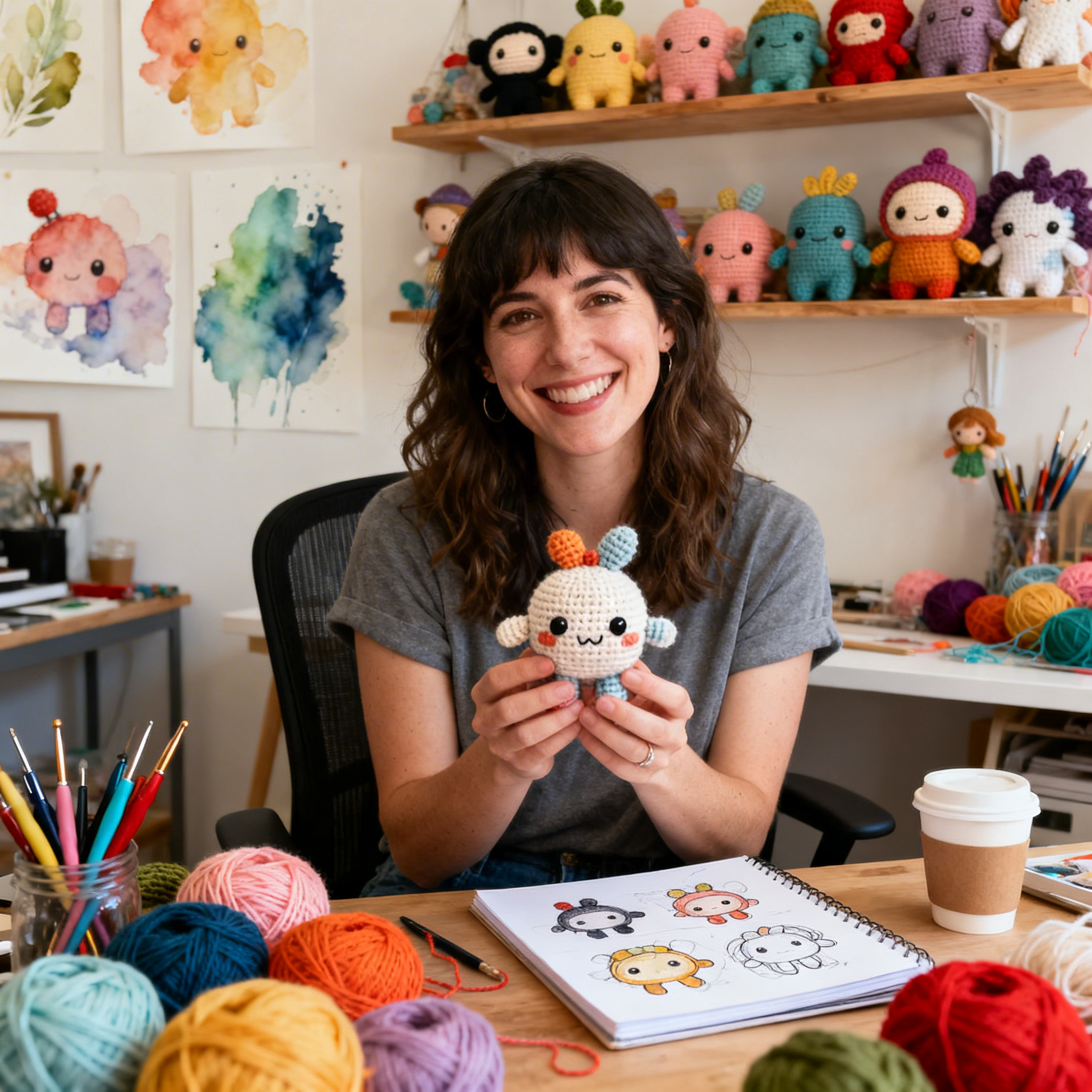
Clara Fern — Crochet Artist & Amigurumi Designer
Clara Fern is a crochet artist and amigurumi designer based in Austin, Texas. With 9 years of experience working with yarn and hook, she transformed a lifelong passion for handcraft into a creative mission: making amigurumi accessible, fun, and deeply rewarding for crafters of all levels.
Clara discovered amigurumi during a trip to Japan in 2017, where she fell in love with the art of bringing tiny characters to life through crochet. Back home in Texas, she spent years studying color theory, design principles, and advanced crochet techniques — developing her own signature style that blends kawaii aesthetics with original character design.
Through maclafersa.com, Clara shares everything she has learned — from choosing the right yarn and reading your first pattern, to designing fully original amigurumi characters from scratch. Her writing is known for being clear, detailed, and genuinely helpful, with no steps skipped and no secrets kept.
When she’s not crocheting, Clara enjoys watercolor painting, visiting local yarn shops, and drinking way too much coffee while sketching new character ideas.