How to Make Large-Scale Amigurumi Without Losing Shape
Build your wire armature
Start with a sturdy core that keeps your amigurumi upright without drooping. Aim for a frame that holds its shape through every stitch and movement. Use flexible yet strong wire so you can bend and reposition as you sculpt, but you won’t fight it later when you stuff. Think of the armature as the skeleton: it supports the bulk but isn’t so stiff you can’t adjust details later.
Shape the wire into a rough skeleton first, then plan where the limbs, torso, and head will sit. If you’re making an animal or human figure, map the range of motion you want — a tilting neck, a curved spine, joints that can rotate a bit. This planning saves you from bulky redo work once you start wrapping. Keep your wire cutters handy and cut the lengths you’ll need in advance so scraps don’t slow you down.
Test the basic balance. Place the bare frame on a table and see if it stands or tips. If there’s wobble, add weight at the base or adjust the legs until it sits evenly. You want a frame that can stand on its own before you wrap it, so stitches stay even and the form stays true.
Pick armature for large amigurumi
For large-scale pieces, choose a wire gauge that won’t buckle under stuffing. A thicker gauge provides a solid core, but you still want to bend easily. A combination works best: a sturdier inner spine with lighter braces on the limbs. Decide how many joints you’ll need — more joints allow posing but add complexity. If you’re new to large amigurumi, start simple: spine, two limbs, and a head, then add joints later as you gain confidence. Use heat-shrinking or tiny silicone tubing at joints to protect the wire and keep seams clean.
Think about the final pose as you wrap. If the piece will sit on a shelf, aim for a stable base with a slight forward weight to prevent tipping. If you want extra articulation for photos, plan for more frame work. Keep your end goal in mind when selecting the armature.
Wrap and cover the wire frame
Begin with a snug wrap of the frame using a breathable material like fabric tape or poly-fil fibers to guard against poking through and to improve grip as you add stuffing. The first wrap should be firm but not crimped to preserve shape.
Cover the frame with a layer of soft stuffing or batting. This cushions the wire and helps hold the shape as you sew. Guide the frame into your intended silhouette; small twists in the stuffing can transform a plain skeleton into a lively pose. Don’t rush—even distribution matters for smooth curves and clean seams.
Finish with a close, even wrap of the outer fabric or yarn. Align patches or color blocks to hide any wire work and create a smooth surface your stitches can grip. After finishing, test the pose again by nudging gently to ensure there are no weak spots.
Test your frame strength
Give the figure a gentle tug at each joint to verify it holds its shape. If you see movement where there shouldn’t be, reinforce with extra wrapping or a dab of glue. For heavy play or long-term display, consider a small internal support like a sculpture rod or dowel at the core or base. Test again after adding support to ensure the outer fabric still looks clean and even.
Stuff your form firmly
You want a solid, shapely amigurumi, so choose stuffing that resists flattening and stays plump after sewing, such as high-quality polyester or cotton batting. Avoid overfilling at the seams to keep a rounded look without stressing the fabric. Regularly feel the density from different angles and adjust as needed to maintain even texture.
Keep layers even when stuffing arms, legs, or the torso. Add small amounts at a time and pat firmly to distribute density. If you encounter hollows, top up stuffing and repack. If stuffing shifts while sewing, hold the piece steady and press along the outside to prevent lumpy seams. The goal is a smooth, consistent surface that holds its pose.
Think ahead about the final shape. For larger figures, plan for extra density in the center and taper toward the edges to keep balance and avoid tilting or collapsing. The aim is even fullness, with hotspots smoothed out as you go.
Use firm stuffing tips for amigurumi
- Start with small stuffing bits and shape them into tight balls for hard-to-reach areas like paws or ears. This locks in density where stitches are close and prevents shifts.
- Use dental tools or chopsticks to tuck stuffing into narrow curves, pushing gently from the inside toward the edges to keep a clean surface.
Choose sturdy stuffing methods for amigurumi
- Layer stuffing in sections and sew each part without rushing. You can compress stuffing where you want stiffness and leave other areas softer for flexibility. Balance is key: firm where needed, flexible where you want play.
- After finishing a part, turn and press from multiple angles to test uniformity. If you feel a hollow, add more stuffing and resew that area.
Compress and smooth stuffing
After filling, use your fingers to compress the stuffing along the outside in a circular motion to smooth surfaces and flatten lumps. This helps maintain shape and keeps stitching lines neat.
Reinforce your stitches and seams
Solid seams are essential for a durable toy. Use tight, even stitches and choose the right technique for the job. Practice consistent tension and keep stitches level to avoid gaps. If a seam relaxes, add a quick extra pass with a second thread to re-secure, then weave the tail into the surrounding fabric.
Spacing matters as much as strength. Use a single, focused line of stitching rather than wandering threads. For extra durability, consider a small felt backing or a dab of fabric glue on high-stress areas, only where necessary. Check the underside of each seam; a reinforcing pass can prevent unraveling during play.
When finishing a color change or join, secure the thread with a tight backstitch or a tiny slip knot just inside the seam. If crocheting, a back loop slip or a single backstitch at the join can lock in the shape. Secure edges to ensure the finished piece stays solid in the hand.
Apply reinforced stitch techniques amigurumi
- Reinforced stitches in high-stress areas (joints, arms, heads) help prevent sagging. Use a double stitch method (through the same loop twice) for extra resilience without changing the fabric look.
- Switch to a half-double or stronger stitch as you reach heavily handled limbs, weaving ends neatly and continuing with the reinforced method. Test by gently pulling on limbs and reinforce as needed.
- Cross-stitch reinforcement along seam edges can guard against raveling and keep the silhouette clean, especially for flat pieces that form part of a larger scene.
Tighten gauge for amigurumi structural support
- Maintain consistent tension from the first stitch. If fabric bulges, ease tension; if loose, pull a bit tighter.
- Near key features, reduce slack or switch to a tighter stitch for a few rounds to build internal strength without changing the exterior look.
- Compare your component to pattern gauge after finishing; adjust future sessions if needed to maintain a strong core and clean exterior.
Scale your pattern without sag
Learn to scale crochet patterns without losing shape. Bigger pieces require more structure, not just more yarn. Start with firmer base rounds and fewer increases to keep the sphere smooth. Balance your decreases and increases to avoid lumps. Use sturdy stuffing that holds shape and pack firmly, but not so tight that the stitch pattern distorts. If neck or limb areas show sag, add stitches or revise your increase strategy early.
Keep yarn tension consistent from start to finish. Inconsistent tension makes large pieces tricky. If you notice varied stitches between rounds, pause to re-tension. Small adjustments now save big fixes later.
How to Make Large-Scale Amigurumi Without Losing Shape
When building a large amigurumi, focus on more than yarn length. Prioritize a firm core, a solid surface tension, and a smooth foundation. Begin with firmer core rounds, fewer increases, and deliberate decreases to maintain roundness. Balance color changes and stuffing to stay even, and select stuffing that won’t sag over time. If sag starts at the neck or limbs, add a couple of stitches or adjust your strategy early. The result should be a clean, sturdy figure that holds its shape.
Keep tension consistent throughout. If stitches differ, re-tension to prevent uneven scaling. You’re building a sculpture you’ll carry and display, not just a blanket.
Adjust stitch counts for scaling patterns for large amigurumi
- Calculate how much larger you want the piece and adjust stitch counts accordingly, keeping increases and decreases balanced to preserve proportion.
- Scale the head, limbs, and torso together to maintain harmony. Pin parts together before stuffing to test fit; small tweaks are easier than restarting.
Make a scale swatch
Crochet a small sample with the exact yarn, hook, and tension planned for the big piece. Measure and compare to target gauge to fine-tune stitch counts. If the swatch changes with stretch, adjust tension or hook size before tackling the main project.
Add internal supports to your amigurumi
For larger pieces, add a lightweight internal frame. Use a flexible core like aluminum rods or wooden dowels that fit through stitches without showing. Dry-fit before sewing to avoid a floppy midsection. Space supports along the spine and limbs to retain pose, especially the neck and torso. If you use wire, wrap it in yarn to soften edges.
Consider a foam core for bulk without weight. Carve it to fit inside, cover with stuffing and yarn to keep the exterior smooth. Run a straight dowel or wire from shoulder to hand or foot for rigid limbs. For bendable joints, insert short wire sections inside the yarn and cover with extra stitches to hold a position. Test movement gently before finishing the seam.
Balance is key. Place heavier pieces toward the center to prevent tipping and leave enough stuffing around the core so outer stitches don’t reveal supports. Re-check balance on a flat surface and adjust as needed.
Insert dowels and armature for large amigurumi
Use long, slender dowels or steel rods along the spine and into each limb. Drill guides to seat pieces snugly without piercing the yarn. Secure ends with fabric glue or short yarn tails tucked inside stuffing. If you choose wire, wrap it with yarn or bias tape to soften the look and prevent poking.
Plan for disassembly or future adjustments with removable sections or adjustable joints. After installation, test balance; the piece should stand on its own. If it leans, redistribute stuffing around the armature.
Add base plates or weight for stability
Base plates or weights provide a firm foundation. Sew or glue a flat plate at the bottom, or use dense weights that won’t shift. Center the weight to prevent wobble and wrap the base to hide edges. Anchor the weight with a few stitches into the stuffing, or tuck it in a pocket sewn inside the amigurumi and secure. If using a plate, ensure the body sits flush to avoid a bump. Test on a flat surface and adjust stuffing at the base to keep level. Color-match the base with fabric or a small felt patch for a seamless finish. For outdoor display, a light sealant on the base can prevent shedding.
Anchor joints with strong ties
Make joints secure with strong ties. Use sturdy yarn or fishing line and knot tightly on both sides. Double- or triple-knot connections to prevent slipping. Weave knots into surrounding stitches and trim close. Add a small fabric backing inside to reinforce attachments and deter thread pull-through. Test movement gently to confirm stability; re-secure ties and add more stuffing as needed. A well-anchored joint keeps the pose through play and reduces loose threads on the exterior.
Block and finish your form
Blocking fixes the overall shape and sets stitches so your amigurumi holds its pose. Damp or lightly mist the pieces, pin them to the exact silhouette, and let them dry. For large pieces, block in stages: body first, then limbs, then head. Blocking helps maintain proportions and prevents warping as parts dry at different times.
Finish seams and stuffing placement after blocking. Ensure joins align and stuffing isn’t bulging. Weave in ends securely and conceal loose stitches inside. Aim for a neat exterior and a sturdy core for confident use and display.
Test the form by pressing and adjusting. If something seems off, re-block and re-stuff as needed. When satisfied, your large-scale amigurumi will stand up to hugs and play.
Use blocking and shaping amigurumi techniques
Blocking is the first tool. Block in stages and mirror each side for balance on the shelf or in a child’s arms. Shaping after blocking can involve gentle steam or hand reshaping to coax curves into place. If a section feels soft, add stuffing and reblock; if it’s firm but lacks definition, loosen nearby stitches and reblock to refine the contour. When sewing pieces together, use pin guides first and switch to the project color for final seams to keep joins invisible.
Keep drying shape to prevent sagging in amigurumi
Drying shape consistently is non-negotiable. Lay larger pieces on flat surfaces and use pins in high-stress zones to prevent gravity from pulling parts out of place while the yarn sets. A light, even weight helps maintain alignment without flattening the stuffing. Dry in a steady environment; avoid heat or fans that can cause cracking. Re-block if you notice soft spots after drying.
Do final shaping checks
Do a quick symmetry and balance check from multiple angles. If something looks off, perform light reshaping or minor stuffing tweaks rather than reworking large areas. Check joints and seams for durability by gently tugging on limbs and tails. If a seam loosens, reinforce from inside. Inspect the surface for gaps or stray ends; weave ends and trim close. The final shaping check ensures your amigurumi looks polished and display-ready.
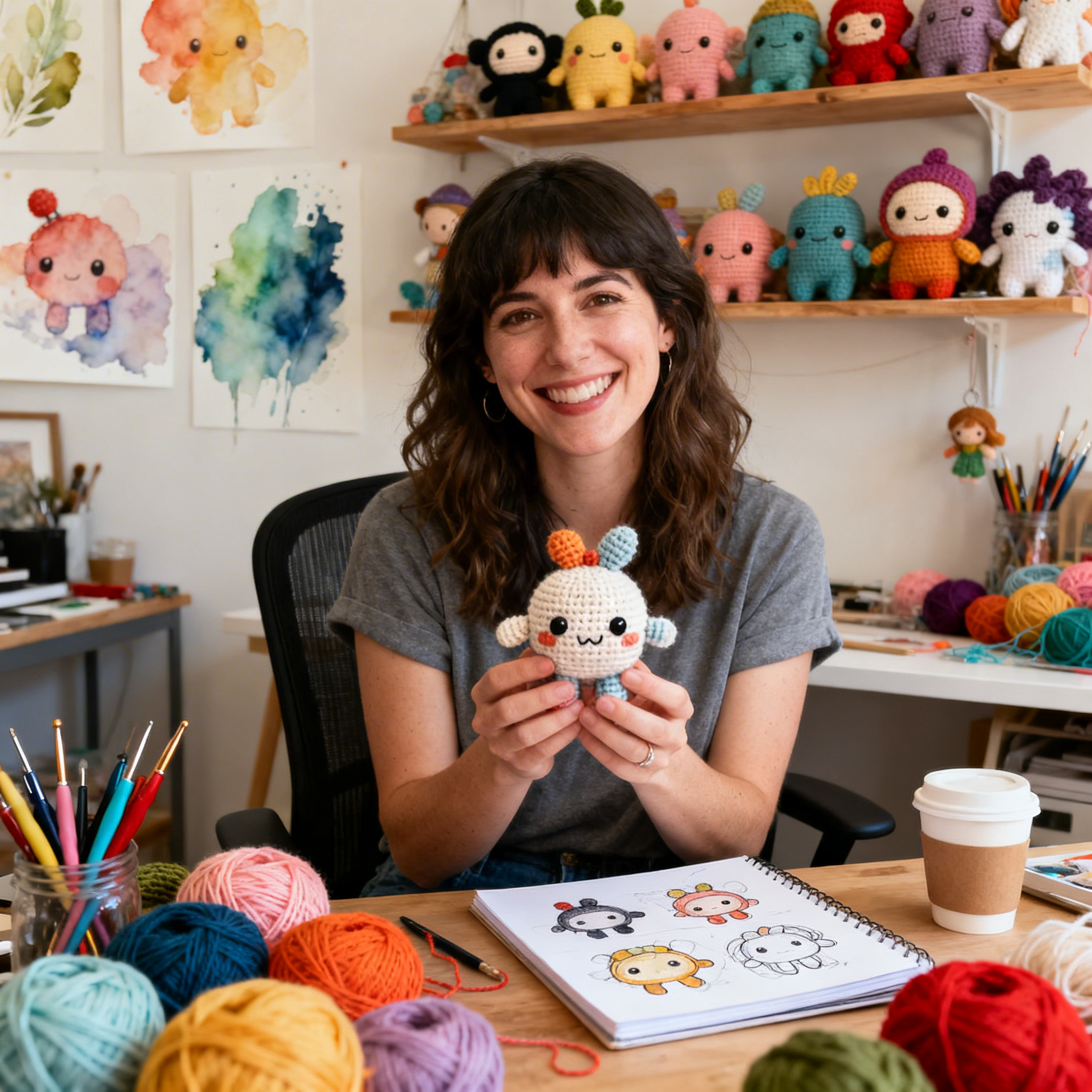
Clara Fern — Crochet Artist & Amigurumi Designer
Clara Fern is a crochet artist and amigurumi designer based in Austin, Texas. With 9 years of experience working with yarn and hook, she transformed a lifelong passion for handcraft into a creative mission: making amigurumi accessible, fun, and deeply rewarding for crafters of all levels.
Clara discovered amigurumi during a trip to Japan in 2017, where she fell in love with the art of bringing tiny characters to life through crochet. Back home in Texas, she spent years studying color theory, design principles, and advanced crochet techniques — developing her own signature style that blends kawaii aesthetics with original character design.
Through maclafersa.com, Clara shares everything she has learned — from choosing the right yarn and reading your first pattern, to designing fully original amigurumi characters from scratch. Her writing is known for being clear, detailed, and genuinely helpful, with no steps skipped and no secrets kept.
When she’s not crocheting, Clara enjoys watercolor painting, visiting local yarn shops, and drinking way too much coffee while sketching new character ideas.