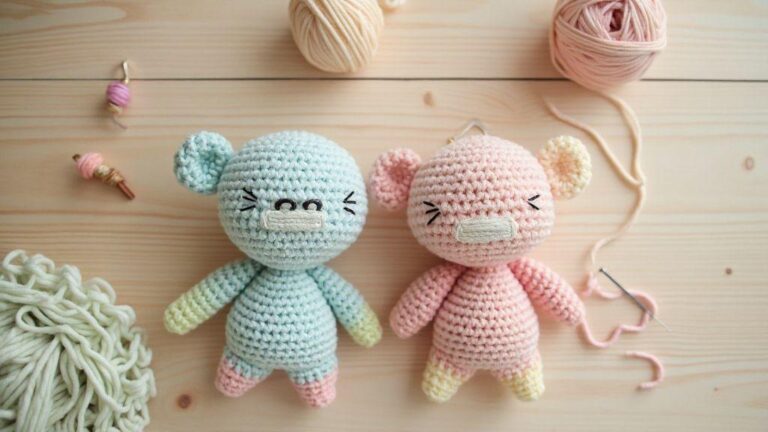

Professional Finishing Secrets Used by Top Designers
Introduction
The difference between amateur amigurumi and professional-quality pieces often comes down to finishing details. While the basic structure and construction might be identical, the way a piece is finished—how seams are hidden, how loose ends are secured, how the overall shape is refined—separates charming handmade toys from museum-quality sculptures. Professional amigurumi designers have developed a collection of finishing techniques that transform good pieces into exceptional ones. These secrets, often learned through years of practice and refinement, are the final touches that make handmade amigurumi indistinguishable from commercial products.
The Art of Invisible Seaming
Professional designers prioritize invisible seaming above all else. Visible seams undermine the illusion of a three-dimensional creature and immediately signal amateur construction.
The Perfect Ladder Stitch is the foundation of invisible seaming. Rather than making stitches every quarter-inch like beginners, professionals make stitches every eighth-inch or even closer, creating a seam so densely stitched that it cannot separate. The ladder stitch is made by bringing the needle out through one piece of fabric, crossing to the opposite piece, and bringing the needle back through the first piece, creating a ladder-like pattern. Professionals make these stitches so small and close together that the seam becomes completely invisible.
The Tension Control is critical to invisible seaming. Professionals maintain perfectly consistent tension throughout the seaming process, pulling each stitch tight enough to close the gap between pieces but not so tight that the fabric puckers. This requires practice and a delicate touch, but the result is a seam that disappears completely.
The Thread Matching ensures that seams are truly invisible. Professionals use thread that exactly matches the yarn color, or they use yarn itself as thread, ensuring that any visible stitches blend seamlessly with the surrounding fabric. For multicolored pieces, they change thread color to match each section of the seam.
Strategic Stuffing for Professional Appearance
How a piece is stuffed dramatically affects its final appearance. Professional designers use strategic stuffing techniques that create pieces with perfect proportions and smooth surfaces.
The Graduated Density Approach involves varying the density of stuffing based on the desired final appearance. Areas that should appear firm and structured are stuffed very densely. Areas that should appear soft and huggable are stuffed more loosely. This creates pieces with varied tactile qualities that feel intentional and professional.
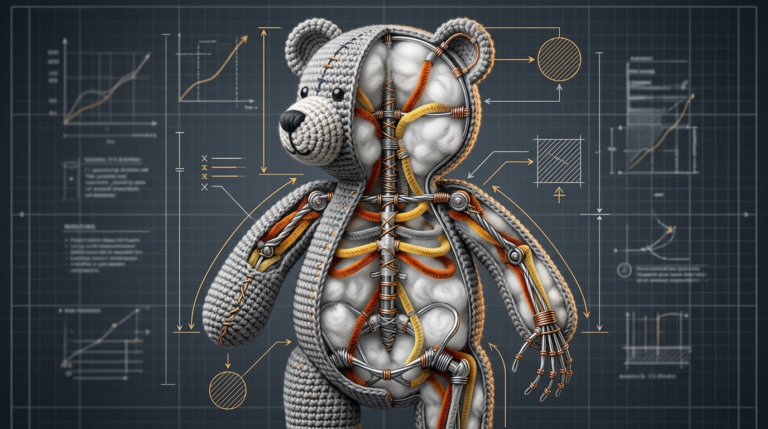
The Smooth Surface Technique involves ensuring that stuffing is distributed evenly without lumps or gaps. Professionals use a chopstick or dowel to pack stuffing into corners and ensure complete coverage. They work methodically, filling small sections at a time and checking for lumps before moving to the next section.
The Weight Distribution involves placing heavier stuffing at the base of standing pieces and lighter stuffing at the top, creating a natural center of gravity that makes pieces appear stable and intentional.
Perfecting Facial Features
Facial features are the first thing viewers notice, and professional designers invest significant effort in perfecting them.
The Eye Placement is calculated precisely. Rather than placing eyes by eye, professionals measure the distance between eyes and from the eyes to other facial features, ensuring perfect symmetry. For realistic faces, they place eyes slightly higher than the midpoint of the head, mimicking human proportions.
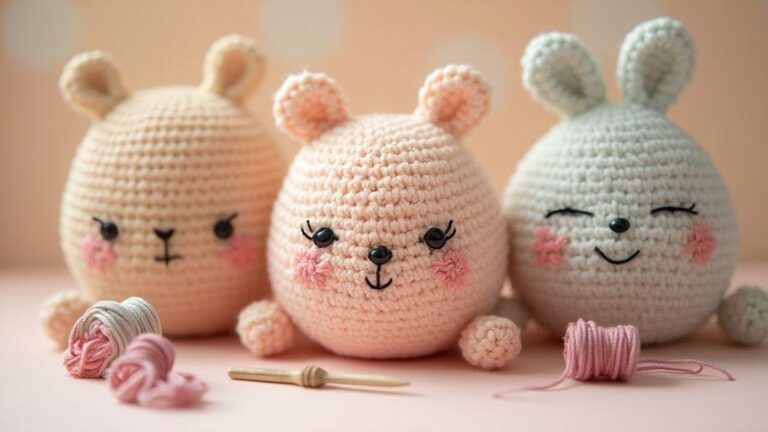
The Embroidered Details are executed with precision. Rather than making quick, casual stitches, professionals use embroidery techniques to create detailed features. Eyebrows are embroidered with careful shading. Mouths are embroidered with precise stitches that create realistic expressions. Noses are embroidered with highlights and shadows that create dimension.
The Expression Control involves using facial features to create specific expressions. A slight upward curve to the mouth creates a smile. Eyes placed slightly to one side create a curious expression. Professionals understand the psychology of facial features and use them intentionally to create desired emotional responses.
Refined Shaping and Blocking
Professional pieces have refined shapes that appear intentional and well-designed.
The Blocking Technique involves steaming or wet-blocking finished pieces to refine their shape. After assembly, professionals steam their pieces gently, allowing the heat and moisture to relax the stitches and allow the piece to settle into its intended shape. For pieces that need more dramatic shaping, wet-blocking involves soaking the piece in water, shaping it by hand, and allowing it to dry in the desired shape.
The Seam Placement is strategic. Rather than placing seams where they’re easiest to construct, professionals place seams where they’re least visible. For a head, the seam might be placed at the back rather than down the center. For a body, seams might be placed at the sides rather than front and back.
The Proportion Refinement involves adjusting proportions during construction to create pieces that appear intentional and well-designed. Rather than following a pattern exactly, professionals adjust proportions based on how the piece looks as it develops, creating pieces that are visually balanced and aesthetically pleasing.
Finishing Loose Ends Professionally
Loose yarn ends are a common sign of amateur construction. Professionals eliminate them completely.
The Weaving Technique involves weaving loose ends through nearby stitches rather than simply tying them off. After cutting a loose end to approximately 2 inches, thread it onto a tapestry needle and weave it through the stitches of nearby rows, following the path of the yarn. This anchors the end securely while keeping it completely hidden.
The Strategic Placement involves planning where loose ends will occur and placing them in locations where they can be easily hidden. Rather than leaving loose ends scattered throughout the piece, professionals plan their construction to minimize loose ends and place them where they can be easily woven in.
The Double-Check involves carefully inspecting the finished piece for any visible loose ends or stray threads. Professionals make multiple passes over their finished work, checking for any imperfections and correcting them before the piece is considered complete.
Quality Control and Refinement
Professional designers implement rigorous quality control processes.
The Inspection Process involves carefully examining every aspect of the finished piece. Seams are checked for invisibility. Stuffing is checked for lumps or gaps. Facial features are checked for symmetry and expression. Any imperfections are corrected before the piece is considered complete.
The Comparison Process involves comparing the finished piece to the original design or to reference images. If the piece doesn’t match the intended design, adjustments are made. This might involve adding embroidered details, adjusting proportions, or refining the overall shape.
The Refinement Mindset involves viewing the finished piece not as complete but as a starting point for refinement. Rather than accepting the first version as final, professionals ask themselves how the piece could be improved. Could the facial features be more expressive? Could the proportions be more balanced? Could the seams be more invisible? This refinement mindset is what separates professional work from amateur work.
Conclusion
Professional finishing secrets are not mysterious or difficult to learn—they are simply the result of careful attention to detail, strategic planning, and a commitment to excellence. By implementing these techniques—invisible seaming, strategic stuffing, refined facial features, careful shaping, and meticulous quality control—makers can elevate their work from charming handmade toys to professional-quality pieces. The investment in finishing details pays dividends in the form of pieces that are not only beautiful but also durable and long-lasting. Professional-quality amigurumi represents the pinnacle of the craft, and these finishing secrets are the tools that make it possible.

Clara Fern — Crochet Artist & Amigurumi Designer
Clara Fern is a crochet artist and amigurumi designer based in Austin, Texas. With 9 years of experience working with yarn and hook, she transformed a lifelong passion for handcraft into a creative mission: making amigurumi accessible, fun, and deeply rewarding for crafters of all levels.
Clara discovered amigurumi during a trip to Japan in 2017, where she fell in love with the art of bringing tiny characters to life through crochet. Back home in Texas, she spent years studying color theory, design principles, and advanced crochet techniques — developing her own signature style that blends kawaii aesthetics with original character design.
Through maclafersa.com, Clara shares everything she has learned — from choosing the right yarn and reading your first pattern, to designing fully original amigurumi characters from scratch. Her writing is known for being clear, detailed, and genuinely helpful, with no steps skipped and no secrets kept.
When she’s not crocheting, Clara enjoys watercolor painting, visiting local yarn shops, and drinking way too much coffee while sketching new character ideas.