How to Build Internal Structures for Large Amigurumi
Introduction
Large amigurumi projects present unique structural challenges that small toys never encounter. As pieces grow beyond a certain size, gravity, weight distribution, and the stress of handling become critical factors in determining whether a finished toy maintains its intended shape or gradually collapses into a misshapen lump. Professional amigurumi designers have developed sophisticated internal support systems that transform oversized projects from engineering nightmares into stable, displayable sculptures. Understanding these structural principles allows makers to confidently tackle ambitious projects that would otherwise seem impossible. This article explores the internal architecture that separates successful large amigurumi from disappointing failures.
Understanding Weight Distribution and Support Needs
Before selecting specific reinforcement materials, it’s essential to understand the physics governing large amigurumi. A small 4-inch amigurumi bear can be stuffed with standard polyester fiberfill and will hold its shape indefinitely. A 24-inch bear, however, experiences forces that the same stuffing cannot withstand. The weight of the head alone creates downward pressure on the neck. The limbs, if not properly supported, will sag under their own mass. The body, when overstuffed to maintain firmness, can develop stress points where stitches separate.
Professional designers calculate weight distribution by dividing large projects into sections and determining how much support each section requires. The head, typically the heaviest single component, needs the most robust support. Limbs need graduated support—stronger at the joints where stress concentrates, lighter toward the extremities. The body serves as the central support structure for everything else.
Internal Armature Systems
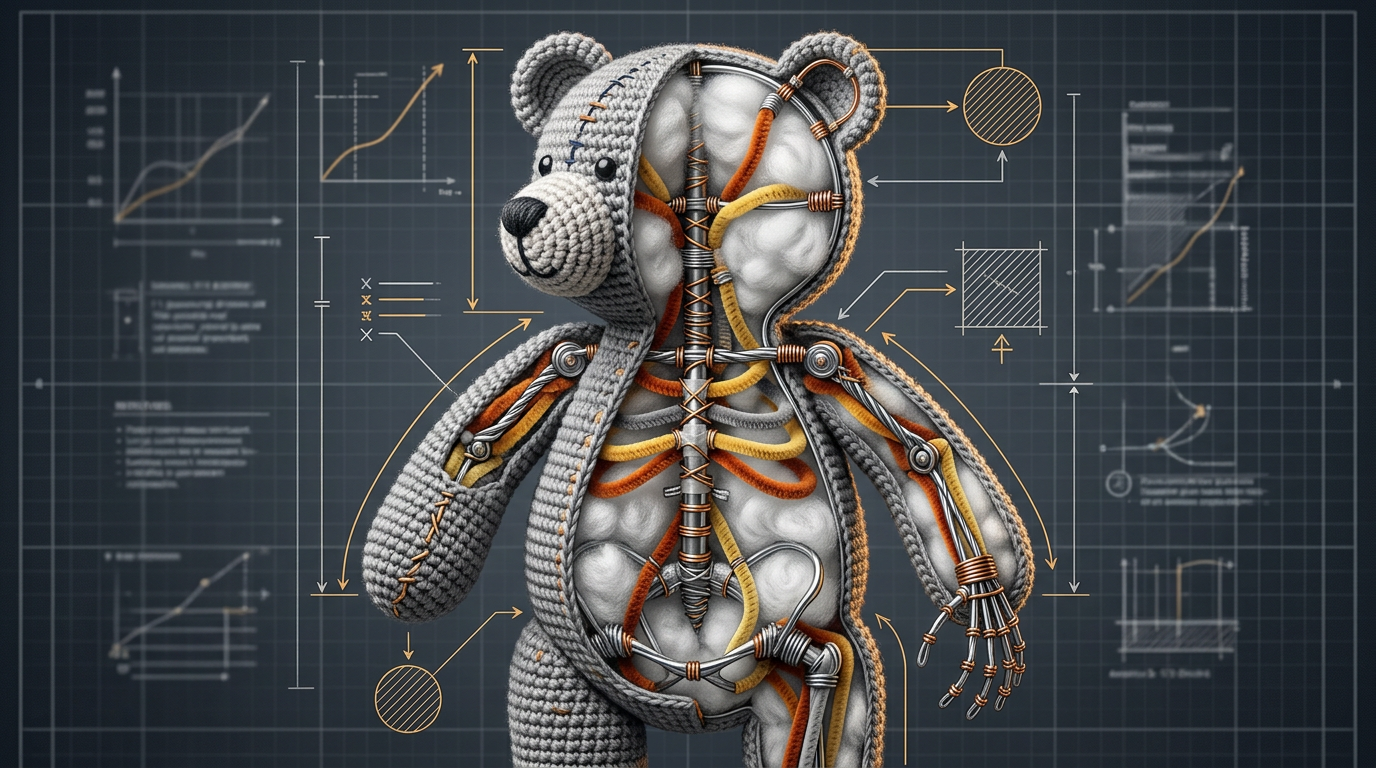
Pipe Cleaner Skeletons represent the most accessible internal structure for amigurumi makers. Fuzzy pipe cleaners, available in craft stores, can be bent into skeletal frameworks that provide shape memory and support. For a large amigurumi, create a central spine by twisting multiple pipe cleaners together lengthwise, then branch off limbs at appropriate points. The pipe cleaner framework should be inserted before stuffing begins, positioned so that it runs through the center of each limb and the torso. The fuzzy texture grips the fiberfill, preventing the skeleton from shifting during assembly. Pipe cleaners work well for projects up to 18 inches but become insufficient for larger pieces.
Wire Armatures offer superior support for very large amigurumi. Floral wire, available in various gauges, can be twisted into complex skeletal structures that support substantial weight. A 20-gauge wire provides enough rigidity for most applications while remaining flexible enough to bend into desired poses. Create the armature before crocheting by twisting wire into the desired shape, then crochet around it. The wire remains inside the finished piece, providing permanent structural support. For extremely large pieces, consider using aluminum wire or even thin rebar, though these require more advanced fabrication skills.
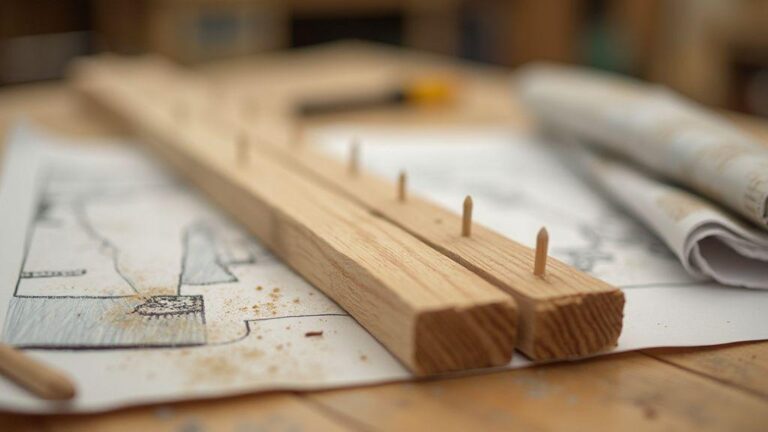
Wooden Dowels and Supports suit projects where internal structure needs to be truly rigid. A 12-inch wooden dowel inserted vertically through the torso and into the head provides unshakeable support for a large standing amigurumi. Dowels can be joined at angles to create limb supports. The primary challenge is that wooden supports are permanent—the finished piece cannot be posed or repositioned. This approach works best for display pieces that will remain in a fixed position.
Strategic Stuffing Techniques
The material used to fill amigurumi dramatically affects structural integrity. Standard polyester fiberfill, while affordable and washable, compresses over time and provides minimal support for large pieces. Professional makers employ graduated stuffing strategies that vary the density of fill based on structural needs.
Firm Stuffing in critical areas—the head, neck, and upper torso—uses densely packed fiberfill or specialty materials like wool roving or cotton batting. These materials compress less than standard fiberfill and maintain their shape through years of handling. Stuff these areas very firmly, using a chopstick or dowel to pack fill into corners and ensure no air pockets remain.
Medium Stuffing in mid-body sections provides adequate support without creating stress points. Use standard fiberfill but pack it more densely than you would for small amigurumi. The goal is a firm but slightly yielding feel.
Loose Stuffing in extremities—the tips of limbs, ears, and tails—allows for flexibility and natural movement. These areas can be stuffed more lightly, creating a softer, more huggable texture.
Reinforcement at Stress Points
Certain areas of large amigurumi experience concentrated stress and require additional reinforcement beyond standard stuffing. The neck joint, where the head connects to the body, bears the entire weight of the head and is the most common failure point. Reinforce this area by creating a sturdy neck structure before assembly. Some makers crochet a separate cylindrical neck piece using a smaller hook and tighter tension, then stuff it very firmly before attaching the head. Others wrap the neck area with embroidery floss or yarn before assembly, creating a reinforced band that distributes stress across a wider area.
Limb joints—where arms and legs attach to the body—also require reinforcement. Create these joints using a technique called “joint reinforcement”: before sewing the limb to the body, wrap the attachment point with embroidery floss multiple times, creating a reinforced band. Then sew through this reinforced area, distributing the stress across multiple layers rather than concentrating it on a few stitches.
Poseable Limbs and Joints
For large amigurumi that will be repositioned or posed, internal joint structures allow movement while maintaining support. Yarn-wrapped joints involve wrapping embroidery floss or yarn around the attachment point before sewing, creating a flexible but stable connection. Bead joints use large beads threaded onto the attachment yarn, allowing smooth rotation while supporting weight. Disc joints, created by sewing through stacked cardboard or plastic discs, provide the most realistic joint movement and are commonly used in professional amigurumi dolls.
Testing and Reinforcement During Construction
Rather than discovering structural problems after completion, test your large amigurumi during construction. After attaching each limb, gently pull and stress-test the joint. If it feels unstable, add reinforcement before proceeding. After stuffing the head, test whether it maintains its shape when tilted at extreme angles. If it flops, add more stuffing or reinforce the neck. This iterative testing approach catches problems early when they’re easy to fix.
Conclusion
Building internal structures for large amigurumi transforms ambitious projects from risky endeavors into achievable goals. By understanding weight distribution, selecting appropriate armature systems, employing strategic stuffing techniques, and reinforcing stress points, makers can create large pieces that maintain their shape and integrity for years. The investment in proper internal structure pays dividends in the form of professional-quality results that showcase the maker’s skill and vision. Large amigurumi, properly constructed, become cherished display pieces and conversation starters rather than disappointing experiments.
Clara Fern — Crochet Artist & Amigurumi Designer
Clara Fern is a crochet artist and amigurumi designer based in Austin, Texas. With 9 years of experience working with yarn and hook, she transformed a lifelong passion for handcraft into a creative mission: making amigurumi accessible, fun, and deeply rewarding for crafters of all levels.
Clara discovered amigurumi during a trip to Japan in 2017, where she fell in love with the art of bringing tiny characters to life through crochet. Back home in Texas, she spent years studying color theory, design principles, and advanced crochet techniques — developing her own signature style that blends kawaii aesthetics with original character design.
Through maclafersa.com, Clara shares everything she has learned — from choosing the right yarn and reading your first pattern, to designing fully original amigurumi characters from scratch. Her writing is known for being clear, detailed, and genuinely helpful, with no steps skipped and no secrets kept.
When she’s not crocheting, Clara enjoys watercolor painting, visiting local yarn shops, and drinking way too much coffee while sketching new character ideas.